Celeste McGovern investigates why testosterone levels are plummeting around the globe and the unlikely recoveries of two men that point to the body’s hidden energy system
Sean Smiley doesn’t mince words when he talks about the time he crushed his left testicle. He was 25 years old in 2007, a new recruit with the Tulare City Fire Department in California, when a rope rescue drill went badly wrong.
Rappelling from more than 20 feet up, he slipped, then dropped, only to be suddenly and violently pulled up by his harness. The force drove into his pelvis, crushing his left testicle and leg.
At first he tried to push through it. For weeks he hobbled around while the bruising got darker and the pain intensified. Local doctors were little help. One even told him that when cavemen were injured, they simply “walked it off.”
Smiley grabbed the man by his white jacket lapels and nearly throttled him. “I told him, ‘I’m not a caveman,’” he says, still bristling at the memory today.
He paid out of pocket for better care. At the University of California, San Francisco, a pelvic injury specialist said he likely had testicular compartment syndrome, a rare and excruciating disorder in which pressure cuts off blood flow to the tissue.
He started treatments including injections to block nerve pain. He also first heard the term hypogonadic and learned that the injury had caused more than pain.
His serum testosterone level had crashed to a barely detectible 200 nanograms per deciliter (ng/dL), well below the 300 ng/dL threshold most clinicians consider low. He began hormone replacement therapy.
Over the next several years, Smiley cycled through nearly every available form of testosterone: gels, creams, pills and injections, though he drew the line at implanted pellets. The therapy worked on paper. His testosterone levels rose, and he maintained his muscle mass.
But he also experienced “every possible side effect,” from acne and greasy skin to hair loss and trouble in the bedroom. His liver enzymes skyrocketed, and at the firehouse they joked about his “roid rage,” the explosive mood swings usually associated with steroid use.
Tired of the roller coaster of side effects, Smiley says he quit cold turkey one day: “I threw it in the trash.” It was decisive but brutal.
“Testosterone is the hormone that makes males male,” he says. Without it, he felt listless and depressed. “I just didn’t have any drive to do anything.” He laid on the couch. He napped a lot. His muscles softened, and fat crept on. His marriage struggled.
As a temporary escape, he signed up for jiu-jitsu to get out of the house. It was a reprieve from the arguments, the bills and the kids’ soccer games. He’d already developed a habit of taking cold showers when his mind started replaying difficult scenes from work. “It was like a reset,” he says, a way to interrupt the emotional vortex before it pulled him under.
But jiu-jitsu was punishing. He was getting beaten up in class, and he was sore from it.
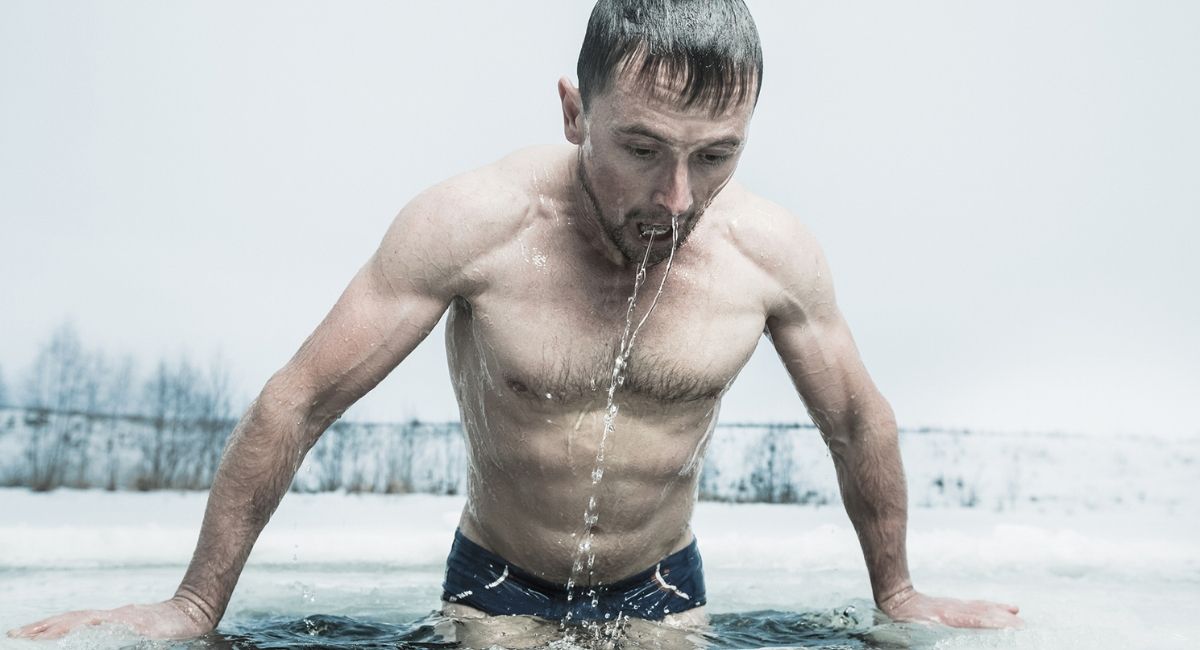
“I didn’t want to take Tylenol or Advil every time and get an ulcer or mess up my liver,” he says. So, before his 5 a.m. “zombie” training sessions, Smiley would step into the backyard in his underwear and plunge into his cold saltwater pool in the dead of winter.
“I’d just go numb and then thrash about and get my arm moving, if it was sore, or my leg moving,” he says. Then he’d head to jiu-jitsu class, where he’d spend the next hour wrestling.
A few weeks into this routine, Smiley noticed changes that didn’t fit with low testosterone. The veins in his arms were bulging. His muscles felt firmer. Morning erections returned.
“What are you doing?” his doctor asked when he saw Smiley’s serum testosterone had risen to more than 500 ng/dL. “Did you pick something up in Tijuana?”
He hadn’t. The only thing he’d changed was the cold plunges.
“Well, keep doing what you’re doing,” his doctor replied.
He did, but then spring turned hot and Smiley noticed that when his pool warmed up, the benefits he was experiencing began to disappear. He got an old Rubbermaid tub, filled it with ice from the firehouse and started plunging in daily before working out.
Once again, all the signs he was looking for returned. He was convinced it was the cold.
Smiley’s ordeal was personal, yet it mirrors a global health issue affecting millions of men. In industrialized nations, an unexplained drop in testosterone has been happening for decades, at least since the 1980s.
In the 1970s, the average testosterone level in American men was around 700 ng/dL. It fell to 605 ng/dL by 2000 and, in young men, to 424 ng/dL in 2012—about a 30 percent drop, even after accounting for obesity and other lifestyle factors.
By 2016, more than 20 percent of young men and adolescent boys had testosterone levels below 300 ng/dL even though they were in the typical peak testosterone years.
“What used to be common for a 60-year-old man in the 1970s is now considered normal for men in their 20s,” says Thomas Seager, an engineering professor at Arizona State University, whose own recovery story is recounted below.
It’s certainly part of what’s driving the modern spiral of infertility. Without testosterone, a man can’t make sperm, and sperm counts—a clear indicator of male reproductive health—have dropped like a stone too. A meta-analysis of nearly 43,000 men found sperm concentrations in Western countries fell by more than 50 percent from 1973 to 2011.1
Falling testosterone isn’t just about lowered libido and sexual function. Despite being the hormone that “makes males male,” as Smiley put it, testosterone is critical to overall health in both men and women.
Lower levels are connected to cardiovascular disease, cognitive decline, obesity, type 2 diabetes, loss of muscle mass and bone density, mood disorders including depression, and a lack of motivation and energy. Testosterone is the hormone of drive.2
One 2013 study estimated that over a 20-year period, testosterone deficiency would contribute to roughly 1.3 million more cases of cardiovascular disease in America, 1.1 million more cases of type 2 diabetes and more than 600,000 new osteoporosis-related bone fractures.3
“Every man over 40 should be screened for low testosterone,” says Dr Mohit Khera, a urologist, professor, researcher and medical director at Baylor College of Medicine. “Testosterone is the best barometer of a man’s overall health.”
Multiple disease conditions can lead to low testosterone (often called low T) and then create negative feedback loops, and low T exacerbates these conditions. If there is a problem with testosterone levels, it may be caused by a medication, for example, or an underlying metabolic disorder. Half of all male type 2 diabetics have low testosterone.
“If testosterone is low, the ‘Check engine’ light is on,” Dr Khera says. “Figure out why it’s low.”
Drain testosterone, and there isn’t just a fertility crisis or even just a potentially catastrophic global health crisis. It’s a phenomenon eating away at a force that has for all of history driven men to compete and create, accumulate wealth, attract mates and father children, forge communities, and build empires. Low testosterone is about a lot more than erectile dysfunction and wimpy arms. It’s an energy crisis.
Scroll through social media and you get the sense, judging by the hundreds of millions of searches for phrases like boost testosterone and testosterone supplements, that something fundamental is slipping and no one is quite sure how to get it back. The testosterone supplement industry is a growing market worth over $3 billion (£2.3 billion) annually.
Once reserved for men like Sean Smiley with clear medically low T, testosterone replacement therapy (TRT) is another $2 billion (£1.5 billion) industry that now puts men an online intake form, a mailed blood test and a telehealth consult away from a prescription. While millions of men with undiagnosed low T should be tested and are not, TRT is now being repositioned as a “biohacking” tool for healthy men—some in their 20s and 30s—who aren’t aware of its long-term side effects (see below).
If testosterone is simply deficient, the solution should be straightforward enough: Replace it. But if it’s a signal for a deeper problem, then treating the symptom without addressing the root causes risks missing the problem entirely.
If modern men are suddenly lacking testosterone that was abundant in their grandfathers just a few decades ago, what changed?
There’s no easy explanation for the 0.6 percent per year testosterone decline. Instead, researchers point to a lengthy list of suspects.
Microplastics and forever chemicals. Endocrine-disrupting and “forever chemicals” in plastics and pesticides are at the top of the list. Endocrine disruptors are chemicals that mimic natural hormones, including testosterone and estrogen, and throw finely tuned biological systems out of whack.
Plastics, pharmaceuticals, chemicals in personal care products, food additives, and natural and synthetic hormones (in birth control and hormone replacement drugs, for example) are now standard and ubiquitous pollutants in our air, water and food.2
Chemicals like phthalates, bisphenols, and “forever chemicals” (PFAS) are everywhere. For example, bisphenol A (BPA), a plasticizer used to produce drink and food packaging, contaminates foods and beverages when heated or exposed to acidic foods.
It mimics estrogen and can dial down the machinery that produces testosterone, such as by interfering with production signals from the brain. In animals, BPA disrupts mitochondria, the tiny energy factories inside testicular cells, reducing energy production and triggering cell death, which has downstream effects on fertility.4
Prenatal exposure to pthalates can interfere directly with formation of the Leydig cells in the testes, which make testosterone. It disrupts key biological pathways, even switching off the genes signaling to make the hormone in the first place.5
“Forever chemicals” were so named because they stick around and build up in the body, where they can damage sperm, disrupt testicular function and create hormonal havoc.6
Meanwhile, Chinese researchers concluded that “microplastics pollute the human male reproductive system” when they found plastic particles in two-thirds of the testis samples and over a third of the semen samples they examined.7 These particles transport the hormone-disrupting chemicals deep into the body, where they assault reproductive cells, weaken the protective barrier around the testes and create damaging oxidative stress.
Then there are pesticides. Widely used in industry and households to kill insects, they also damage the testicles, and research suggests they contribute to the silent testosterone drain.8
Toxic metals. Toxic metals in food, water, air and more can make their way into the male reproductive tract, where they interfere with hormone signaling and testosterone production. One study of 62 sperm donors at a French infertility clinic found high aluminum levels in the semen of every donor. The higher the aluminum, the lower their sperm count.9
Arsenic, which is common in rice, groundwater and mining communities, negatively affects T levels.10 Cadmium from foods, tobacco and plastic stabilizers stays in the body for 20–40 years, leading to metabolic and testicular dysfunction.11
Men are often exposed to lead in soil, old plumbing, jobs such as welding and construction, and foods such as chocolate.12 Dental fillings, vaccines, seafood and industrial processes are common ways they encounter mercury. And both of these metals lower testosterone as well.13
Processed foods. The standard Western diet of ultra-processed foods high in sugar, refined carbohydrates and seed oils could be taking a toll on testosterone. Not only does it affect the gut microbiome and cause inflammation but it also lacks micronutrients like magnesium and zinc that are crucial for male reproductive health. It’s also associated with obesity, metabolic dysfunction and low testosterone levels driven by insulin resistance.14
Sugar is a testosterone killer, too. Research shows men aged 20–39 who consume more sugar-sweetened beverages like sodas and energy drinks tend to have lower serum testosterone levels.15 Even a single spike in blood sugar can depress testosterone levels for hours.16
Trans fats—the artificial fats in many processed foods—damage cell membranes and enzymes involved in testosterone production. Their intake correlates with lower T levels in clinical studies.17
Vaping. The data on smoking is mixed, but surprisingly, some studies find cigarettes raise testosterone rather than lower it.18 However, rat studies show e-cigarettes have the opposite effect,19 and vape liquid ingredients have been found to interfere with testosterone production.20 For men who want a baby, both smoking and vaping lower sperm count significantly.21
Sitting. Sitting is the new smoking when it comes to testosterone. Up to one-third of people worldwide fail to meet even the minimum guidelines set by the World Health Organization, about 2.5 hours of moderate activity per week. Hours spent in front of screens or in traffic have become the norm, but these have a negative impact on men’s hormonal health.
Several studies have found that time spent watching television22 and physical markers like muscle loss23 are linked to low testosterone. It’s hard to say whether low T leads to reduced activity and muscle mass or vice versa, and some researchers suggest it’s a negative feedback loop. The more a man sits, the lower testosterone falls, and the less he feels like getting up and being active.
Poor sleep. Cutting sleep short can crash testosterone. Studies show that sleeping just five hours a night for a single week can lead to a 10–15 percent drop. Issues like insomnia and sleep apnea also lower testosterone.24
Like with reduced activity, it’s hard to know which comes first, poor sleep or low T. The relationship runs both ways, and low testosterone can make it harder to sleep well.
Late-night screen time, blue light, cell phone radiation, erratic sleep hours, and loads of caffeine and chronic stress can all muddle a natural sleep-wake cycle. The result is loss of REM sleep, leading to hormonal imbalance. Testosterone dips, while stress-induced cortisol climbs. Over time, insulin resistance and chronically lower hormone production can develop.2
It’s easy to see these factors as separate assaults on testosterone. But what if they’re all, in different ways, draining the body’s ability to produce energy?
Making testosterone is an energy-intensive process. It starts in mitochondria, the tiny structures in every cell that convert fuel into usable power. Mitochondria also regulate metabolism, control oxidative stress and aid hormone production.
In men, T synthesis begins in the mitochondria of the Leydig cells in the testes. When those mitochondria are impaired, production falters. The numerous testosterone-lowering factors all disrupt mitochondrial function.
That’s where cold exposure comes in. It’s one of the most potent natural stimulators of mitochondrial activity, triggering the formation of new mitochondria and improving their efficiency. Shivering activates brown fat, or brown adipose tissue (BAT), which is densely packed with mitochondria that help generate heat and ramp up metabolism. It hits directly at the cell level.
Smiley calls his testosterone recovery after backyard cold plunges a “big fat happy accident.” He may actually have stumbled onto a way of getting a suppressed mitochondrial system back online.
This idea is central to the work of Thomas Seager, author of Uncommon Testosterone (Morozko Media, 2025). He argues that testosterone production is downstream of the body’s energy-generating capacity. Restore the energy capacity—the mitochondria—and the testosterone will follow.
Seager, who spent much of his academic career studying risk, resilience and the unintended consequences of modern technologies, became interested in cold therapy.
In 2017, at age 51, routine bloodwork showed a high prostate-specific antigen (PSA) score of 7.0, a diagnostic gray zone. He had no symptoms, had recently lost 50 pounds and was feeling good. Every other test result looked good, including his testosterone, which was a healthy 736 ng/dL (normal is 300–900 ng/dL). His doctor wanted a biopsy.
The PSA marker sent him into a spiral. “It took only about 20 minutes of online reading to convince me I was going to die of prostate cancer,” he says.
He asked friends about the PSA test, and they opened up with horror stories. “They told me how painful the biopsies were. They told me about the agony of an ‘inconclusive’ result and the urinary incontinence and erectile dysfunction that followed their prostatectomies,” he recalls.
Seager decided to steer clear of the mainstream medical prostate path altogether. He knew that about 75 percent of men with a PSA of 4–10 don’t have cancer.25 And he knew that PSA is a marker of inflammation rather than cancer.
But he was also worried about dying. He was cycling days of eating a low-carb keto diet with eating high-carb, inadvertently practicing what is now known as “metabolic flexibility.” Then he turned to cold therapy to combat inflammation. He bought a full-size Sears freezer, filled it with water and ice, and began plunging for a few minutes daily. Afterward, he would warm up with light exercise, and he felt good.
A few weeks later, his PSA had dropped to 1.6 ng/mL—well within the normal range. After a few more months, it was 1.5 ng/mL, but another number caught his urologist’s attention: His total T had risen by more than 400 points to 1,180 ng/dL.
The doctor suspected he was taking steroids and ordered more bloodwork. But Seager’s luteinizing hormone (LH) was elevated too, a sign that he was making testosterone naturally.
Like fasting and exercise, cold briefly shocks the system, but in a controlled way that prompts the body to adapt and become more resilient. This “good stress” is called hormesis.
Seager says the cold exposure doesn’t have to be long to get the benefits: “Cold enough to trigger a gasp, long enough to make you shiver.”
Most athletes finish a workout with cold exposure to reduce inflammation. But Smiley and Seager had accidentally done the opposite. They went into the cold first and then got moving, which may have activated the very system modern life has been quietly shutting down.
Neither man had set out to fix his mitochondria, only to feel better, and neither was chasing testosterone. But they got it anyway, and not by prescription.
If testosterone is falling across populations, it may not be because it can’t be made but because the dial for its production is turned down. The question isn’t how to “boost” T but how to restore the right conditions for the body to produce it.
It’s not just environmental chemicals to watch out for to keep testosterone levels high—it’s chemicals in your medicine cabinet, too. Some prescriptions can drastically lower testosterone, especially addictive opioid painkillers; those taking them were found to be 40 percent more likely to have low T. Opioids suppress brain signals that tell the body to produce hormones.1
Another drug linked to lower T is statins. The most commonly prescribed drug for men on the planet, they’re designed to lower cholesterol—the building block of testosterone.
“The same cholesterol that most medical doctors tell you is dangerous to your health is the substrate from which your essential sex hormones are derived,” says Prof. Seager. Little wonder that complaints of low libido, depression and fatigue, hallmarks of low T, go hand in hand with statins.2
Antidepressants, especially SSRIs (selective serotonin reuptake inhibitors), are another class of drugs that decrease libido and lower sperm counts. They’re associated with oxidative stress, DNA fragmentation and low sperm motility.3
Long-term use of corticosteroids, frequently prescribed for inflammation, can significantly suppress hormone production by increasing cortisol, the body’s stress hormone. Even some blood pressure medications have been linked to lower testosterone.4
Ironically, many of these drugs are prescribed for conditions that are already associated with low testosterone. Adding them may just create a perfect storm of hormonal decline and negative health effects.
Online quizzes like the ADAM quiz for low T can feel a bit like an ADHD checklist for middle-aged men. The questions are so broad that just about any tired, stressed or aging man could see himself in them. Not as good at sports as you used to be? Tired after dinner?
The difference is that low T has a measurable biomarker. Guidelines in the US, the UK, Canada and Australia all call for symptoms and repeated early-morning blood tests to confirm a diagnosis. Most align with the American Urological Association’s threshold of 300 ng/dL.
Urology professor Dr Mohit Khera thinks millions of men have undiagnosed low T that may signal underlying medical conditions, such as type 2 diabetes and insulin resistance.
Low testosterone can worsen metabolic dysfunction, while metabolic dysfunction can suppress testosterone. Testosterone replacement therapy (TRT) can sometimes help with tackling lifestyle changes to lose weight, add exercise and improve sleep, says Dr Khera: “It’s bidirectional.”
TRT has been clouded by concern over potential cardiovascular risks, mostly because of conflicting findings of small trials. In 2023, however, came the large TRAVERSE trial, a randomized, double-blind, placebo-controlled study of more than 5,000 men aged 45–80 with low T and at risk of a cardiovascular event. After nearly two years, it found, the men on TRT were no more likely to have a major cardiovascular event than those on placebo.
There were other signals, however. Men on TRT had a higher risk of pulmonary embolism, nonfatal arrhythmias warranting intervention, atrial fibrillation and acute kidney injury.1
Those were men being cared for in clinical practice, too. The risks are different for men on the internet, who are doing DIY TRT like gym supplements to boost muscle gains and masculinity, and for “optimization.” Especially if they want to have children.
External testosterone suppresses the body’s natural production and can reduce sperm counts significantly, in some cases to zero.2 While men hear that their T production and sperm count can recover if they stop TRT, the results are not always predictable.
Some regain production within months of stopping therapy, but for others it takes a year or longer. Even then, “you may not recover to baseline,” warns Dr Khera.
Social media is saturated with “testosterone boosters”—supplements promising everything from “explosive strength” to “alpha-level confidence” and “peak masculinity.” There isn’t always hard science to back the competitive marketing, however.
One analysis found 90 percent of these products claim to boost testosterone, yet there’s evidence for only about 25 percent. And 10 percent even have ingredients shown to lower testosterone.1
Here is a list of supplements with research to support their efficacy:
Ashwagandha (Withania somnifera) has long been used in Ayurvedic medicine to restore vitality, and recent research confirms it can affect the body’s hormonal systems. It appears to help rebalance stress responses, which may indirectly support reproductive hormones and fertility.
Several randomized controlled trials show modest increases in testosterone, particularly in men who are stressed or overweight.2 One placebo-controlled study found taking 600 mg of ashwagandha daily for eight weeks increased testosterone and improved well-being and stress markers.3
Fenugreek (Trigonella foenum-graecum), a metabolic and hormonal support herb that has been used in ancient Chinese and Ayurvedic medicines for centuries, has become a popular testosterone booster.
In one systematic review of six clinical trials involving 366 men, four studies showed increases in testosterone. Doses typically ranged from 250 to 600 mg daily over eight to 12 weeks. Some studies reported boosts in total and free T—particularly in younger or overweight men—while others saw improvements in free T without changes in total levels.4
Shilajit. Shilajit is another Ayurvedic medicine, a dark, sticky, tar-like resin that seeps from rocks, especially in the Himalayas. It looks like something you’d scrape off your wellies, according to GQ, but men are drinking it mixed into hot water or consuming it in gummy-style supplements.
One study shows increased total and free T in healthy men aged 45–55 years taking 250 mg twice per day for 90 days.5
See Healthy Shopping: The Best Shilajit Supplements for how to choose a top-quality product.
Zinc. This element is an essential nutrient that is crucial to male fertility, and deficiency is associated with low T and poor sperm quality.
Supplementation when zinc is deficient can raise testosterone and increase fertility.6 Recommended intake of zinc for men is about 11 mg/day, but many studies use 15–30 mg/day. Zinc sulfate is the most studied, but newer forms, including zinc picolinate, zinc citrate and zinc bisglycinate, are absorbed better with fewer digestive effects.
Zinc and copper have a delicate balance in the body, so don’t take too high a dose. Taking copper as well, but separately, can help prevent deficiency.
Seager wondered what the cold was doing. Digging into the literature, he found a little-known Japanese study from 1991 in which healthy young men cycled for 20 minutes, increasing T levels temporarily by roughly 20 percent. Cold exposure alone, however, reduced them.
When the researchers combined protocols, something different happened. When cold followed exercise, the testosterone response was blunted. When cold came first, followed by exercise, testosterone rose.
It’s an important distinction, Seager says, because cold isn’t just a “T booster.” It’s a physiological stressor. It can suppress or stimulate hormone output depending on timing and context.1
What do you think? Start a conversation over on the... WDDTY Community

Great news! Discounts are available based on your cart total. Check the details below: