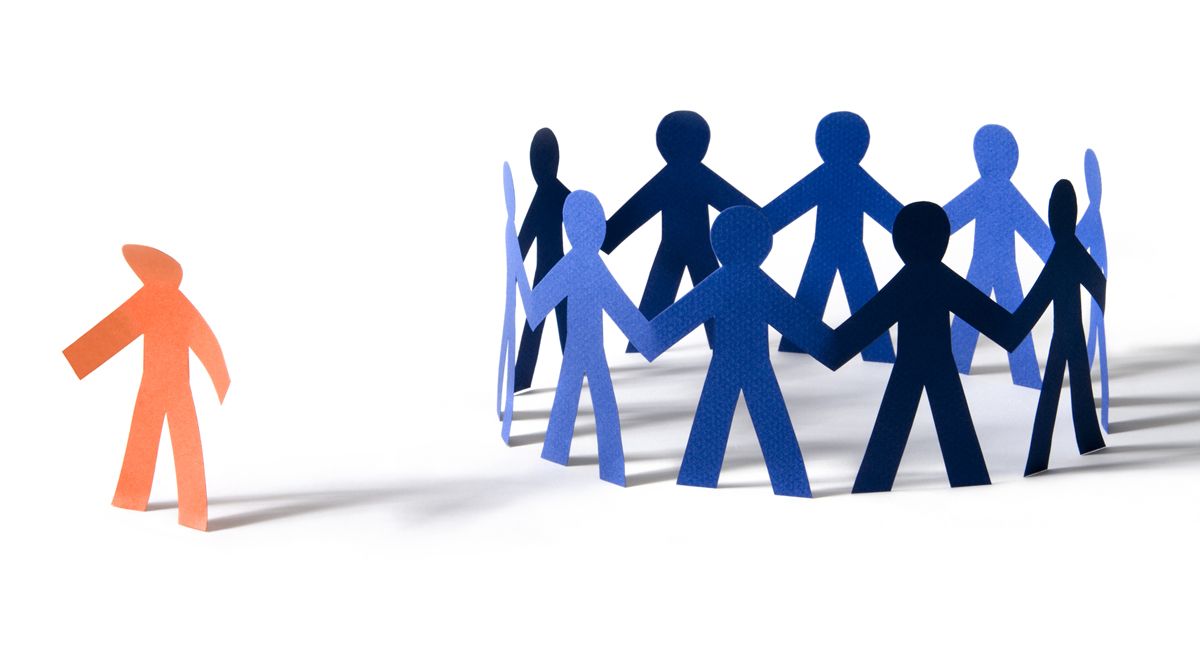
Celeste McGovern investigates the deadly effects of loneliness and how our social habits might add years to our lives
My phone rang on a sunny afternoon in the summer of 2020, and I saw it was my son calling from Alberta, Canada, 3,000 miles away. Normally cheerful and laid-back, he sounded agitated. After a few minutes he said, “Mum, do you remember the time you talked to the high school guidance counselor about me being suicidal?”
For a second, I thought—or hoped—it was a bizarre joke. No such thing had ever happened. He had been very well liked in high school, which was years earlier, and he’d never had any issues. He was never even melancholy, let alone suicidal, but always very grounded, easygoing and quite funny.
But he wasn’t joking. He was calling from a room where he’d been confined for weeks, isolated under strict lockdown protocols put in place by the government and zealously enforced by thoughtless officials.
He had been living at a college, working as a groundskeeper and part-time on one of the ski hills in the popular mountain resort town. I’d asked him to come home repeatedly, but he was young and optimistic that the lockdowns would end “any day.”
During the Covid pandemic, Alberta was supposedly freer than we were on the UK’s rural east coast, where there was absolutely nothing to do. He’d be back home with his parents and younger sisters with every gym, bar, cinema, mall and school closed and with no work prospects.
At that time, you needed to register with the government even to leave the province, and quarantine for two weeks if you came in. People were snitching to government hotlines if they saw extra cars parked in driveways.
My son sent me videos of elk and the mountain scenery from walks in the national park. He didn’t tell me that staff were segregating people when they ate downstairs and patrolling the grounds to prohibit socializing. Though he sounded impatient and bored, it was nothing unexpected, considering the absurdity of the situation.
This day he didn’t sound good, though. He whispered that he couldn’t shake the feeling that there were cameras watching his every move. I felt my stomach drop like a stone as I realized the isolation was warping his mind.
“Listen, you’re going to focus on packing your bags right now, okay, hon?” I said, trying to reassure him as I felt panic rising in my chest.
How could I be so stupid? I asked myself for the first time of a thousand that followed. Why hadn’t I seen this coming? How could they do this to people?
If I had only looked, a ton of research had already piled up about the dangers of isolation. Public health officials imposing the lockdowns knew about it. Studies have long shown that prolonged social deprivation can trigger severe psychological distress, including paranoia, hallucinations and cognitive distortions.
Among other methods, the animal model of human psychosis is created by isolating animals from their peers.1 Isolated rodents show alterations in neurotransmitter systems, including dopamine dysregulation, as well as neurochemical and pharmacological changes that mirror schizophrenia and other psychotic disorders.2
Research in both human and animal models shows social isolation alters brain function, particularly stress regulation and perception of reality. Individuals deprived of normal interaction exhibit increased activity in the brain’s threat detection centers, heightening paranoia and reinforcing delusional thought patterns.
The human brain is wired for connection, and when that connection is severed, the consequences can be devastating. As far back as 2011, United Nations Special Rapporteur Juan E. Mendez said solitary confinement is so psychologically damaging that it “cannot be justified for any reason, precisely because it imposes severe mental pain and suffering,” and it can only be construed as “torture.”
Recently, social isolation and loneliness have been making headlines, partially because the research has been pouring in about the pandemic fallout and because the problem of human loneliness, despite our hyperconnected digital world, isn’t going away.
Ironically, the same agencies that imposed stay-at-home orders with an iron fist (and might again without notice) now cite loneliness and social isolation as a “significant public health concern” with profound implications for physical, mental and societal well-being.
The World Health Organization (WHO), for example, currently has a Commission on Social Connection promising solutions such as “broad national policies” to get people more connected. In 2023, then–US President Joe Biden’s surgeon general, Vivek Murthy, issued an advisory about the “epidemic of loneliness.”
The WHO estimates one in four elderly people are socially isolated and 5–15 percent of adolescents feel lonely.3 Other polls are more pessimistic.
Gen Z (born approximately 1997–2012) spends more time in the digital world than any other generation, and their social life is dominated by platforms like TikTok, Snapchat and Instagram. They’ve been dubbed the “loneliest generation” due to rising levels of social isolation, declining in-person connections and mental health struggles.
They came of age during the pandemic measures that cut them off from key social experiences and opportunities, and they report feeling lonely more often than aging baby boomers. A 2023 poll found that 61 percent of Gen Zers said they felt lonely or isolated “often,” compared to just 36 percent of their grandparents’ generation.4
“Loneliness is far more than just a bad feeling—it harms both individual and societal health,” according to the US surgeon general’s advisory. “It is associated with a greater risk of cardiovascular disease, dementia, stroke, depression, anxiety and premature death.”
Murthy cited research showing social isolation is associated with 29 percent higher mortality. He compared loneliness to smoking up to 15 cigarettes a day, an even greater risk than that for obesity, lack of physical activity and poor air quality.5
Experts have known isolation and loneliness are deadly for half a century. A landmark study published in 1979 followed nearly 7,000 individuals for nine years and found the most isolated men, with weak or nonexistent social networks, were twice as likely to die within the study period than those with a strong social network, regardless of their previous state of health.
Lonely and isolated women fared even worse; they were almost three times more likely to die than their connected peers.
The impact of social ties was greater than the participants’ socioeconomic status, smoking and drinking habits, weight, physical activity levels and access to preventive healthcare. For staying alive, having meaningful friendships and loved ones mattered more than all these health factors.6
Since then, decades of research have confirmed the link. Actual or perceived loneliness raises the risk of death by 30 percent.
Those with weak or no social connections are about 30 percent more likely to have heart disease and stroke. They’re more susceptible to obesity and type 2 diabetes.7
We know now that isolation can weaken immune responses, leaving us more vulnerable to infections (which makes the abandonment of the at-risk elderly in nursing homes during the pandemic seem even more cruelly absurd).8
In 2022, UK and Chinese researchers published their study based on UK Biobank data from 462,619 individuals followed for about 12 years. They found social isolation came with a 26 percent higher risk of dementia and changes in brain structure, including lower gray matter volume in some brain regions.9
These same researchers followed up their study with new research that for the first time explains how isolation is linked to mental and physical health problems. It examined 2,920 blood proteins that might be playing a role in this pathology of social isolation.
Using UK Biobank data again, this time from 42,062 people, they investigated the link between the blood proteins and self-reported loneliness and social isolation. They reported the presence of five proteins (GFRA1, ADM, FABP4, TNFRSF10A and ASGR1) may result from isolation. These proteins have been implicated in inflammation as well as poor antiviral and immune responses in previous studies.
People who felt more lonely tended to have higher levels of these proteins than those who didn’t, and over the course of 14 years, the proteins were linked to heart disease, infections, diabetes, stroke and death.10
“Based on our findings, having good social relationships and not feeling lonely may promote health by reducing the levels of certain harmful proteins,” the researchers concluded in an article about their work.11
What’s increasingly clear from all this research is that connection to other people is critical to health and well-being.
“Decades of research have proven that connection is as essential as food and water, but this knowledge hasn’t yet made its way into the mainstream understanding of health—and without it, we’re suffering,” says Kasley Killam, author of The Art and Science of Connection: Why Social Health Is the Missing Key to Living Longer, Healthier, and Happier (HarperOne, 2024).
Killam points to figures showing that behind the loneliness epidemic is a society of people who are consciously or unconsciously pulling away from each other.
In the past two decades, the amount of time people spent alone increased by an average of 24 hours per month.5 Over the past 10 years, participation in communities such as churches, book clubs, sports leagues and neighborhood associations fell by nearly 20 percent.
Although women seem to have more trouble with social isolation, men are more isolated than they used to be. Thirty years ago, most men (55 percent) reported having at least six close friends. Today that number has been cut in half. Slightly more than one in four men (27 percent) have six or more close friends today, and 15 percent have no close friendships at all—five times more than in 1990.
A 2019 national survey (before the pandemic) was sadly telling: About half of US adults felt no one knows them very well.12
“You can’t be fully healthy if you don’t have a name to write down as your emergency contact,” says Killam.
But why are people disconnecting? And what can we do to curb the phenomenon and cultivate our own friendships and social connections?
Killam points to our modern “busyness,” the fact that more people at younger and younger ages feel rushed and pressured to earn money or achieve goals.
She points to a famous 1970s experiment in which 40 theology students were directed to a building to give a presentation either about the Good Samaritan (a biblical story about helping an ill stranger on the road) or about work opportunities. On the way to the presentation, the researchers had placed an actor posing as a sick homeless person, coughing and moaning.
Remarkably, whether the students were cued to the Good Samaritan story or not didn’t affect their response to the “homeless” man. Their time constraints did.
Of the 40 percent who did help in some way, only 10 percent were from the group that was told they were “running late,” compared to 45 percent of those who were “on time” and 63 percent of those who were in no hurry.13
Social connections are no longer on people’s radar, which is now crammed with the ever-increasing pressures of the day. “If you’re preoccupied with your tasks, you have less mental bandwidth to pay attention to the people around you, let alone connect with them in a meaningful way,” says Killam. “If you often or always feel busy, it’s worth pausing to ask yourself: What—or whom—are you so busy for?”
It takes time, and contact, to make friends. Dr Jeffrey Hall of Kansas University found it takes 40–60 hours of interaction within about three months to form a casual friendship, one in which you stick to surface-level conversation but do things together occasionally.
Ninety hours of contact with someone you like will lead to a moderately close relationship that allows for deep conversations. For a close or “best” friend, it takes an average of 200 hours together to gel.14
If your health and well-being depend on it, it’s a worthwhile investment of time that might be dawdled away on less precious things than the gift of friends.
Lots of studies have shown that spending quality time in person speeds up the formation of friendships. Activities such as sharing hobbies or meals and attending events together promote stronger bonds.
Not surprisingly, people who live together, like siblings or students in dorms, and those who travel somewhere new together (as in team training) or go through a bad experience together tend to bond faster. Distance does not make the heart grow fonder. It’s self-disclosure, laughter and shared experiences that build rapport more quickly.
Some people are more comfortable disclosing feelings or experiences online, and sharing vulnerable details helps friendship develop. But research shows digital interactions (texting, video calls, social media) usually take longer to develop closeness and trust than in-person interactions and are weaker.
That said, once an in-person friendship is established, texting can help bolster it so long as it’s punctuated with face-to-face get-togethers.15
In 2021, when the mental ravages of the pandemic were becoming too obvious to ignore, the UK’s Minister for Loneliness (Japan has one, too) announced millions in spending during Loneliness Awareness Week to combat isolation. In a typical government vein, this included sponsorship of a chatbot service from the tech giant WhatsApp and a partnership with the social media platform TikTok, billed as a community for “shared enjoyment and connection.”
Once again, the governments were out of step with the research showing apps and social media add to loneliness more than they alleviate it. Dozens of studies show that the more people scroll social media, the more likely they are to be depressed, anxious and lonely. One study reported teens spending more than five hours daily on digital devices are 70 percent more likely to have suicidal thoughts or actions than those who spend less than an hour a day.16
Conversely, cutting back on social media time has mental health benefits. Researchers at Iowa State University found college students limiting their social media usage to 30 minutes a day scored significantly lower for anxiety, depression, loneliness and “fear of missing out” than the control group.
They also scored higher for “positive affect,” the “tendency to experience positive emotions described with words such as ‘excited’ and ‘proud.’” In other words, they had a brighter outlook on life.
“It surprised me to find that participants’ well-being did not only improve in one dimension but in all of them,” said Ella Faulhaber, lead author of the 2023 paper.17
Even those who sometimes exceeded the 30-minute limit felt benefits. “The lesson here is, it’s not about being perfect but putting in effort, which makes a difference. I think self-limiting and paying attention are the secret ingredients, more so than the 30-minute benchmark,” says Faulhaber.
Participants in the Iowa study, like many people trying “digital detoxes,” said it was difficult to cut back on scrolling time for the first few days, but then they noticed they became more productive. Others said they were sleeping better and spending more time with people in person.
There may be a negative feedback loop with technology as well. A recent study found that people with weaker social connections were more likely to become addicted to their smartphones.18
Smartphone addiction then draws people away from real-life experiences, leaving them with fewer social connections. It becomes a vicious, lonely loop.
More friends and connections—a bigger network of people—makes for better social health and longer, happier years of life. But what does a happy social life look like?
In her book The Art and Science of Connection, Kalsey Killam says national survey data from Canada provides a good social guideline for those with the highest happiness index, which she calls her 5-3-1 guideline:
5. Connect with five people each week, be they family, coworkers or friends.
3. Maintain at least three close relationships in general. The people in your tightest circle might include a spouse, family and friends.
1. Spend at least one hour each day in engaging social time with someone. “Remember the principle ‘quality over quantity,’” says Killam. “A few minutes of meaningful connection may be more rewarding than a few hours around people you don’t particularly like or interacting superficially on social media.”
Don’t be shy about stretching the guidelines. The more you socialize with people, whether you’re inclined to at first or not, and the deeper your conversations, the happier you’re likely to be.
Despite the classification of solitary confinement as torture, during the pandemic, people supposedly concerned about public health zealously imposed similar conditions on millions of people globally.
My brother, a psychiatrist, was working at a large hospital in the southern US in 2020. “The Covid ward is nearly empty,” he told me on the phone, “but our wing is packed.
“There’s a lot of young kids in there in their 20s. Their schools shut down. Their plans are all on indefinite hold. They’re not working. They’re disconnected from friends. It’s a disaster.”
Psychiatric disorders1 and drug overdoses2 skyrocketed. Boston College researchers found anxiety and depression rates spiked to 39 percent and 32 percent, respectively, by November 2020—four times the 2019 rates.3
Research identified a rise in new-onset psychosis or mania cases during the initial phase of the pandemic, up 45.5 percent compared to 2019.4 Some individuals developed symptoms strikingly similar to those seen in solitary confinement studies.
People were shocked by stories like that of Hayden Hunstable, who hung himself in his bedroom during the Covid-19 lockdowns, three days before his 13th birthday. “He didn’t like the isolation. He didn’t like being at home,” said his heartbroken father, Brad Hunstable.5
Studies reported such cases weren’t rare. Global suicide and suicide attempts soared by tens of thousands during the pandemic due to quarantines, increased domestic violence, financial loss, depression and anxiety.6
Besides young people, the elderly also saw ill effects, such as long-lasting cognitive impairment.7
But the younger the adults, the more likely they were to suffer from mental ill-effects of stay-at-home measures. Gen Z (46 percent) was the most likely to say their mental health had worsened since before the pandemic, followed by Gen X (33 percent), millennials (31 percent), boomers (28 percent) and older adults (9 percent).8
Recent research has pointed to the microbiome as a mechanism to explain how social isolation can cause mental and physical illness.
One 2020 study showed people with larger social networks tended to have a more diverse collection of gut microbiota, which is favorable to overall health.1 Anxiety and stress are related to reduced diversity.
Considering the importance of social connection to health and happiness, it’s hardly surprising that research shows extroverts are happier.1
Introverts who naturally prefer solitude and quiet may feel drained by lengthy social interactions. But research shows just stepping out of their comfort zone to do something a natural extrovert would do—like signing up for dance lessons or a networking club—can generate a big mood boost. Pushing yourself to be more outgoing can improve emotional well-being, boost happiness and even reduce stress.
University of California researchers found that when introverts acted more extroverted—engaging in conversations, expressing enthusiasm and being more assertive—they experienced more positive emotions and life satisfaction. Doing so for just one week led to feeling happier and more energized.2
The connection between increased social interaction and oxytocin (the “love hormone”) release is well established. Socializing and positive social connections can stimulate oxytocin production, helping regulate stress and improve mood.
Like with exercise, it seems even if they don’t feel like doing something extroverted, introverts can feel the benefit of it. You’re more likely to act yourself into feeling than to feel yourself into action, as famed Harvard psychologist Jerome Bruner said.
Practicing extroversion may even help maintain brain function, which prevents cognitive decline as you age.3
If you’re introverted, you don’t need to become a social butterfly overnight. Start by initiating small conversations, joining group activities or spending more time with friends. Over time, these small steps can enhance both your mental and physical well-being, making you feel more connected, happier and healthier.
One excellent way to counter loneliness is to meet regularly with a small group. Jolanda Jetten, a social psychologist at the University of Exeter in the UK, has examined many social networks and discovered that the most well-adjusted first-year university students and those with the lowest rates of depression are those who belong to the most groups.
One great option is to join a Power of Eight® group, one of the intention groups launched by WDDTY editor Lynne McTaggart. To find out how to run such a group, check out Lynne’s book The Power of Eight: Harnessing the Miraculous Energies of a Small Group to Heal Others, Your Life, and the World (Atria Books, 2017), her website lynnemctaggart.com or her forthcoming course, Intention Essentials (learn more at lynnemctaggart.com/courses/intention-essentials).
What do you think? Start a conversation over on the... WDDTY Community

Great news! Discounts are available based on your cart total. Check the details below: