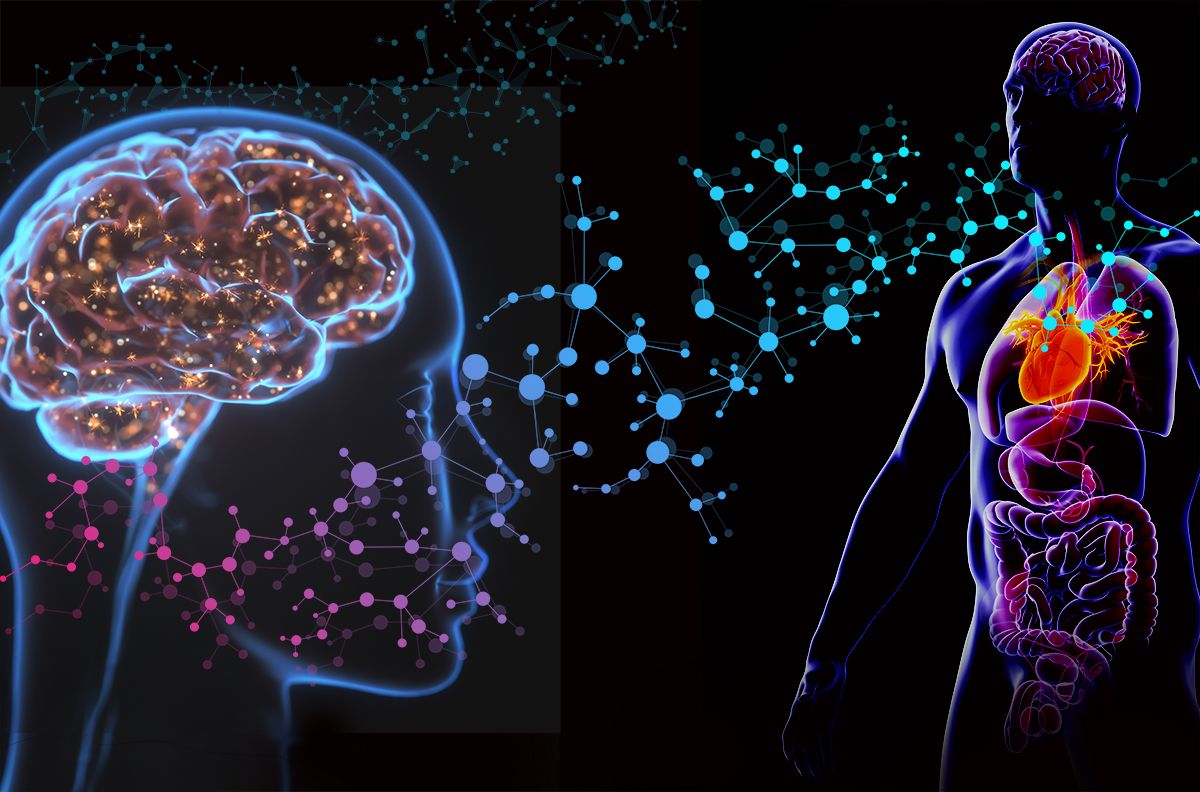
Dr Ryke Geerd Hamer offers a paradigm shift, a new understanding of what triggers disease and what fosters healing—a map that goes beyond the customary understanding of a mind-body-spirit connection. Cate Montana reports
German New Medicine (GNM) is not “medicine” per se. It’s a medical paradigm shift—a new view of why disease occurs and how we can heal. It’s off the charts in its amplification of our customary understanding of the mind-body-spirit connection.
And yet, its radical understanding of the source of illness as the “interplay between the psyche, the brain and the corresponding organ,” and of healing as the absolute responsibility (and capability) of the body itself, has triggered worldwide rejection of GNM and its founder, Dr Ryke Geerd Hamer, by the mainstream allopathic community.
A practicing physician specializing in internal medicine and oncology, Dr Hamer was also a professor at the Pedagogic Institute in Heidelberg and at the University Clinics of Tübingen and Heidelberg. In 1978, his 17-year-old son Dirk was accidentally shot and killed.
Shortly thereafter, both Dr Hamer and his wife, who was also a doctor, developed cancer. Instead of seeing this as a coincidence, Hamer began researching the connection between trauma and cancer.
Studying the cases of over 20,000 patients, Hamer found that 100 percent of the time he could connect the onset of cancer to an extreme shock to the system—a shock that consistently evidenced three characteristics: It was unexpected, it was emotionally disturbing, and it left the person isolated with no recourse or understanding of how to proceed.
In October 1981, Dr Hamer submitted his research to the University of Tübingen. Included in his findings was a new view of cancerous tumors as “emergency measures designed to save the organism” and not rogue cells bent on destroying the body, which is, of course, the standard view.
The university refused to investigate his findings, and he was fired from the clinic and forced into private practice. But the harassment continued. By 1989, his medical license had been revoked by a court order and he could no longer practice.
Despite the antipathy of the allopathic world, Hamer’s vision and research found alliances in the holistic and alternative healing communities. Many practitioners, such as Andi Locke Mears, MA, CHHP, CWHE (andilockemears.com), founder of Bio HealthWorks Institute in Black Mountain, North Carolina, were immediately drawn to German New Medicine.
Mears explains why: “It’s a biology-based natural science that’s beyond holistic medicine, providing a new and highly detailed gestalt of the human system, providing consultants and their patients with an understanding of health, illness, symptoms and healing as they occur.”
A holistic health practitioner for over 25 years, well versed in the connection between emotional issues and disease, Mears talks about the differences between the holistic outlook and GNM. “This is not mind-body-spirit medicine,” she says.
“It’s an entirely new perspective that is psyche, brain and organ. When you’re in the mind-body-spirit world of medicine, you’re often looking at symptoms as a spiritual ‘lesson’ guiding you toward something that needs to be learned. You’re also looking at the emotions in terms of emotions causing disease.”
GNM, on the other hand, understands the psyche, brain and organs as essentially one organism. As Dr Hamer put it, “The differentiation between the psyche, the brain and the body is purely academic. In reality, they are one.”
This oneness is evidenced by Dr Hamer’s research analyzing thousands of patients’ brain CT scans (computer tomograms), which revealed that a shock meeting the three criteria stated above always produced a circular lesion in the brain. The lesion, called a Hamer Focus, was always in an area of the brain related to the nature of the trauma itself.
For example, a severe accident could trigger survival fear (fear of death), which showed up as a small lesion in the medulla of the brain stem. The medulla regulates basic life functions critical to survival, such as breathing, heartbeat, blood pressure and swallowing.
As a further example of the oneness, if the conflict was left unresolved, tissue adaptation would take place in an organ or region of the body related to the area of the brain in which the lesion occurred. In the above scenario, for example, a survival trauma related to the medulla might result in tissue adaptation and cell proliferation in the lungs, heart or throat.
“It’s a situation where the immediate unconscious terror of ‘I’m going to die. Oh, my God, I’m going to die,’ triggers the lesion, which immediately starts cells growing in your lungs so you can better process air. Because without air, we die,” says Mears.
So why does tissue adaptation in the form of cell proliferation (such as cancer) continue and not stop when the emergency is over? Hamer realized it’s because of the unresolvable nature of the trauma itself.
Until the psyche can perceive a way forward, the body remains locked in what he called the “conflict-active” phase—the point at which the body has given the emergency “green light” to tissue adaptation in the organ related to the area of the brain where the lesion occurs.
Not until the conflict has been resolved can the body safely move into what Hamer called the “resolution phase,” when healing can begin. At this point, the body begins to break down any cell accretion that occurred, which is often accompanied by symptoms of pain, swelling and inflammation.
If cells were lost during the conflict-active phase, as in an ulcer or necrosis, the body begins to replenish them in the resolution phase. If organ function was lost or compromised during that period, it begins to function again.
“This is what we call ‘being sick,'” says Mears. “Having symptoms is part of resolution.”
Dr Hamer found that all diseases follow five biological laws, which explain how the body works through trauma and why symptoms occur (see below). The two phases and five biological laws lead to a completely different view of what we call illness.
Colon cancer
Colon cancer in GNM is considered an “indigestible morsel” issue. This means the trauma experienced is symbolically something the patient simply “can’t swallow.”
In the conflict-active stage, cells proliferate in the intestinal tract to help the body facilitate digestion. They continue to proliferate in response to the unresolved conflict and remain in the active phase until the patient resolves the conflict.
“That’s usually when you get other symptoms, like pain and inflammation and diarrhea, things like that,” says Abigail Puccioni, a GNM practitioner in Columbus, Ohio (abigailpuccioni.com). “This is the body utilizing microbes and bacteria to help the process of breaking down the additional cells that grew that are no longer needed.
“Unfortunately, this kind of bacterial overgrowth means you might get diagnosed with something like SIBO (small intestinal bacterial overgrowth), and many doctors will put you on an antimicrobial protocol that can actually retard the healing phase of the cancer.”
From the GNM perspective, the proliferating bacteria are technically causing the symptoms, but they’re at the worksite for a reason. They’re getting instructions from the brain to do the repair work that will restore the digestive tract to normality.
Gluten allergy
Here we have another obvious “indigestible morsel” issue affecting the gastrointestinal tract. For example, perhaps the patient is a six-year-old boy. While eating a peanut butter sandwich in the kitchen one day, he overhears his parents having a violent argument in the living room.
He feels caught off guard and emotionally isolated in that moment. It’s extremely distressing to his psyche, which perceives this specific event as emotionally indigestible. From this point on, every time he eats a sandwich with bread that has gluten in it, he gets an allergic reaction.
“Why did he perceive that fight as an indigestible morsel conflict?” asks Puccioni. “Why is it the gluten that reactivates the conflict? Well, here’s where we get into some holes in GNM.
“We know it has something to do with how his perception was primed to experience the world around him. A different child would perhaps not have had any issue at all with this experience.
“We also don’t know why it’s the gluten protein in the sandwich that gets trapped as a subconscious red flag. For someone else, it might end up being the peanuts that trigger symptoms.”
Gluten is one track the psyche and body follow. But continuing to see his parents argue would also be another track and a very obvious reactivation of the original shocking conflict. Which is why, when little Johnny grows up and goes to college, his symptoms get better and he can eat gluten all he wants because he’s not living with his parents anymore.
But then, 12 years later, he gets married and starts experiencing fights with his partner. Boom, the gluten allergy program gets reactivated. And it stays activated until the original issue is resolved through practical steps, like marital counseling to reduce or eliminate the fights—as well as recognition of the original trauma with his parents.
Eczema
In GNM, skin conditions like eczema are related to a “separation conflict”—either wanting to separate from something or someone, or not wanting to separate and instead wanting to be close. Bottom line, eczema is about human connection and social interactions.
As an adaptation, eczema produces cell loss and/or cell ulceration in the conflict-active phase in an attempt to numb the place of connection where you lost someone and numb the pain of separation. Or it can be the opposite, numbing the pain of having to endure contact with someone you want to push away.
Either way, skin conditions like eczema are the body’s attempts to numb the epidermal layer of skin so that the patient cannot feel as well. Interestingly, eczema can also be accompanied by brain fog or short-term memory loss, which is another attempt by the brain to achieve distance from the original shock during the conflict-active phase.
Let’s say at age seven, Jane was sent away to boarding school. She’s suffered from terrible eczema ever since. From the GNM point of view, a practical and direct solution is not cortisone shots but a move back home to attend a day school so she can live with her parents once again.
But let’s say Jane is now in her 30s and still plagued with skin problems. “There needs to be a perceptual resolution,” says Puccioni. “How can she shift things in her psyche so that she’s no longer eligible for that type of conflict?
“Chances are Mom is living in a different city, and she has no conscious desire to move back near her. So, how about a Zoom call with Mom once a week?
“For some people, maybe that’s enough. And for others, perhaps it’s not. This is why finding solutions can be an issue of trial and error, trying different things.”
The common cold
“If you’ve had a common cold, then you’ve had a conflict shock,” says GNM practitioner Andi Mears. “You had a loss of cells in your nasal mucosa because you experienced some sort of annoyance conflict or sense of danger conflict.
“You lost cells, and the purpose of that was to widen the olfactory area so you could better smell danger. Think of animals in the woods. They smell danger, and we’re built just like they are. So, the body’s program is creating wider areas to breathe in the air so we can better sense that danger.”
According to GNM, once the conflict is resolved, cold-like symptoms result as the original tissue adaptation to the conflict is healed.
So far, Hamer’s discoveries have been hotly contested by mainstream medical authorities, and no clinical studies have been done to validate his work. As well, although Hamer is reputed to have accurately read the health histories of thousands of patients by examining their CT scans alone, there are no clinical studies showing a definitive relationship between trauma and lesions in the brain.
However, researchers have begun to recommend broadening the definition of traumatic brain injury to include both physical and emotional trauma as sources of brain injury.1 Lesion analysis is also being considered as a new way to understand neurologic function and disease.2
Articles examining how traumatic events may physically change our brains are entering mainstream medical news as well. For example, they’re sharing statements like “Knowing what to look for in the brain when someone is exposed to trauma could significantly advance treatments.”3
That statement is a quote from neurology researcher Benjamin Suarez-Jimenez, a member of a team at the University of Rochester that recently found differences in the brain function of people who had suffered trauma. The team also noted that emotion affected brain function.4
But, given the prevalence of trauma—including traumas exhibiting all three of Hamer’s criteria for conflict in the human organism—and given the millions of CT scans done every year worldwide, why has no one noticed lesions with concentric rings?
“They’re there,” says Mears. “But radiologists don’t know how to read them correctly. They’re visible in everyone’s CT. But a cranial CT without contrast is what we are looking at. And you have to be taught how to find these lesions.”
Another reason GNM has been slow to gain traction is that it requires intense self-honesty and a willingness to examine one’s most difficult life experiences, thoughts, feelings and motivations. This is how a person can discover the original shock and uncover the emotional tracks and associations that are perpetuating the conflict-active phase.
“It’s all about taking radical personal responsibility for your health,” says Puccioni. “And that’s really frustrating sometimes. But it’s also one of the beautiful things about GNM. There’s no one coming to save you.
“I can’t save anyone. I’m not clearing your trapped emotions or anything like that. And there’s nothing that I do, modality wise. If a client wants to follow some sort of health modality, the person has to decide what they most believe in, what they most feel supported by, and then go for that.”
Which brings up yet another serious controversy around GNM. “Old world medicine,” as Dr Hamer called it, focuses on finding the pill, surgery or therapy that will make diseases and symptoms go away. And holistic and alternative practitioners take the same approach, prescribing things like nutritional therapy, Reiki, homeopathy, chiropractic and acupuncture.
Dr Hamer’s therapeutic approach was to “trust the body’s intelligence and let it do what it does best and heal itself.” His research clearly showed him that once the resolution phase was engaged, the body would heal itself in about 90 percent of cases.
To this day, the closest adherents to GNM use the same purist approach and rigorously oppose using additional therapies. On the other hand, many holistic practitioners using GNM find this stance too limiting.
“Because of my nutritional background and work with mineral balancing, I’m biased in that direction,” says Brianne Campbell, a nutrition expert and GNM practitioner in Ohio. “Because if somebody has a calcium shell or they’re really imbalanced in their minerals, they’re pretty numbed out. Which means accurate self-reflection is difficult. So, helping them balance out their minerals is one of the ways I help clients get to that position.”
That said, pretty much everybody agrees that living a healthy lifestyle and working to become the best versions of ourselves in every area of our lives is the ticket to staying healthy and avoiding trauma in the first place.
“When we’re working on pursuing what brings us joy,” says Puccioni, “when we’re eating healthy foods that make us feel good and strong, and we’re getting a good amount of movement and not just laying around on the couch all day, scrolling on Instagram, we’re in a more resilient place to handle the conflicts that might pop up in our life. And that’s the place we want to be.”
Brianne Campbell, California
Brianne had gone through most of her life with heartburn, acid reflux and a lot of pain around her liver. Eventually she was tested for H. pylori, but the results were negligible.
She had an endoscopy, which confirmed she had acid reflux. And she was told she had gluten intolerance.
For seven years she went gluten-free, and that helped ease her symptoms. But then she got married and things flared up again.
Eventually she found her way to Abigail Puccioni, who, after asking questions about her life story, told her she was dealing with a “territorial anger conflict” that had started due to issues with her mother.
“My mom wanted to get an abortion when she was carrying me,” says Brianne. “After I was born, I mostly stayed with my dad, and my brother and sister were taken under my mom’s wing. “So, I had a lot of conflict with my mom, especially around territory—my personal inner territory—because I felt that I was not wanted, cared for or loved the way that I was with my dad. I had to fight for my position in the household.”
As it turns out, her husband subconsciously reminded her of her mom because she had to fight for her position and for safety in her household. “My husband’s a wedding photographer with a drinking issue. He would go do a wedding and then drink and then come home.
“And every time he would go, I would be conflict-active with really bad heartburn, acid reflux and pain in my liver, because anytime there’s a threat to my sense of safety or security, that is my go-to program. His drinking was a real issue for me, just like it was with my mom.”
For Brianne the awareness, the understanding that she felt very unheard, ignored and misunderstood by both her mother and her husband, was almost all she needed for resolution to occur. As a practical solution, she ended up going back to work with her husband.
“We’re both wedding photographers, but when I had babies, for five years, I was no longer able to do that. Working with my husband again, I don’t have to wait at home for him and worry that something is happening. And the everyday heartburn and GERD is gone.”
Marcy Bowman, Ohio
Marcy was never comfortable getting a mammogram, so she always depended on thermographic imaging. This last February, the images came back showing a hot spot on her left breast. The second step, which was an ultrasound, revealed a lump.
“There had always been an issue with that breast,” Marcy says. “It always just felt like a spot there sometimes hurt really bad. It would go away and it would come back. So, I wasn’t too surprised at the location.”
She had been learning about GNM from Abigail Puccioni and immediately booked an appointment. Very quickly it was established that her breast issue had to do with unresolved issues and guilt surrounding her relationship with her ex-husband.
“Abigail suggested that I call him and say the things that I needed to say,” Marcy says. “But that just felt impossible and even more traumatic. So, I wrote this lengthy letter and read the letter out loud as if I was reading it to him.”
After burning the letter, she also had a long talk with her current husband about what had happened in her first marriage. And she opened up to a longtime friend, disclosing everything.
“After sharing with Abigail, my current husband, and my friend, I instantly felt like I lost about 25 pounds. It felt like I had come clean. By May, that lump in my breast was totally gone.”
Hamer discovered five biological laws that govern how the psyche, brain and body are involved in disease and healing. These laws are at the foundation of GNM.
First biological law
Every disease begins with an event that is simultaneously unexpected and shocking, dramatic (highly emotional) and isolating. You can’t talk about it, there is no support and you don’t know what to do.
The shock immediately affects the person’s psyche, impacting the brain in a way that causes a lesion visible on a brain scan as a set of sharp concentric rings. The nature of the conflict determines the location of the impact in the brain and the corresponding organ in the body that manifests symptoms.
Second biological law
All diseases have two phases: The conflict-active phase and the healing phase, which begins once the conflict is resolved.
Third biological law
The development and behavior of tumors and cancer-equivalent diseases are determined by the embryonic germ layer from which the affected organ originates. Each germ layer (endoderm, mesoderm, ectoderm) is associated with specific types of conflicts and corresponding organ responses.
Fourth biological law
Microbes such as bacteria and viruses are part of the “repair crew” that helps tissues heal during the healing phase that follows conflict resolution.
Fifth biological law
This law, also called the “quintessence,” states that disease is not accidental and random but an essential and meaningful aspect of biological processes. What we label “disease” and “symptoms” are actually part of the body’s intelligent response to restore balance and homeostasis.
Another “law” in GNM is not stated as one of the five main laws but is still accepted as such: a right-handed person responds to conflicts involving their mother and/or children with the left side of the body (that’s where symptoms appear). They respond to all other types of conflict (say, with a spouse or partner) with the right side of the body. For people who are left-handed, this situation is reversed.
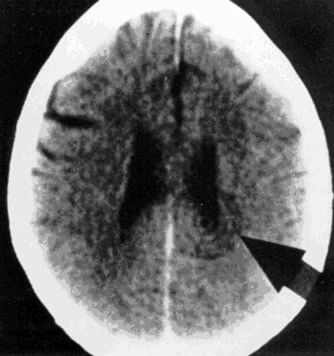
A Hamer focus appears as a set of concentric rings on a CT scan of the brain, as shown by the arrow in this image. The center of the rings occurs in the area of the brain that controls the organ or body part related to the conflict.
Here are some resources for finding a GNM practitioner near you.
US
Germanic Healing Knowledge Global
ghkglobal.org
Click on the “Find a consultant” tab to find a GNM practitioner in the US by state. Practitioners in Canada, Australia and Asia are also listed.
UK
GNM Institute
gnminstitute.com
Click on the “Enroll” tab, then “Work with a certified GNM clinician” to find a list of practitioners in the UK, US, Canada and Australia who have successfully completed the GNM Institute’s Certified Clinician Program.
There are two listings for the UK:
Richard Laker
gnmtherapy.co.uk; theforbesclinic.co.uk
Agustina Plos
naturalezasagrada.com
What do you think? Start a conversation over on the... WDDTY Community

Great news! Discounts are available based on your cart total. Check the details below: