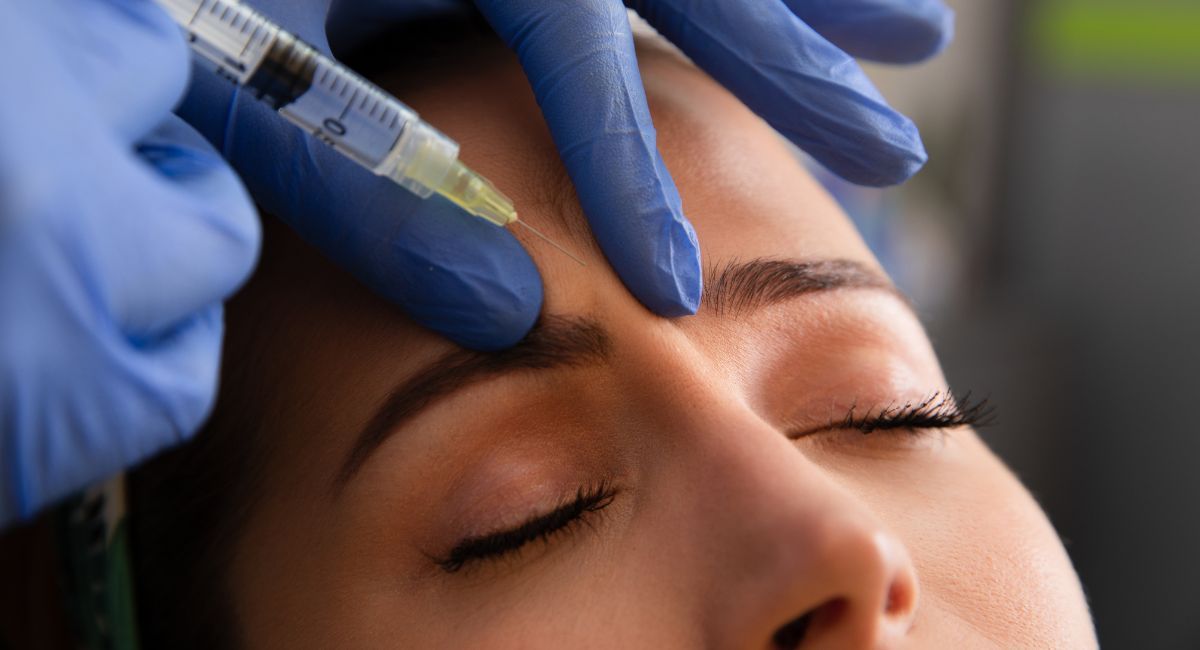
Everyone seems to be opting for a Botox “tweakment”—but nobody is being told about the adverse reactions that can sometimes be life-threatening
Think botulism, and you probably conjure up images of a nasty bout of food poisoning. Up to 20 years ago, contaminated food was the only way you’d get poisoned by botulinum toxin—but today there’s a new type, iatrogenic botulism, or doctor-induced poisoning, and it’s caused by the explosion in Botox beauty treatments.
The market for Botox—an injectable that harnesses Clostridium botulinum type A—is predicted to triple in size in the US by 2036, while worldwide revenues are anticipated to top $30 billion. Celebrities and non-celebrities alike are using it to create a younger, wrinkle-free face and other parts of the body.
The young, pressured by social media, are also turning to it; between 2019 and 2022, the use of Botox in women still in their 20s rose 71 percent. And it’s not just for the girls: In 2024, 1.6 million American men also had a tweakment or two.
Botox is also a medical therapy to treat severe migraine, excessive sweating (hyperhidrosis), bruxism, overactive bladder, muscle spasms and eye twitching. Doctors have been using it extensively since the 1970s to treat eye problems such as strabismus (eye misalignment) as an alternative to surgery.
As C. botulinum is one of the most potent toxins in existence—one 1 g can of the aerosolized toxin can be used as a bioweapon with the capacity to kill up to 1.5 million people—what could possibly go wrong? Quite a lot, it seems.
Its rising use is causing a host of reactions that emergency doctors aren’t recognizing. Patients have been left paralyzed, some permanently, and yet are feeling dismissed, minimized or completely unprepared for the possibility of systemic reactions and prolonged complications following what are often described as “routine” procedures.
Their distressing stories are related on social media groups such as NeverTox, also known as Botox Dysport Side Effects, which has nearly 145,000 followers on Instagram. Botox and Dysport both use botulinum toxin type A. The group reckons that around 44,000 adverse reactions to therapies have been reported to US drug watchdogs since 2002, when Botox was approved by the Food and Drug Administration (FDA) for cosmetic treatments.
Doctors are slowly waking up to the phenomenon. Emergency service doctors warn that hospitals are not prepared to deal with serious adverse reactions to Botox beauty treatments. Very few hospitals even stock the most effective drug, the antitoxin Heptavalent, to counter botulinum poisoning, and doctors have not been trained to identify cases, one review warns.1
Cases of life-threatening food poisoning are rare—only 13 cases were reported in the UK from 2010 to 2024.2 But reactions to Botox beauty treatments are on the rise. There were 41 cases of iatrogenic botulism reported in the UK between June and August 2025, caused by cosmetic injections.3
Reactions to Botox beauty treatments fall into two categories: benign and transitory, or serious, say researchers from Poznan University of Medical Sciences in Poland.
Benign ones are short-lived, usually happen around the area where the injection was given, and include bruising, headache, pain and swelling (edema). Bruising happens in up to a quarter of cases, and more serious cases—called hematoma—should be treated with pressure and ice packs immediately after injection.
Serious reactions to Botox beauty treatments, which are life-threatening or disabling, are rare. They are 33 times more common in therapeutic treatments, such as for joint pain, migraine and facial spasm, since these use four times as much botulinum toxin.4
Despite this, serious reactions to beauty treatments are on the rise. As early as 2005, just three years after Botox was approved as a beauty treatment, 36 serious adverse events were reported in the US, including dysphagia (swallowing difficulties), muscle weakness and allergic reactions.
Dysphagia and muscle weakness are far more common than the figures suggest, the Polish researchers say, especially after treatments to remove neck wrinkles. Higher doses of 50 units and more are used to remove lines around the neck, and a combination of an older patient and a higher dose increases the risk of a life-threatening reaction.
Botulinum toxins can spread as far as 45 mm (1.7 inches) from the injection site and into other muscles. Neck muscles are especially prone to damage—poisoning can cause dysphonia (vocal problems, including hoarseness), dysphagia or dystonia (muscle contractions).
The reactions aren’t always immediate. Dysphagia can happen 10 days after the treatment and can last for more than three weeks. But botulism poisoning can occur even years later, especially after multiple injections, and the tipping point seems to be around the 11th injection, even if there hadn’t been any reactions before that.
Muscle weakness is one of the most common reactions, and it can recur even a year after treatment. Weakness is a term that can hide an array of reactions, some life-threatening, including paralysis and respiratory arrest, when breathing suddenly stops.
Early warning signs of a serious reaction include severe and long-lasting headache and fatigue, which can affect 1 percent of patients. Severe anaphylactic shock is also a remote possibility, and antibodies can develop in up to 10 percent of patients who have repeated treatments.
Botox beauty treatment is a booming business and is set to grow exponentially over the next decade. It’s relatively safe, but factors such as age, dosage and frequency of treatments contribute to the risk of a dangerous reaction.
Critics, including followers of the NeverTox social media group, are worried that manufacturers and cosmetic surgeons don’t even want to acknowledge the dangers. When an industry expands this rapidly, conversations about adverse events, informed consent, long-term outcomes and patient safety should expand too—but they aren’t.
Botox (botulinum toxin A) evolved from a deadly bacterial poison discovered in the 19th century into a mainstream cosmetic and therapeutic treatment. Originally identified in the 1890s, the toxin was developed in the 1970s to treat eye muscle disorders before accidental discovery of its anti-wrinkle effects led to FDA approval for cosmetic use in 2002.
Belgian professor Emile van Ermengem was the first to isolate C. botulinum, the bacterium that produces the toxin, in the 1890s after an outbreak of food poisoning. However, German physician Justinus Kerner had noticed years earlier that the toxin could paralyze muscles and so might be used as a therapy.
But nothing much happened until the 1970s, when ophthalmologist Dr Alan B. Scott injected monkeys—and later, humans—to treat strabismus, or misaligned eyes. The FDA approved the toxin, branded as Oculinum, in 1989.
But the crow’s feet around patients’ eyes also disappeared when they were given Oculinum, and two Canadian ophthalmologists, Jean and Alastair Carruthers, saw its potential as a beauty aid. They published their results in the 1990s, inspiring off-label use, and in 2002 the FDA approved the injection for the temporary improvement of frown lines.
Botulism poisoning comes in four varieties.
If you’re looking for natural alternatives to Botox, there are plenty of safe, simple ways to support healthier skin and help slow visible signs of aging.
Protect skin from the sun. Sun exposure is vital for health, but it’s also the number one cause of skin aging. So protecting your facial skin with a hat or daily nontoxic sunscreen is an important first step.
Eat well. Aim to eat a balanced, colorful, whole-food diet as free of processed foods as possible. Especially include foods rich in antioxidants, healthy fats and vitamin C. And drink plenty of water to keep your skin hydrated.
Destress. Stress can have an aging effect, so consider stress-reduction techniques such as meditation and yoga.
Prioritize sleep. Good-quality sleep (seven to nine hours a night) may help maintain skin barrier function and support skin health.
Try cosmetic acupuncture. The use of acupuncture on the head, face and neck to improve appearance is fast becoming a popular anti-aging technique, with fewer side effects.
Choose the right skincare. Opt for all-natural formulas packed with antioxidants, free-radical fighters that can reduce inflammation, stimulate collagen production and repair sun damage. Some science-backed ingredients to look out for are coenzyme Q10 and vitamins C, B3 (niacinamide) and E.
Also consider peptides, portions of proteins that can imitate a sequence of molecules such as collagen or elastin. Applying them to the skin can stimulate collagen synthesis and activate skin metabolism.
Supplement with antioxidants. Taking antioxidant supplements like astaxanthin and vitamin C may help improve signs of skin aging, like skin elasticity and fine lines. Or opt for a high-quality multi-antioxidant formula, such as Pharma Nord’s Evelle.
What do you think? Start a conversation over on the... WDDTY Community

Great news! Discounts are available based on your cart total. Check the details below: