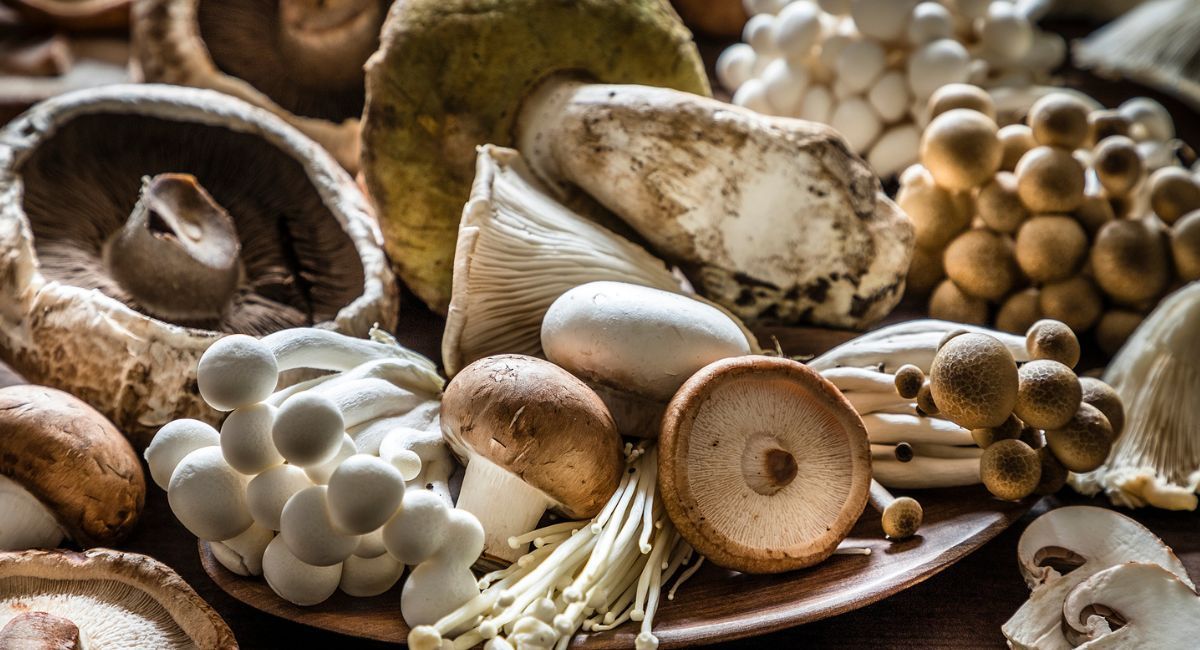
If we eat mushrooms at all, they’re probably the button variety. But get off the beaten track, and you’ll discover many other types that deliver powerful boosts to our physical and mental health, says Bryan Hubbard
We’ve been eating mushrooms for thousands of years. They’re full of antioxidants and a rich source of vitamin D, making them an essential ingredient during the long winter days.
Most of us eat button mushrooms, the most common variety found in supermarkets. But there’s more to mushrooms than buttons, and their health-giving properties are being harnessed by functional and nutritional medicine, which encourages the use of mushroom supplements and even coffees. One type, psilocybin mushrooms—better known as magic mushrooms—is being used in microdoses to ease depression and anxiety.
When it comes to mushrooms, you can’t go far wrong, as all have some health benefit, from balancing blood sugar levels to supporting the immune system and boosting energy. Here are the top seven medicinal mushrooms, according to Real Mushrooms (realmushrooms.com).
Hericium erinaceus
The mushroom for the mind
The key ingredients in lion’s mane are compounds like beta-glucans that protect the brain and nerves. People with mild memory problems saw an improvement when they regularly ate the mushroom, and they fared better in memory tests than those who didn’t eat them. Traditional Chinese Medicine (TCM), which calls it hou tou gu (monkey head mushroom), uses it to improve spleen function and digestion.
Ganoderma lingzhi
The mushroom of immortality
The polysaccharides in reishi mushrooms support the immune system and help improve sleep and reduce anxiety and restlessness. They can even enhance lung and respiratory health and balance blood sugar levels. Reishi’s use in the East has been documented for over 2,000 years; for instance, Chinese royalty used it to promote longevity, describing it as the “mushroom of immortality.”
Cordyceps militaris
The caterpillar fungus
If you’re low on energy, Cordyceps is the mushroom for you. In animal studies, it boosts ATP, the compound that energizes our cells. In human trials, it improves exercise levels in older people. If you’re looking to start a family, Cordyceps improves sperm quality and counts and increases libido. One variety is the most expensive mushroom in the world: Cordyceps sinensis costs more than $8,000 (£6,300) a pound, and it’s a rare combination of a caterpillar and a mushroom. Fortunately, the militaris variety isn’t so rare or expensive.
Inonotus obliquus
More canker than mushroom
Chaga is one of the most widely researched mushrooms for its abilities to treat skin and stomach disorders. It’s rich in antioxidants that support our digestion and immune system, and it controls inflammation. Unlike most mushrooms, chaga hasn’t been adopted in the East, but Russians recognized its value in the 16th century and used it as a tea to help with digestion. In fact, it’s not a mushroom at all but a canker that grows on birch trees in the cold far North.
Trametes versicolor
Our T-cells’ best friend
If you really want to boost your immune system’s killer responses, turkey tail should be on your shopping list. Of all the mushrooms, turkey tail is the immune system’s best friend, promoting the function of our killer T-cells. TCM takes a slightly different view of turkey tail, using it to support digestion, lung health, body fluid regulation and vitality.
Lentinula edodes
The popular elixir
Who doesn’t like shiitake mushrooms, probably the best known of all the medicinal mushrooms? It’s good for the immune system, supports the liver and protects the cardiovascular system. In particular, it can also keep our cholesterol levels in check. The Chinese call it the “fragrant mushroom,” and the Ming Dynasty described it as “the elixir of life.”
Grifola frondosa
The immune booster
Maitake offers similar benefits to turkey tail mushrooms, but perhaps with a little less potency. It supports immune function by stimulating the immune system’s natural killer cells, monocytes and T-helper cells. If you’ve heard of maitake mushrooms, it’s probably down to the research of Dr Hiroaki Nanba, who in the 1990s isolated their polysaccharides as immune boosters.
What do you think? Start a conversation over on the... WDDTY Community

Great news! Discounts are available based on your cart total. Check the details below: