During a retreat that we were running in converted monasteries in Spain in 2019, I had a conversation with two American doctors, a husband-and-wife team, that has stayed with me.
“Don’t believe any DEXA tests you’re given—they’re going to show you have osteoporosis,” the woman doctor told me. “My test showed that I have osteoporosis, and it does for every thin woman out there.
“The problem isn’t the women, it’s the test,” she added. “It’s inherently inaccurate, particularly for women of your size.”
Now, she wasn’t a big woman, and I’m not either. I’m about five foot six and have always been pretty slim, which makes me a prime candidate for an inaccurate test, said the doctor.
Shortly after I met her, I had to go for the DEXA test and, sure enough, the result had me as borderline osteoporotic. There isn’t osteoporosis in my family. In fact, my mother, who was about five feet tall and ate a poor, sugar-laden diet, broke one of the vertebrae in her spine in a boating accident after menopause. The bones knitted back together beautifully and never gave her any trouble thereafter.
I’m not minimizing osteoporosis. It’s a terrible disease affecting some 200 million people worldwide. The UK’s Royal Osteoporosis Society claims that one in three women and one in five men will suffer an osteoporotic fracture in their lifetimes, so clearly we need to take care of our bones, figure out why they’re so delicate, and finger the foods and the particular lack of activity that cause them to give way too early.
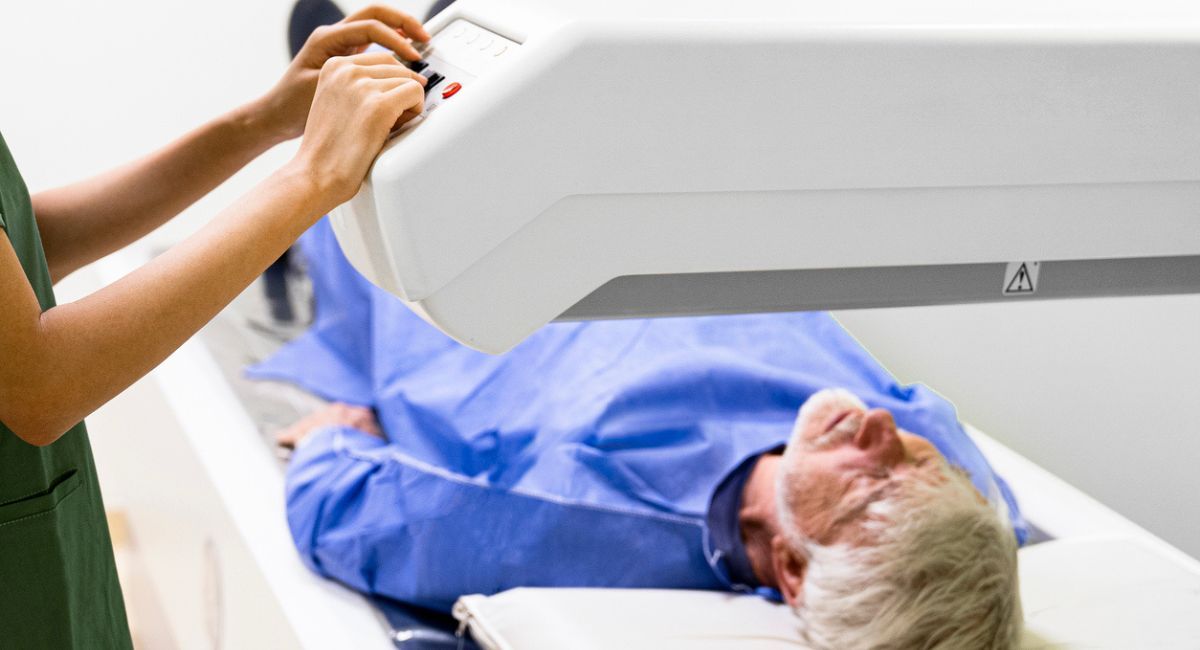
The so-called gold standard for determining whether someone has potentially serious bone loss is a DEXA scan, which stands for dual-energy x-ray absorptiometry. It works by having the patient lie on his or her back while two x-ray beams scan the body part in question (usually the spine and hips), after which operators measure the amount of x-rays that are absorbed by the bone.
DEXA is now used for any suspicion of bone loss: to diagnose osteoporosis, monitor bone loss over time, assess fracture risk and even measure your body composition, or the percentages of your body made up of muscle, fat and bone mass.
Medicine continues to argue for the accuracy of DEXA, but decades ago, the late Herbert H. Bolotin begged to disagree. An award-winning professor of physics at the University of Melbourne, Bolotin was renowned for his groundbreaking work on nuclear structure (the arrangement and interaction of protons and neutrons in the nucleus of an atom) but also on bone densitometry (tests that reveal the density of bones).
In the early 2000s, he argued that DEXA scans were highly inaccurate. In 2001, he published an explosive paper in the scientific journal Bone arguing that the DEXA test had built-in inaccuracies leading to measurement errors that could be as high as 20 percent. And the most common inaccuracies occur in older adults, postmenopausal women and people with low bone density—in other words, the very people who are at highest risk of osteoporosis.1
The problem with the test, he said, is that DEXA also picks up the type and amount of soft tissue, like fat and muscle, that lies around the bones. People of very different shapes and sizes can get very different bone density readings, even if their bone density is comparable. And changing your body composition—for instance, losing weight or working out to improve your muscle mass and strength—can also create big changes in the test, even if your bones don’t change.
For years, after noticing that DEXA tests showed some correlation between a patient’s weight and amount of fat and bone density, doctors and medical researchers simply assumed that bigger and heavier people naturally had stronger bones. But Bolotin argued that this correlation was false—a result of DEXA’s measurement errors rather than any inherent difference in biology.
Aside from the problems with using the test to diagnose bone loss or osteoporosis, there are also problems with using DEXA to monitor whether antiresorptive drugs like Fosamax (alendronate), used to treat osteoporosis, are working well enough. Bolotin argued that any changes in body fat or muscle would also affect the test results, leading doctors to believe the drugs were working better than they actually were.
This means, of course, that all the studies measuring the effectiveness of particular drugs in battling osteoporosis may also have been inaccurate; any one of these osteoporosis drugs probably worked far less effectively than the studies showed. It may even mean osteoporosis isn’t quite the epidemic we’re told it is.
Calling DEXA “a contaminated and false measure of bone mineral areal density,” Bolotin argued that doctors should be cautious about using the DEXA test for anything, whether diagnosing osteoporosis, judging bone health or even evaluating whether a treatment is working.
It’s time to look to alternatives, such as radiofrequency echographic multi spectrometry (REMS), an ultrasound tool that has been shown to have higher accuracy than DEXA and with the added bonus of not using radiation.
Initial results inspire optimism, showing it’s more specific than DEXA. However, studies rate its measurements as 91 percent accurate—REMS still gets it wrong nearly 10 percent of the time.
How reliable is it? As the Buddha once observed, “We’ll see.”
What do you think? Start a conversation over on the... WDDTY Community

Great news! Discounts are available based on your cart total. Check the details below: