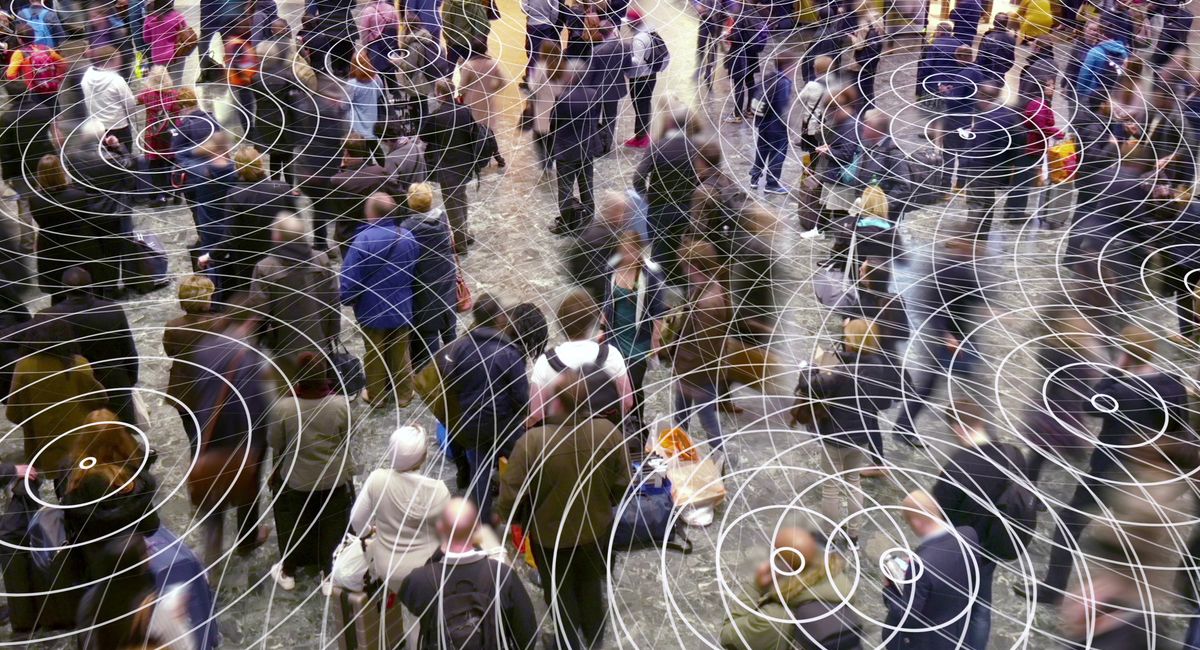
Electromagnetic fields from cell phones and wireless technology could be having just as devastating an effect on human health and life on earth as pesticides, warn Iver Mysterud and Einar Flydal
In 1962, the American biologist Rachel Carson alerted the world about humanity’s chemical destruction of nature. In her groundbreaking book Silent Spring, she showed that insecticides were polluting the environment, endangering our health. “Everyone knew” these chemical substances were safe—just as everyone today knows that EMFs (electromagnetic fields) are harmless.
Little or nothing has been written about EMFs, the communications industry denies there is a problem, and government bodies seem reluctant to investigate. Neither medical doctors nor environmental agencies have any registration systems aggregating information about impacts and making them visible.
Although we have safety standards that help moderate EMF levels, around 75 percent of scientific papers published since 1990 show detrimental effects at levels below “safe” limits.1 Also, these standards are designed to protect only humans and not other forms of life. Here are a few of the many disturbing findings that demand action.
Insect populations are now falling worldwide. An overview study shows that radiation from everything wireless is an important factor in their decline.
Exposure to microwaves is probably not the only cause, but it could be interacting with other environmental issues, such as intensive farming, monoculture, the use of pesticides, invasive species and climate change.2 Although more research is still needed, EMFs appear to represent a significant threat to insects across the globe.
Several insect species are of inestimable importance to our survival, and this alone should trigger the precautionary principle—if you don’t know the outcome, don’t do it. Instead of deploying new and more invasive communication technologies, humans should be researching their impact on all living things.
A recent paper presented the evidence-based argument that increasing background levels of man-made, non-ionizing electromagnetic radiation, all the way up to 300 GHz, can harm life.3 This applies to all kinds of organisms in entire ecosystems and beyond—indeed, to the biosphere itself.
Many species other than humans are extremely sensitive to both natural and man-made electromagnetic fields. It is likely that man-made fields—both static, extremely low frequencies (ELFs) and radio waves (RFs) from cell phones—can have negative effects on all animal and plant species, even at very low intensities.
Safety limits are focused on protecting people, but they’re designed only to protect against acute damage resulting from tissue heating. That’s as far as they go even though we know a number of other physiological changes happen when radiation is so weak that no significant heating can occur.
For decades, researchers have warned the global population and their governments about potential harm by EMFs. A team recently found that most studies show biological effects, many of which are potentially harmful and occur at exposures within “safe” levels according to current safety standards.
Studies have found “changes to neurotransmitters and receptors” and “damage to cells, proteins, DNA, sperm, the immune system and human health, including cancer.” In addition, research has uncovered effects on insects, birds, frogs, other animals and plants.4
It’s true that all life on earth is naturally exposed to electromagnetic energy, such as from the sun and from the ground under our feet. Our cells use it to communicate with each other. Animals use it to navigate. And every living organism emits its own EMF.
But man-made radiation differs from natural radiation. Electric fields from all kinds of devices and transmitters emit positive and negative charges that are polarized and ordered. That is, they are not chaotic (canceling each other out), like those in nature.
Thus, even though natural EMFs are more intense than man-made ones, the artificial EMFs exert force in a specific direction, adding together instead of canceling each other out, which gives them strength. They can pull and push molecules, impede their natural flow, and trigger reactions, which we call biological stress.5
Man-made EMFs interfere with natural processes, while naturally occurring EMFs don’t.
Life is built by complex chemical processes driven by electrical forces, and it can be disrupted in all sorts of ways by these forces. Among the most sensitive are the cell membranes’ ion channels, proteins opened and closed by oscillating electrical forces, regulating everything that comes in and out of cells.
Collagen, an essential ingredient in connective tissue, is affected by specific frequencies, and this can trigger epileptic seizures.6 We know these structures are disturbed by man-made electric fields, and we also know even extremely weak pulses can have this effect if the frequencies are “right.”7 Simply put, the use of EMFs opens a Pandora’s box of possible health effects at the cellular level.8
Even the planet’s ecosystem—which extends into the upper atmosphere—is now affected by human electrical activity,9 and some investigators have warned that the ozone layer could be at risk.10
These concerns have been met by silence and apathy. Yet science has long known that EMFs, misleadingly called “non-ionizing,” are a biological stress factor and may have contributed to the emergence of major chronic diseases.11
A short commentary from 2018 demonstrates the dramatic increase in radiation levels, a fundamental change from the environment in which life on Earth began. Since World War II, cell phones and other wireless communication equipment have increased the natural background radiation around 1018 times—that’s 10 with 18 zeros behind it.12 This radiation, from civilian and military use, has created a physical environment to which Earth’s living organisms are simply not adapted.
As was the case with other environmental stressors, like lead and PVC, there are powerful stakeholders who don’t want these concerns to be publicly discussed; instead, they’re pressing for a fast deployment of the technology. Telcos are rushing toward 5G networks and wide-area Wi-Fi, disregarding the repeated warnings from leading researchers as well as appeals to the EU Commission, the US Federal Communications Commission and national governments to postpone the rollout.4
The shift toward a more sustainable future, as it’s envisioned today, entails an increasing use of electricity and wireless communication. It’s not at all obvious that nature and human health will withstand such a development in electricity production, distribution and consumption, even when generated by “eco-friendly” wind turbines at sea, solar panels or a new breed of compact nuclear power stations. It’s time for humanity to start putting the issue of ever-increasing demand for electricity and EMFs on the agenda.
Rachel Carson is probably spinning in her grave over the lack of attention to the problem. She saw a parallel problem 70 years ago: Then it was the environmental toxin DDT, universally considered a benefit to humans. Now it’s something else man-made that could be having a significant material impact on life on Earth.
Iver Mysterud, PhD, is the scientific editor of the Norwegian health magazine Helsemagasinet VO. Einar Flydal has an MSc in political science and an MSc in telecom strategy and technology management. He has worked for nearly 40 years in computing, telecom and academia as a researcher, strategy advisor and lecturer.
READ MORE
What do you think? Start a conversation over on the... WDDTY Community

Great news! Discounts are available based on your cart total. Check the details below: