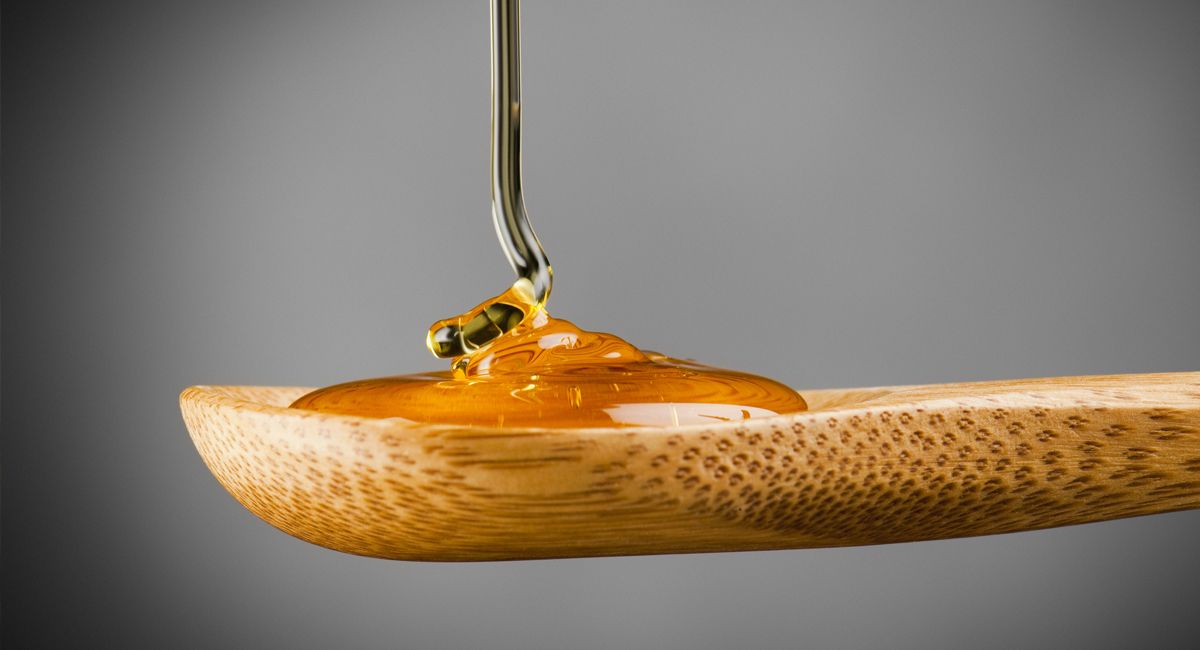
Around 2,600 BCE, honey was listed in an ancient Egyptian trauma manual, much treasured for its ability to speed wound healing. And now, modern science has proved these ancient wisdoms correct.
Manuka honey is now accepted, in even mainstream medicine, for its ability to heal wounds and successfully fight an array of nasty bugs like strep infection and E. coli.
Among the vast variety of natural honeys, manuka honey is the prom queen. This dark, rich substance is chock-full of phenols and methylglyoxal, both highly potent antimicrobials.
Although most honey comes from wildflowers and clover, the purest and most potent form of manuka honey is “monofloral,” made when bees, of their own choice, exclusively pollinate the manuka flower, the sweet-smelling white or pink flowers of the manuka plant (Leptospermum scoparium).
Bees are nectarivores whose food source is exclusively nectar from flowers. But when seasons change, flowers are in short supply, so they have to store it. A bee’s method of preserving food is to collect nectar, then ingest, regurgitate and chew it to remove moisture before storing the residue in a honeycomb. Anytime they’re hungry out of season, they go back to the honeycomb and suck up the honey like a Slurpee.
In the case of manuka honey, the honeycomb is particularly precious cargo, for the manuka plant flowers for just two to six weeks a year and grows predominantly in the remote hills and forests of New Zealand, with their unique microclimate. It’s here, away from insecticides or pollution, that bees produce the most potent manuka honey.
And the latest evidence suggests manuka honey’s healing effects are more wide-ranging than those of other honeys. Early research suggests manuka honey is a potential treatment for breast cancer.
Recent studies (albeit in mice) showed that small amounts of the honey shrank estrogen-receptor-positive tumors in mice by 82 percent in a month and a half. This joins earlier evidence showing that it may have a positive role in shrinking colorectal and liver cancer as well as prostate, bladder, kidney, endometrial and even bone cancer cells.
A number of possible mechanisms are responsible: Manuka honey induces apoptosis, or cancer cell death, lowers inflammation, re-regulates cell cycles and mitochondrial pathways, and inhibits angiogenesis (growth of blood vessels, feeding cancer).
In fact, it appears to affect the entire life cycle of cancer by inhibiting the start, promotion and progression of cancer cells. And while honey is highly toxic to cancer cells, it has no effect on normal cells.
Those extraordinary results beg a basic question: How can something that’s basically sugar—some 80 percent fructose and glucose—kill cancer, when cancer feeds on sugar?
The answer is simply that manuka honey contains a great deal more than sweetness: some 200 compounds, many of which are lethal to cancer cells, including phenolic acids like caffeic acid, benzoic acid, and gallic acid and flavonoids such as quercetin, catechin, kaempferol, luteolin and apigenin. It also has less than half the sugar content of regular honey. And you don’t need to take large doses of the stuff to benefit.
The other unexpected benefit of manuka honey is its ability to heal or improve gastrointestinal issues like reflux; a vast range of skin conditions, such as dermatitis and psoriasis; a range of eye conditions; and even Alzheimer’s and dementia.
All this and the other near-miraculous benefits of manuka honey for wounds, respiratory infection and other less life-threatening conditions have driven up demand: Given bugs’ increasing resistance to antibiotics, hospitals are urgently buying up supplies, as are consumers. This growing popularity is a problem because of its dwindling supply and the short window during which the manuka plant flowers and bees can collect the nectar.
All manuka honeys are not created equal. Their genuineness and potency are measured using the Unique Manuka Factor, mostly known as UMF™.
This rating system tests for manuka honey’s three most important chemical markers:
Even pure manuka honey may not contain enough of these three to heal health conditions. That’s why top brands (see Healthy Shopping: How to Choose Manuka Honey) have a rating to guarantee the levels of these substances in each jar. They also test to ensure the honey is made mainly from the manuka plant.
Given its growing popularity and increasing rarity, it’s not surprising that manuka honey is much more expensive than other honeys. But keep in mind that the price tag is pennies compared to the cost of most drugs.
The main issue is not only keeping this natural medicine pure but also keeping it out of the hands of the pharmaceutical industry, which tends to seize on natural substances with healing promise, isolate their active compounds and bastardize them into expensive, patented drugs.
Most of the time, the best treatment is not the latest “miracle” pharmaceutical but the natural treatment whose healing successes have long stood the test of time.
What do you think? Start a conversation over on the... WDDTY Community

Great news! Discounts are available based on your cart total. Check the details below: