Just one look at the statistics tells you that emergency surgery is dangerous. Patients who undergo an emergency procedure are eight times more likely to die than if they had the surgery electively (scheduled in advance), and half of them will develop a complication, with at least one in 10 patients needing further hospital care within 30 days.
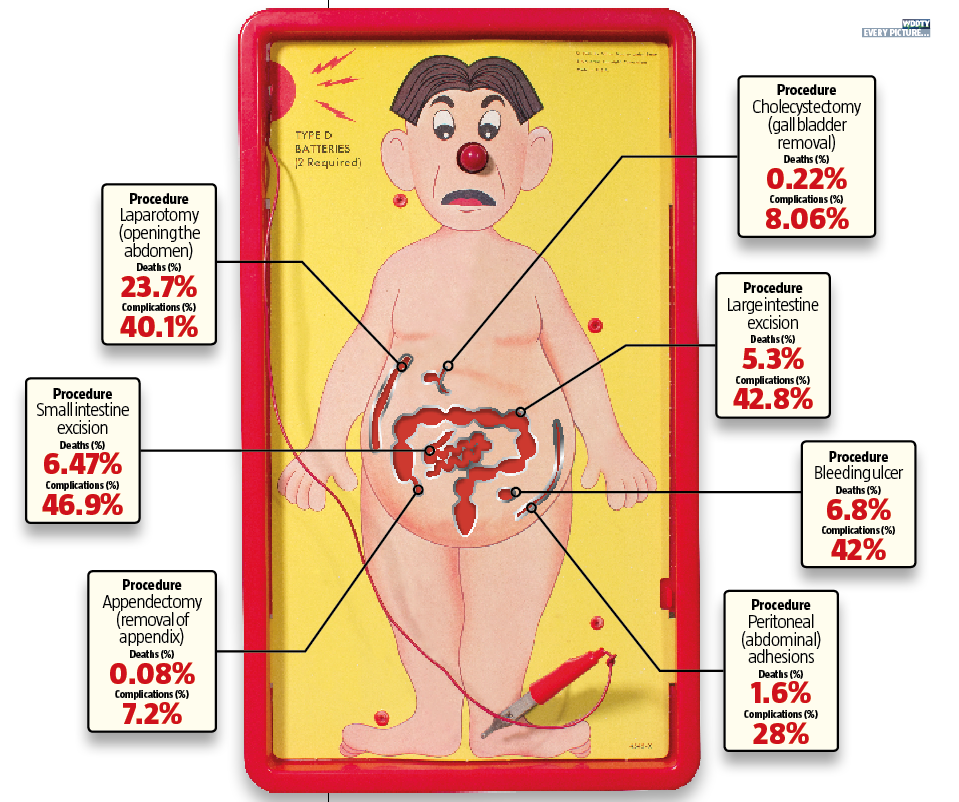
But that’s the problem with statistics. The truth is that the vast majority of emergency procedures aren’t dangerous at all, as the high death and complications rates are associated with only seven procedures.
The dangerous seven are responsible for around 80 per cent of all deaths, complications and hospital readmissions related to emergency procedures, a new study has discovered.1
Researchers at the Brigham & Women’s Hospital in Boston, Massachusetts, discovered the dangerous seven when they looked at the outcomes for more than 421,000 people who had undergone one of 35 emergency surgeries over a four-year period. Although the overall death rate was just over 1 per cent and the complication rate was 15 per cent, the dangerous seven were responsible for the vast majority of these.
The good news is that something can be done about it. Having identified the dangerous seven, standards can now be improved and better training for them offered. And for patients who know they are about to undergo one of the dangerous seven procedures, it may be a good idea to check on the experience and track record of the surgeon first.
|
references |
|
|
1 |
JAMA Surg, 2016; doi: 10.1001/jamasurg.2016.0480 |
What do you think? Start a conversation over on the... WDDTY Community

Great news! Discounts are available based on your cart total. Check the details below: