Stroke is the third most common cause of death in the US and the UK, and the leading cause of adult disability. For those lucky enough to survive a stroke, life afterwards can be a constant battle-both physically and mentally-and the currently available conventional treat-ments often do little to help.
Fortunately, a number of alternative and complementary therapies-particularly creative-arts therapies and mind-body techniques-are showing considerable promise in treating stroke and reversing some of the devastating damage these ‘cerebrovascular accidents’ can cause.
Music as therapy
Scientists have recently discovered that listening to music can have powerful effects on the brain and, so, may be a viable treatment for stroke victims.
In a study carried out in Helsinki, Finland, listening to music for a few hours every day was found to boost brain function and emotional recovery in the early stages following a stroke.
The researchers compared the recovery of 60 stroke patients who, every day, listened to either music of their own choice, audio books or nothing at all over a period of two months. All of these patients also received the usual standard medical care and rehabilitation.
The results showed that the recovery of verbal memory and focused attention (the ability to control and perform mental operations, and resolve con-flicts) improved significantly more with their preferred music than with either audio books or nothing at all. The music group also felt less depressed and confused than the no-music groups.
What’s more, these differences were still present six months later, suggesting that music may have long-term effects on brain function and mood (Brain, 2008; 131: 866-76).
Another compelling study looked at the effects of music on three stroke patients who had lost half their field of vision, a condition known as ‘visual neglect’. The patients completed tasks under three conditions: listening to music they liked; listening to music they didn’t like; and in silence. While listening to music of their own choice, all patients were able to much more accurately identify coloured shapes and red lights on the depleted side of their visual field (Proc Natl Acad Sci U S A, 2009; 106: 6011-6).
The precise mechanisms behind these effects are still unclear, but one possibility is that music directly stimulates recovery in damaged areas of the brain. Another theory is that the positive emotions elicited by music may result in more efficient brain neuronal signalling.
Although more research is needed, a number of experts are now recommending every-day music listening as an invaluable addition to the care of stroke patients.
Singing
Stroke patients may also benefit from singing, research suggests. A technique called ‘melodic intonation therapy’ (MIT), which involves making patients sing words and phrases, has helped those with aphasia-where patients lose the ability to produce and/or comprehend language-a common complication of stroke and other brain injuries.
In a study of two patients with similar stroke-induced impairments, a team of researchers from Harvard compared the effects of MIT with a control intervention (speech repetition) on picture-naming performance and measures of propositional speech (ability to formulate a message, either self-motivated or in response to a question). After 40 daily sessions, both techniques resulted in improve-ment in all outcomes, although the extent of improvement was far greater in the MIT patient compared with the control (Music Percept, 2008; 25: 315-23).
Again, much more research is needed, but it’s thought that MIT’s effectiveness may be due to its unique ability to engage language-capable brain regions in both hemispheres, but expecially on the right (Front Psychol, 2011; 2: 230).
Guided imagery
This technique, which involves visualizing a desired physical outcome, has been successfully used in a variety of medical settings, including stroke rehabilitation.
One area in which this appears to be particularly helpful is the recovery of motor function, as mental rehearsal of movements appears to stimulate the same brain activity that is normally seen when actually practicing the movements.
In one study, 32 chronic stroke patients who had problems with moving their arms were split into two groups: one mentally practiced specific arm movements; the other was given a sham inter-vention (relaxation). Both groups also received 30-minute therapy sessions twice a week, focused on activities of daily living.
After six weeks, the group instructed to do the mental practice showed significant reductions in their arm impair-ment and significant increases in daily arm function. In addition, only patients in the mental-practice group demon-strated a new ability to perform valued activities (Stroke, 2007; 38: 1293-7).
Video games
Virtual reality and interactive video-gaming are new types of therapy being provided to people following a stroke.
The therapy involves using computer-based programmes that are designed to simulate real-life objects and events.
A recent review of the literature by the prestigious Cochrane Collaboration looked at 19 trials of this type of therapy involving more than 550 participants. It found that virtual reality may be useful for improving motor function and the ability to cope with everyday activities.
Of these 19 trials, seven of them assessed the effects of virtual-reality therapy compared with conventional therapy on arm function, and the results showed that the interactive virtual-reality games were the superior treatment.
Interactive virtual reality also resulted in a slightly greater ability to manage nor-mal activities such as shower-ing and dressing, according to three controlled trials (Cochrane Database Syst Rev, 2011; 9: CD008349).
Tai Chi
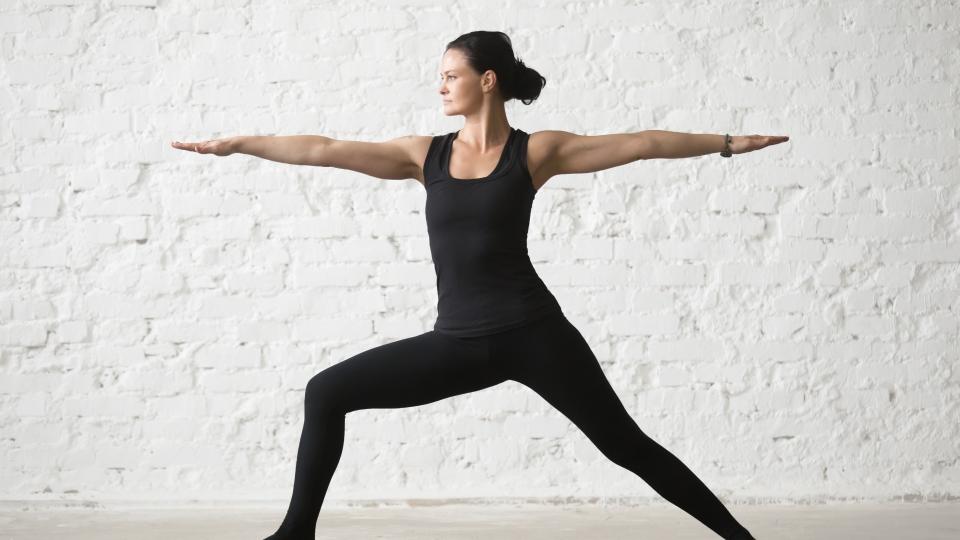
Exercise is known to be beneficial for stroke survivors, but one form that may be particularly useful is Tai Chi, the traditional Chinese tech-nique that combines deep breathing and relaxation with a series of postures that flow smoothly from one to the next.
Research shows that Tai Chi is associated with better balance, lower blood pressure and improved mood, all of which are important for stroke survivors (Top Stroke Rehabil, 2007; 14: 9-22).
In one study of 136 patients who were at least six months post-stroke, four hours a week of Tai Chi practice for 12 weeks led to significant improvements in standing balance compared with the control group (who performed general exercises). Also, these improvements per-sisted for up to six weeks after the Tai Chi training had stopped (Neurorehabil Neural Repair, 2009; 23: 515-22).
Another controlled trial showed that regular Tai Chi practice can also result in improvements in social and general functioning (Int J Rehabil Res, 2004; 27: 303-4). And crucially, a recent trial indicates that Tai Chi is a safe and feasible community-based treatment for stroke survivors, reporting that satisfaction and adherence rates are high with this form of therapy; indeed, there appear to be no adverse effects (Clin Rehabil, 2012; 26: 121-31).
Vitamin B therapy
Compelling evidence from researchers at the Henry Ford Hospital in Detroit, MI, has suggested that vitamin B3, or niacin, might be able to help improve brain function after a stroke. Their research with rat studies showed that niacin can essentially ‘rewire’ the brain by stimulating the growth of new blood vessels and nerve cells (Stroke, 2010; 41: 2044-9).
Given such positive animal results, studies are currently underway to determine whether or not these findings can be replicated in humans.
“If this proves to also work well in our human trials, we’ll then have the benefit of a low-cost, easily tolerable treatment for one of the most neurologically devastating conditions,” said lead researcher Michael Chopp.
Joanna Eva
ns
Factfile: Stroke prevention
To cut the risk of suffering another stroke, consider making these dietary and lifestyle changes.
WDDTY Vol. 22, 12. March 2012
What do you think? Start a conversation over on the... WDDTY Community

Great news! Discounts are available based on your cart total. Check the details below: