In the polluted twenty-first century, we live surrounded by artificial chemicals that our bodies are not evolved to cope with. Some 80,000–100,000 have been synthesized since the Industrial Revolution. They are in common use, and find their way into our air, water, soil and food, and ultimately into us.
Car fumes, industrial waste, pesticides, heavy metals—we are exposed to all these and many more with very little choice. Then there are the toxic chemicals to which we expose ourselves voluntarily, but in blissful ignorance—our perfume or aftershave, deodorant and hair spray, the kitchen cleaning fluids under the sink, the stain remover, the car oil, the air freshener we spray in the toilet. All of these substances are alien to the human body, and they accumulate over the years, potentially doing us serious harm.
Here’s a guide to some of the main pollutants to watch out for, and how to detox effectively.
Mercury
Sources: Mercury is found in some fish, notably tuna, as well as “silver” amalgam dental fillings, broken thermometers, industrial effluent and in old vaccination stocks in the form of “thimerosal”
Effects: Neurological and psychiatric symptoms,1 bleeding gums, metallic taste in the mouth, gut disorders, tinnitus, autoimmune disease and more
Lead
Sources: Old house paint, old pipes, cosmetics (especially skin whiteners), imported toys, factory emissions, coal burning and more
Effects: Gut ache, bowel problems, nausea and vomiting, developmental delay, impulsivity/aggression,2 memory and learning problems, muscular weakness/fatigue, insomnia, anemia, Alzheimer’s-like pathology and more
Nickel
Sources: Stainless-steel pots and pans (stainless steel is 14 percent nickel), coins, orthodontic appliances, cheap jewelry, margarine, cigarette smoke, batteries, electroplating, fossil fuel combustion, car exhaust fumes (actually virtually all the toxic metals have been found in gasoline/diesel exhaust)
Effects: Cancer,3 especially of the breast and lung, hypoglycemia, zinc deficiency, manganese deficiency, skin sensitivity/nickel allergy, endocrine (hormone) disruption, diseases of the heart, kidney and immune system
Aluminum
Sources: Deodorants/antiperspirants, aluminum pots and pans, as an adjuvant in some vaccinations, cooking/wrapping food in “tin” foil, some antacid medications, aluminum drink cans, takeaway containers, cosmetics
Effects: Dementia/Alzheimer’s in adults, neurological damage/delay in children,4 breast cancer,5 autoimmunity, kidney/liver/bone damage, heart/lung damage, endocrine disruption, DNA damage
Cadmium
Sources: Tobacco smoke, burning of fossil fuels and tires, yellow paint (including artists’ paint), some fertilizers, toys, cosmetics, some soy-based baby formulas, carpet underlay
Effects: Bone pain and bone damage,6 multi-organ damage, headaches, hair loss, endocrine disruption, gynecological cancers and pancreatic cancer,7 zinc deficiency
These compounds are all around us and many of them we come into contact with daily.
Many contain substances classified by the World Health Organization (WHO) as carcinogens (chemicals that cause cancer), teratogens (chemicals that cause birth defects) or endocrine disrupting compounds (EDCs; chemicals that interfere with our hormones). Many are neurotoxins. And many are persistent organic pollutants, or POPs; they are still found in our soil and our bodies decades after being banned.
Toxic synthetic compounds
Some of the main synthetic compounds of concern include:
How do toxins do their damage?
There are several mechanisms by which toxic pollutants can harm us, by:
Here are the seven main methods I recommend for detox. But before you start, you need to do three other things:
1. Avoid and replace. Try to identify which toxins you think you have been exposed to/are being exposed to and avoid them as far as possible. This includes replacing toxic versions of everyday items like perfume, toothpaste and aluminum pots and pans with safer versions, and eating organic [see WDDTY March 2021 for a quick guide]. Of course, it isn’t possible to avoid pollutants completely. But for detoxing to be successful, you want to try to avoid “retoxing.”
2. Look after your nutrition. Toxins are far more dangerous to malnourished people than to well-nourished people. Low levels of essential minerals will give heavy metals easy access to your system, for example. Conversely, good levels of essential minerals and vitamins will protect you.
3. Look after your gut. Friendly bacteria will help you detox; unfriendly gut bugs will impede the process.
Sweating is the best way to eliminate toxins, especially fat-soluble toxins. Anything that encourages sweating is good, particularly exercise and saunas. It’s very important to wipe off the sweat every few minutes, otherwise the toxins released from the tissues onto the skin will simply be reabsorbed. Just 5–10 minutes in the sauna is sufficient, ideally three times per week for a few months.
Your local leisure center or gym should have a sauna. It has to be the sauna, not the steam room, because the sweat has to be able to evaporate. Always take a couple of large towels into the sauna with you, one to sit on and one to regularly mop up the sweat. After the sauna, put them in the laundry, then shower.
Straight after the sauna, you need to replace not only the water, but also the major minerals that will have been lost in the sweat. So take an electrolyte (mineral) solution such as “E-lyte” electrolyte concentrate by BodyBio, which replaces not only the sodium and chloride but also the potassium and magnesium.
For people who cannot use an ordinary sauna, such as those with severe chronic fatigue/myalgic encephalomyelitis, there is a good alternative, called the far infrared sauna. There are various versions of the far infrared sauna, and they can be expensive, so see if there is an option to rent for a while before you buy. Try Get Fitt or FirZone in the UK or Sunlighten in the US.
Epsom salts are magnesium sulfate, and if you put ½ lb to 1 lb (approx. 250–500 g) of Epsom salts into the bath every night or every other night for a few months, and lie in it for 20–30 minutes, you will absorb a substantial amount of magnesium sulfate through the skin.
Almost all of us are magnesium deficient, for reasons to do with diet, stress and pollution, and it is easier to absorb magnesium through the skin than by taking it orally.
Magnesium is vital for the relaxation of muscles, maintenance of normal blood sugar, bone structure and at least 100 crucial enzyme reactions within the body. But it also helps push toxic metals out of the body.
The sulfate, which is the other component of Epsom salts, is extremely helpful too, as it supports some of the liver’s detoxification pathways. Some people who are sulfate-sensitive may not be able to take it, but this is quite unusual.
Do not use soap or shampoo or any other products in an Epsom salts bath. The soap may combine with the Epsom salts and create scum. Shower first if you need to, but the point of the Epsom salts bath is to soak and absorb the magnesium sulfate—not to wash. Turn the lights down, light a candle, burn some essential oil of lavender, rose or whatever you like, play some music and enjoy!
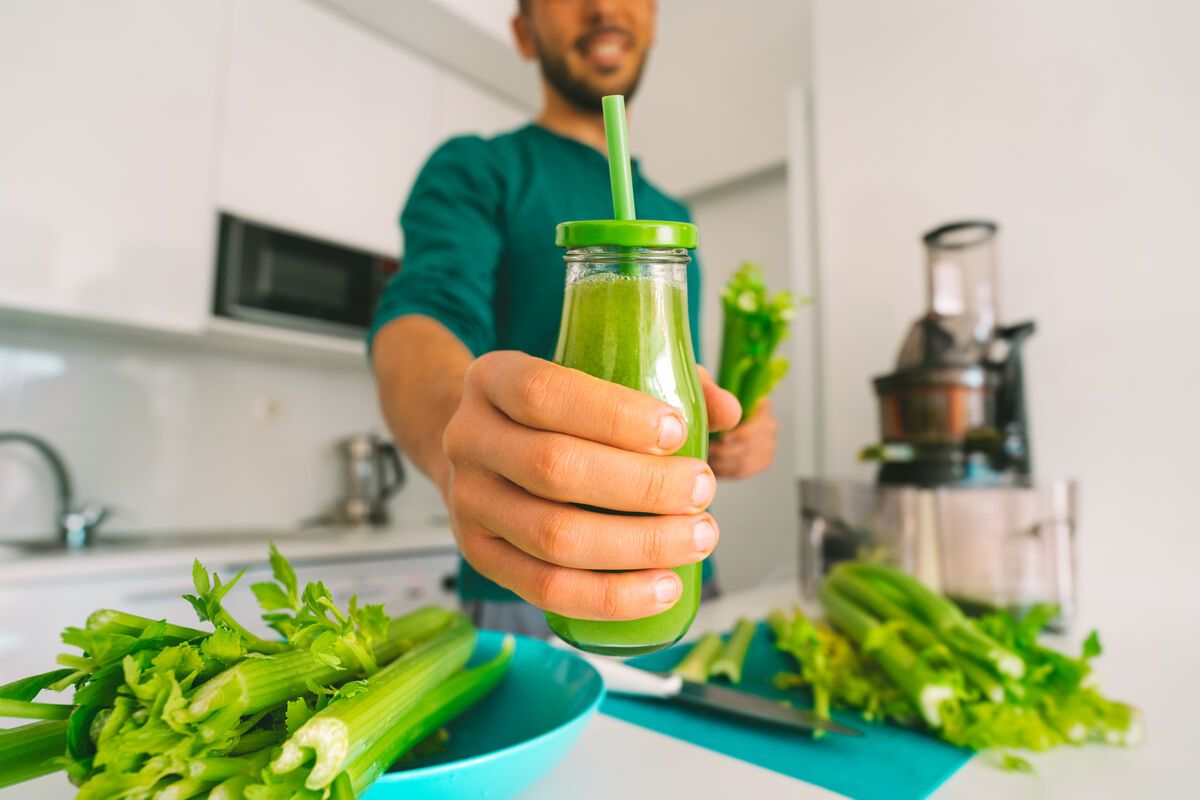
This means making your own raw, organic, green vegetable juice at home. Get a good-quality juicer (details below), and use only organically grown vegetables. Otherwise you are juicing pesticide residues, which defeats the point. See the box on the right for some examples of vegetables to use.
You will initially want to get a balance between the sweet vegetables, such as carrot and beet, and the dark green leaves. As you get used to it, gradually use more of the latter and less of the former, ideally until the juice is only green ingredients. Experiment with different combinations, but don’t add fruit unless it is a very thin sliver of apple or a squeeze of lemon juice. Juicing fruit will give you too much of a “sugar hit.”
The purpose of vegetable juicing is to cleanse the gut and thus the liver, to give the liver maximum capacity to do its detox work. Juicing also provides a fresh and concentrated source of vitamins, minerals and natural antioxidants, which we need to quench the toxic free radicals in our body.
A good supply of antioxidants is essential to any detox program, and no supplement can replace the goodness that you get from freshly made vegetable juice.
If the vegetables have come straight from the fridge, you may need to add a little hot water from the kettle and mix before drinking. It’s not good to drink anything stone cold. In the winter you can simply take the vegetables out of the fridge the night before.
Start with half a pint and build up to a pint. Don’t swig it down all in one go; sip it gently over a few minutes. The juice should not, ideally, be made hours in advance, or it will lose much of its antioxidant power.
Which juicer to get? You need a masticating juicer, not a centrifugal one. The centrifugal ones are designed for fruit and chunky vegetables such as carrots, whereas you need one that will extract maximum juice from green leaves—and that’s a masticating juicer. Check out Omega Vert and the Omega Horizontal range and VitalMax.
A juicer is not the same as a blender. Blenders such as the NutriBullet make vegetable smoothies, not vegetable juice. Smoothies still have all the raw vegetable fiber in, which is ok for some people’s guts but not for others, and you can get the raw fiber by simply eating a salad anyway. A smoothie-maker is just pre-chewing your salad very small for you, whereas a juicer extracts far more of the beneficial phytonutrients from the green leaves, so is more valuable for nutrition and detox.
Top vegetables for juicing
Detoxification can occasionally drain the good minerals out of your system as well as the toxic heavy metals. The best way to prevent this, in addition to taking the necessary supplements, is to sprout your own seeds and beans. This is very easy, and is a good practice for life, not just for the period of detox. It’s like having a tiny, organic, instant garden in your kitchen. Immensely beneficial nutritionally, even if you’re not detoxing.
The main organ of detoxification is the liver. You cannot wash out your liver, but you can wash out your colon, and there is an active circulation of blood from the colon to the liver, so this is the next best thing.
The idea is to make the blood supply that reaches the liver from the colon as pure as possible, minimizing the amount the liver has to detox, thereby maximizing its capacity to detox whatever remains.
The colon is a major organ of elimination, and many toxins can be eliminated directly via the gut. Furthermore, colonic hydrotherapy tones up the muscle of the bowel wall and makes it work more efficiently, as well as removing the “plaque” that may have accumulated on the lining over decades of suboptimal bowel function.
But it does not flush out the good bacteria, any more than watering your garden washes away the plants.
The significant gut bacteria are embedded in the lining of your colon, not floating around loose!
It only makes sense to start colonic hydrotherapy once you have cleaned up your diet. An improvement in what goes into your system at the top end means you’ll get much more value out of clearing out the lower end.
You cannot use colonic hydrotherapy as a substitute for eating good food, nor is it a tool for weight loss. Nor should you do it repeatedly; after the first three or four sessions, it should be an occasional treatment, maybe three or four times a year. There are certain people for whom it is not suitable, including anyone under 18, or anyone with inflammatory bowel disease (ulcerative colitis or Crohn’s).
Make sure you find a fully qualified practitioner (visit www.colonic-association.org in the UK and www.i-act.org in the US) and speak to them before booking; it is an intimate procedure, and it is vital that you feel comfortable with the practitioner before you begin.
Certain supplements are almost always helpful to aid the process of detoxification. These include:
B vitamins: to help the methylation pathways that are crucial to detoxification
Zinc and magnesium: to help defend against toxic metals
Phosphatidylcholine (PC): to help remove fat-soluble toxins
Glutathione: for many of the liver’s detox pathways. (We vary in our capacity to make glutathione. The detoxification genetics test from Lifecode Gx, www.lifecodegx.com, can tell you how well your body synthesizes it, and therefore whether a supplement would be helpful.)
Milk thistle: for helping the liver with clearing virtually any toxin
Here’s what to use to help eliminate specific heavy metals:
Silica: for getting rid of aluminum
Zinc, vitamin C and PC: for getting rid of cadmium. But cadmium is very slow to go, and you may need specialist help with this, including intravenous treatment, if you were at some point in your life a smoker
Zinc: for excess copper (from birth control pills or the copper coil IUD)
Selenium, sulfur, iodine, zinc, vitamin C, PC, Chlorella and cilantro (coriander): for mercury toxicity. Make sure cilantro is organically grown. Cilantro is as good at picking up toxic metals from the soil as it is at picking them up from our bodies, so it is only safe and effective if it has been grown in uncontaminated (i.e. organic) soil
Zinc, vitamin C, PC and calcium: for getting rid of lead. But check your magnesium level first. You will likely never get all the lead out, though, as it hides in the bones
Zinc, vitamin C and the amino acid methionine: for nickel detox.
For getting rid of heavy metals and fighting/preventing bacterial and viral infections, vitamin C is invaluable, but to be effective you need to use it as a medicine rather than a supplement, and that means taking it at higher doses than you need for regular nutritional maintenance.
You need to build up the daily dose gradually and systematically, to find your “bowel tolerance,” i.e., how much you can take before it (harmlessly) gives you
the runs.
This dose varies greatly between people; a few people can only take a gram a day, in divided doses, but people with a life-long tendency to constipation are often fine on 6 or even 10 grams daily. It’s a great treatment for constipation and for gut dysbiosis generally, and it’s a powerful antimicrobial.
The more you can spread out the vitamin C doses over the day, the more you can take; it is water-soluble, so it doesn’t last long. The body eliminates what it can’t use via the urine within a matter of hours.
So you need it frequently, but there is probably no advantage to taking more than 2 grams at once in most situations.
Get a good-quality vitamin C in the form of ascorbate, not ascorbic acid. Ascorbic acid may be cheaper, but it can be rough on the stomach. In the ascorbate form, vitamin C is “buffered” by being combined with a mineral such as magnesium or potassium. So you are looking for magnesium ascorbate or potassium ascorbate powder.
Don’t get an effervescent, colored, flavored variety; you don’t want the artificial additives in there. Just pure ascorbate.
Why powder, not capsules? Because the large doses of vitamin C you need for detox and antimicrobial purposes (as opposed to the much lower dosage for regular nutritional maintenance) would require you to swallow too many capsules, overloading your digestive system with methyl cellulose (the stuff most capsules are made of).
Dissolve the vitamin C powder in water or vegetable juice.
This is how to build up the amount, over a six-day period (a teaspoon is around 3 g):
Day 1: 1 g at breakfast
Day 2: 1 g at breakfast, 1 g at dinner
Day 3: 1 g at breakfast, 1 g at lunch, 1 g at dinner
Day 4: 2 g at breakfast, 1 g at lunch, 1 g at dinner
Day 5: 2 g at breakfast, 1 g at lunch, 2 g at dinner
Day 6 and thereafter: 2 g at each meal
Most people won’t need to go any higher than this. If at any point in this increasing schedule you get diarrhea, you may have exceeded your “bowel tolerance” for vitamin C. So, drop down to the previous day’s dose, and stick to it; that is your personal maximum.
In practice, I find it’s very rare for bowel tolerance to be as low as 6 g per day, so long as the doses are spread out. If you forget the lunchtime dose, don’t double up at dinner. If you forgot, you forgot.
You don’t need to do this for more than a few months. After that you can drop down to a bit lower than these doses. If you feel run down, or people around you are full of coughs and colds, you can increase it again as needed to support your immune defenses.
Excerpted from Staying Alive in Toxic Times: A Seasonal Guide to Lifelong Health by Dr Jenny Goodman (Yellow Kite, 2020)
|
1 |
Neurotoxicol, 1988; 9: 1–8; Neurotoxicol, 1997; 18: 315–24 |
|
2 |
JAMA, 1996; 275: 363–69; Pharmacol Biochem Behav, 1998; 60: 545–52 |
|
3 |
J Environ Monit, 2003; 5: 190–7; Toxicol Ind Health, 2008; 24: 603–10 |
|
4 |
J Trace Elem Med Biol, 2018; 4: 76–82 |
|
5 |
J Inorg Biochem, 2013; 128: 257–61 |
|
6 |
Environ Res, 2019; 176: 108539 |
|
7 |
Environ Int, 2019; 128: 353–61 |
What do you think? Start a conversation over on the... WDDTY Community

Great news! Discounts are available based on your cart total. Check the details below:


