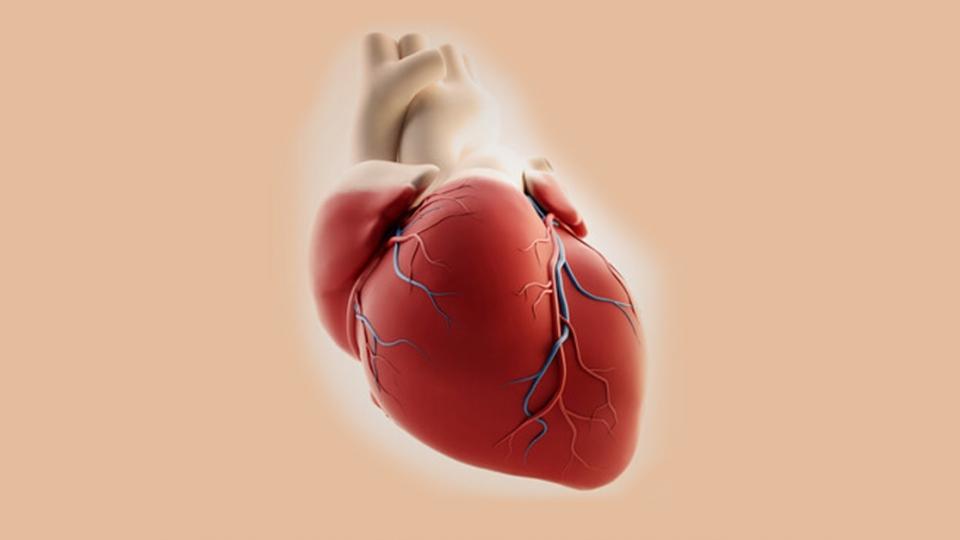
Men don’t usually think of their prostate until it starts acting up. An obscure little gland—often compared to a walnut—it lies under the bladder, quietly and thanklessly performing its endless and vital task of mixing enzymes and ingredients into the seminal plasma to allow sperm to flow freely, until one day a man may notice that he’s suddenly making trips to the toilet in the middle of the night, or that his stream just isn’t as powerful as it used to be.
For Kevin McNamara, he suddenly noticed that it was a bit of a wait and an effort to urinate in the morning, which seemed odd. He went to the doctor.
McNamara went through mainstream medicine’s prostate protocol. He had a PSA blood test and got a high reading of 6 on the scale that adjusts according to age and race. A magnetic resonance imaging (MRI) scan showed his prostate was enlarged, so he was scheduled for a prostate biopsy.
Biopsies are billed as being a simple 10-minute procedure that can be “uncomfortable,” but they can be excruciating—and risky, too. Doctors used to say they weren’t painful. Now they routinely use anesthetic.
A biopsy may lead to erectile dysfunction,1 and in 2 to 5 percent of biopsies, sepsis results, often requiring hospitalization.2 Questions remain about whether cancer can spread from a prostate via biopsy needle tracks, as well. A review of the risk found that so-called “tumor seeding” via the biopsy needle occurs in less than 1 percent of cases,3 but the fact that it occurs at all is still cause for concern.
To perform the biopsy, a hollow-tipped needle is inserted through the wall of the rectum to reach the prostate, and 10 to 12 (sometimes up to 45) small chunks of tissue from the gland are extracted in a sort of lottery that hopes to find cancer if it’s in the gland—like plucking 12 marbles from a bag of 1,000 to find a red one.
McNamara’s biopsy was positive for prostate cancer—a diagnosis made 1.3 million times worldwide in 2018, making it the second most common cancer in men. His doctor recommended he just have the thing removed.
Prostate “treatment regret” had not yet entered the medical lexicon in 2012 when McNamara’s prostatectomy was suggested. The immigration officer had his own ideas about surgery, and he wasn’t ready for it.
He attended a seminar by “American dude” Don Tolman, a “Whole Foods Cowboy” who preaches a message of health through food, sunshine, healthy living and meditation, and he was sold. Instead of undergoing surgery, he visited Tolman, a “larger than life” character with a black handlebar moustache and a cowboy hat, and took on his anticancer regimen of juicing fruits and vegetables, lots of anti-inflammatory turmeric and a vegetarian diet for at least a year.
Science is catching up with the Whole Foods Cowboy. A study published recently by researchers at the Cleveland Clinic’s Genitourinary Malignancies Research Center analyzed the baseline levels of gut nutrients and metabolites (byproducts of digestion) in the blood serum of nearly 700 people.
They compared serum levels between men who later received a diagnosis of prostate cancer and those who died from the disease to healthy men in the sample, all of whom were previously enrolled in the National Cancer Institute’s Prostate, Lung, Colorectal and Ovarian (PLCO) Cancer Screening Trial. The comparison revealed that men who had high levels of a molecule called PAGln (phenylacetylglutamine) in their gut were up to three times more likely to be diagnosed with an aggressive form of prostate cancer.
It turns out that the unfavorable PAGln metabolite is produced when microbes in the gut break down an amino acid called phenylalanine, which is found in meat, beans, soy, egg yolk and high-fat dairy. Two other nutrients abundant in meat, egg yolk and high-fat dairy—choline and betaine—also were linked to increased risk for aggressive prostate cancer.4
“We found that men with higher levels of certain diet-related molecules are more likely to develop aggressive prostate cancer,” said Dr Nima Sharifi, director of the Genitourinary Malignancies Research Center and lead author of the study.
“As we continue our research in this area, our hope is that one day these molecules can be used as early biomarkers of prostate cancer and help identify patients who can modify their disease risk by making dietary and lifestyle changes.”5
It worked for Kevin McNamara. He threw himself into Don Tolman’s anticancer protocol for 90 days and cut out meat, eggs and dairy. He started each morning with a high-fiber breakfast of rolled oats, flaxseed and citrus juice. He’d also chug down Tolman’s signature CABALA juice (an acronym for carrots, three apples, a beet the size of your clenched fist and a lemon) and throw in lots of the anti-inflammatory Indian root spice turmeric to boot.
“Before the 90 days were up, I was urinating like a fire hose!” said McNamara. “My prostate had returned to normal size, and I was no longer struggling to urinate.” After about five months, he had his PSA tested again, and his reading had fallen from 6 to 2.
What’s good for the prostate, it’s been discovered, is also good for other aspects of men’s health—including the heart. One of the collaborators on the Cleveland Clinic team, Stanley Hazen, has found a similar relationship between gut metabolites and cardiovascular disease (CVD) risk. In 2020, he and his colleagues published their findings that PAGln increases the risk of heart attack, stroke and death.6
“Interestingly, we found that PAGln binds to the same receptors as beta-blockers, which are drugs commonly prescribed to help lower blood pressure and subsequent risk of cardiac events,” Dr Hazen said. “This suggests that part of beta-blockers’ potent efficacy may be due to blocking the metabolite’s activity.”
While the Cleveland Clinic team has set off to investigate the merits of using beta-blockers for prostate cancer, here are some things that can be changed immediately to improve prostate and heart health.
The standard diagnostic for prostate health is a PSA test, which stands for prostate-specific antigen, an enzyme that breaks down proteins secreted by the prostate gland.
PSA can seep into the blood, and the amount detected can indicate if there is cancer in the gland. However, the PSA test is notoriously problematic—it has been detected in women, and at particularly high levels in pregnant women. It’s even been found in breast milk.
PSA tests are plagued by false positives, and they miss one in seven cases of prostate cancer with a false negative. A positive result can be indicative of size and age rather than cancer, and it’s been linked to other conditions like benign prostatic hyperplasia, inflammation and infection.
A positive PSA test is intended to give affected men the opportunity to fight cancer while it is small and harmless, but that’s not necessarily the case. More than 70 percent of men over 80 will develop the disease, but most won’t die of it—they’ll die with it.1
So the test can lead to unnecessary, painful and risky treatment for what in many men would be a benign, perhaps even unnoticeable, growth, while they are 24 times
more likely to die of something other than prostate cancer.2
These limitations, though ignored for decades, are now openly acknowledged.
Today in the UK, men over the age of 50 are encouraged to read online information about the pros and cons of the test, emphasizing that it can miss some cancers, it may lead to unnecessary worry and medical tests, it cannot distinguish between aggressive, dangerous cancer and slow-growing benign growth and, “it may make you worry by finding a slow-growing cancer that may never cause any problems.”3
The PSA test may be accompanied by an equally dreaded digital rectal probe (which involves feeling the prostate with a gloved finger) to marginally improve the PSA test’s reliability.
The results almost always lead to a vortex of more and more testing. Biopsies are invasive and have their own risks. These are followed by watchful waiting (active surveillance and more PSA testing), radiation, hormone therapy, surgery or a combination—all followed by more regular
PSA testing.
Men are told that testing saves lives, and stories of men who tested early and caught their cancer early are featured as medical triumphs. The truth is much murkier.
While survival rates have gone up in recent decades, that could be from improved treatment rather than increased screening.4 There’s no magic genie to say which treatment is best, and cancer treatments don’t always work.
While the medical industry has recognized the anxiety and overtreatment that result from PSA testing, there’s no sign that the industry is taking action to curb it. A market report projects the prostate cancer diagnostics industry to soar in value from $3.32 billion in 2020 to $7.65 billion in 2027.5
Red meat has become a sort of modern anti-superfood—with high consumption tied to cancer and CVD. Much of the meat sold in grocery stores comes from concentrated animal feeding operations (CAFOs) where animals are crowded and stressed, fed diets of grains and corn instead of left to free range or graze their food and pumped full of vaccines, antibiotics and, frequently, growth hormones.
However, many of the studies villainizing meat do not distinguish between processed meat, CAFO products and organic, free-range, or grass-fed animal sources, so the results are tricky to interpret. A host of confounding factors such as activity levels and weight also muddle results.
A recent study highlights the problem. In a widely publicized 2021 study, University of Oxford researchers looked at an enormous database of 474,985 middle-aged adults recruited into the UK Biobank study between 2006 and 2010 and followed until 2017, linking available information on meat intake with data on hospital admissions and mortality.
Regular meat eaters who consumed an average of 70 grams of meat per day, either processed or unprocessed (but of unknown rearing and feeding practices), were 15 percent more likely to suffer from heart disease, 30 percent more likely to get diabetes and almost a third (31 percent) more likely to develop pneumonia in the future.
However, the researchers found that most of the health-related issues were reduced when BMI was considered. The troubles developed primarily in people who were overweight and obese, so there is a question remaining as to how much meat-eating factors into excess weight, which may be the real hazard.7
One chemical—trimethylamine N-oxide (TMAO)—has been singled out as a culprit in meat-driven heart disease, with studies suggesting it can affect clotting and cholesterol-depositing mechanisms.
TMAO is a digestion byproduct formed by gut bacteria, derived in part from nutrients that are concentrated in red meat. A growing stack of studies ties higher TMAO levels to a greater risk for heart disease, heart attack, stroke and death. People with the highest blood levels of TMAO are 62 percent more likely to have cardiovascular conditions compared to those with the lowest levels.8
Dr Hazen of the Cleveland Clinic prostate study enrolled 113 healthy men and women in a clinical trial and fed them three different diets in random order, each for a month. All meals were prepared for the participants and contained one-quarter of their calories from protein, from either red meat, white meat or non-meat sources.
The red meat eaters were given the equivalent of an eight-ounce steak daily, or two quarter-pound beef patties. After one month on this diet, blood levels of TMAO soared to three times their level on the diets based on either white meat or non-meat protein sources. Trial participants placed on high-saturated-fat versions of the three diets (with an equal number of calories) did not have raised TMAO levels.
What the study showed clearly was that the TMAO increases were reversible. When the participants discontinued the red meat diet and ate either the white meat or non-meat diet for another month, their TMAO levels dropped.
“This study shows for the first time what a dramatic effect changing your diet has on levels of TMAO, which is increasingly linked to heart disease,” Hazen said.
“These findings reinforce current dietary recommendations that encourage all ages to follow a heart-healthy eating plan that limits red meat,” says US National Institutes of Health nutrition researcher Dr Charlotte Pratt. “This means eating a variety of foods, including more vegetables, fruits, whole grains, low-fat dairy foods, and plant-based protein sources such as beans and peas.”9
A 2020 prospective cohort study carried out across the US, which included a total of 29,682 American adults who did not have CVD at baseline, recorded the participants’ dietary intake and followed them for 30 years, concluded that “intake of processed meat, unprocessed red meat, or poultry was significantly associated with incident CVD, but fish intake was not.”
The increased risk from meat consumption was not huge—the impact on relative risks of CVD and all-cause mortality ranged from about 3 percent to 7 percent. “The increased absolute risks were less than 2 percent over the 30 years of follow-up,” said the authors.
Another prospective cohort study published in the American Journal of Clinical Nutrition in November 2021 looked at the impact of a plant-based diet on prostate cancer using data from 47,239 men in the Health Professionals Follow-up Study (1986–2014).
The researchers, from New York University and Manhattan Veterans Affairs, the Harvard T.H. Chan School of Public Health and the University of California, San Francisco, followed 6,655 men diagnosed with prostate cancer—including 515 with an advanced stage at diagnosis, 956 with lethal disease (metastasis or death) and 806 whose death was attributed to prostate cancer—and concluded, “Greater overall plant-based consumption was associated with a significantly lower risk of fatal prostate cancer.”
In men under the age of 65, but not those over 65, higher plant consumption was associated with a lower risk of prostate cancer overall as well as a lower risk of advanced, lethal and fatal forms of the disease.10
If there is one plant that could be considered a “superfood” for men’s health, it might be tomatoes. They’ve been widely recognized for their benefits to cardiovascular health for decades.
A rich source of lycopene, beta-carotene, folate, potassium, vitamin C, flavonoids and vitamin E, raw and cooked tomatoes have different nutritional profiles. Cooking increases lycopene availability, for example, but reduces other nutrients, so there’s a benefit to eating both.
“Many of these nutrients may function individually, or in concert, to protect lipoproteins and vascular cells from oxidation, the most widely accepted theory for the genesis of atherosclerosis,” say researchers from North Carolina State University in a review on the topic. “Other cardioprotective functions provided by the nutrients in tomatoes may include the reduction of low-density lipoprotein (LDL) cholesterol, homocysteine, platelet aggregation, and blood pressure.”11
A 2019 review of the medical literature on tomatoes looked at 28 studies on lycopene consumption and blood levels of lycopene and found that high dietary intake or high serum concentration of lycopene was associated with significant reductions in the risk of death (37 percent), stroke (26 percent) and CVD (14 percent).12
Several epidemiological studies have also found that tomatoes impact prostate health and prevent cancer, although a 2021 review found no effect overall.13
The orange root from the ginger family used traditionally to season Indian food is another plant that has become an all-star health food for its potent anti-inflammatory and antioxidant properties. A 2021 review of 11 studies including a total of 745 prostate patients found evidence that turmeric or its active component, curcumin, have beneficial effects on PSA levels and quality of life, along with oxidative stress, feelings of incomplete bladder emptying, urination frequency, intermittency, urgency, weak stream, straining and nighttime urination.14
Turmeric’s role in heart health is well established. A 2020 review of the extensive literature on curcumin for CVD claims that it “plays a critical role in protecting humans and animals from cardiovascular dysfunction which is always the primary step for CVDs including atherosclerosis, aortic aneurysm, MI [myocardial infarction/heart attack]
and stroke.”
Studies have reported its efficacy in improving heart enlargement, heart failure and diabetic cardiovascular complications. Given its safety at doses up to 12 grams per day, “curcumin will become a routine food supplement such as vitamins and fish oil, to prevent or treat CVDs,” the international consortium of researchers concluded.15
Studies usually give curcumin doses of 400–500 mg per day. However, one 2012 study of 121 patients evaluating the effect of curcuminoids at a higher dose (4 g/day) to prevent heart attack after coronary artery bypass grafting found that the risk of having a heart attack while in the hospital decreased from 30 percent in the placebo group to 13 percent in the treated group and saw other CVD measures improved as well.16
Per- and polyfluoroalkyl substances (PFAS) are man-made chemicals designed to resist grease, oil, water and heat. They’re used in nonstick coatings on pots and pans, fast food packaging, stain-resistant carpet sprays and firefighting foam, and they’re linked to fertility issues, thyroid disease,17 CVD18 and cancer.19
A 2020 study found that women who used dental floss containing fluorine had higher levels of PFAS in their blood.20 Another recent study found PFAS contaminate the water supply of 200 million Americans.21
While PFAS are hard to avoid and the US Centers for Disease Control and Prevention says they are found in the blood of 97 percent of Americans sampled, a 2021 study published in the journal Nutrients suggests other controllable factors may mitigate their effects.
Researchers from the University of Illinois at Urbana-Champaign and the University of Illinois at Chicago found that mice injected with malignant prostate cancer cells had a faster tumor growth rate when they ate a Western-style high-fat diet and were exposed to PFAS, compared to mice fed a control diet or mice exposed to either a high-fat diet or PFAS alone.22
The benefits of exercise for cardiovascular disease and overall health don’t need to be stated. And new research shows that high-intensity interval training (HIIT)—repeated bursts of high-intensity, maximum-effort aerobic activity followed by short rest periods—may improve the outcome of men who are in active surveillance for prostate cancer after high PSA readings, too.
Researchers had 52 men on active surveillance (with an average age of 63) either do a supervised treadmill HIIT workout three days a week for 12 weeks or follow their usual low-intensity exercise routine. In the trial, the workouts consisted of two minutes of exercise at 85 percent to 95 percent of a person’s VO2 max (the maximum amount of oxygen the body can use during exercise), followed by two minutes of recovery at 40 percent VO2 max, repeated five to eight times.
Compared with the men doing their usual lower-intensity exercise, men in the HIIT group had lower PSA levels, lower rates of change in PSA levels over time and slower prostate cancer cell growth. As a side benefit, they also had improved cardiovascular fitness—a bonus since, as the researchers noted, men on active surveillance are on average three times more likely to die from CVD than from prostate cancer.23
Treatment-related regret is common among men with localized prostate cancer, especially those who have their prostate surgically removed, according to a new study.
Researchers at Mount Sinai Hospital in Toronto, Canada, conducted a population-based, prospective cohort study that included 2,072 men with prostate cancer and asked them about their satisfaction with the treatments they underwent, five years after their diagnosis. Of these, 279 men (13 percent) reported regretting their choice.
For men who underwent surgery, the regret was highest, at 16 percent. For those who had radiation therapy, 11 percent regretted the decision, as did seven percent of men who opted for active surveillance (with repeat testing and diagnostics).
Sexual dysfunction was significantly associated with regret, according to the study, although lasting pain and incontinence are recognized factors as well.1
Ingredients:
McNamara pours about a half a bowl of rolled oats, sprinkles about a quarter cup of flaxseed on top, pours on the juice (and pulp) of half a fresh orange and a full lemon, drizzles on the wheat germ oil, mixes and lets the bowl set overnight. In the morning, he boils the kettle, pours hot water to heat the porridge and slices a banana on top. “I call it magic,” he says. “It shrinks your prostate. It did for mine.”

The report is a downloadable PDF that you can keep on your PC or print out.
CLICK HERE FOR MORE INFO
Main Article
|
1 |
Urologia, 2019; 86(3): 145–7 |
|
2 |
Urology, 2019; 133: 11–5 |
|
3 |
BJU Int, 2015; 115(5): 698–704 |
|
4 |
Cancer Epidemiol Biomarkers Prev, 2021 Oct 28. doi: 10.1158/1055-9965.EPI-21-0766 |
|
5 |
Cleveland Clinic Newsroom, News Release Oct 28, 2021 |
|
6 |
Cell, 2020; 180(5): 862–77.e22 |
|
7 |
BMC Med, 2021; 19: 53 |
|
8 |
J Am Heart Assoc, 2017; 6(7): e004947 |
|
9 |
Eur Heart J, 2019; 40(7): 583–94 |
|
10 |
Am J Clin Nutr, 2021; nqab365 |
|
11 |
Crit Rev Food Sci Nutr, 2003; 43(1): 1–18 |
|
12 |
Crit Rev Food Sci Nutr, 2019; 59(1): 141–58 |
|
13 |
Front Nutr, 2021; 8: 625185 |
|
14 |
Adv Exp Med Biol, 2021; 1291: 345–62 |
|
15 |
Biotechnol Adv, 2020; 38: 107343 |
|
16 |
Am J Cardiol, 2012; 110(1): 40–4 |
|
17 |
Reprod Toxicol, 2017; 69: 53–9 |
|
18 |
Int J Mol Sci, 2020; 21(2): 399 |
|
19 |
Environ Res, 2021; 194: 110690 |
|
20 |
J Expo Sci Environ Epidemiol, 2019; 29(2): 206–17 |
|
21 |
Environ Sci Technol Lett, 2020; 7(12): 931–6 |
|
22 |
Nutrients, 2021; 13(11): 3902 |
|
23 |
JAMA Oncol, 2021; 7(10): 1487–95 |
To test or not to test?
|
References |
|
|
1 |
“Prostate Cancer: A Guide for Aging Men.” www.aging.com |
|
2 |
J Clin Oncol, 2015; 33(30): 3379–85 |
|
3 |
National Health Service, “Should I have a PSA test?” www.nhs.uk |
|
4 |
Cancer, 2012; 118(23): 5955–63 |
|
5 |
Grand View Research, Feb 2020, “Prostate Cancer Diagnostics Market Size, Share & Trends Analysis Report By Test Type (Preliminary, Confirmatory (PCA3, Trans-rectal Ultrasound, Biopsy)), By Region, And Segment Forecasts, 2020 – 2027.” www.grandviewresearch.com |
To treat or not to treat
|
References |
|
|
1 |
JAMA Oncol, 2021; e215160 |
What do you think? Start a conversation over on the... WDDTY Community

Great news! Discounts are available based on your cart total. Check the details below: