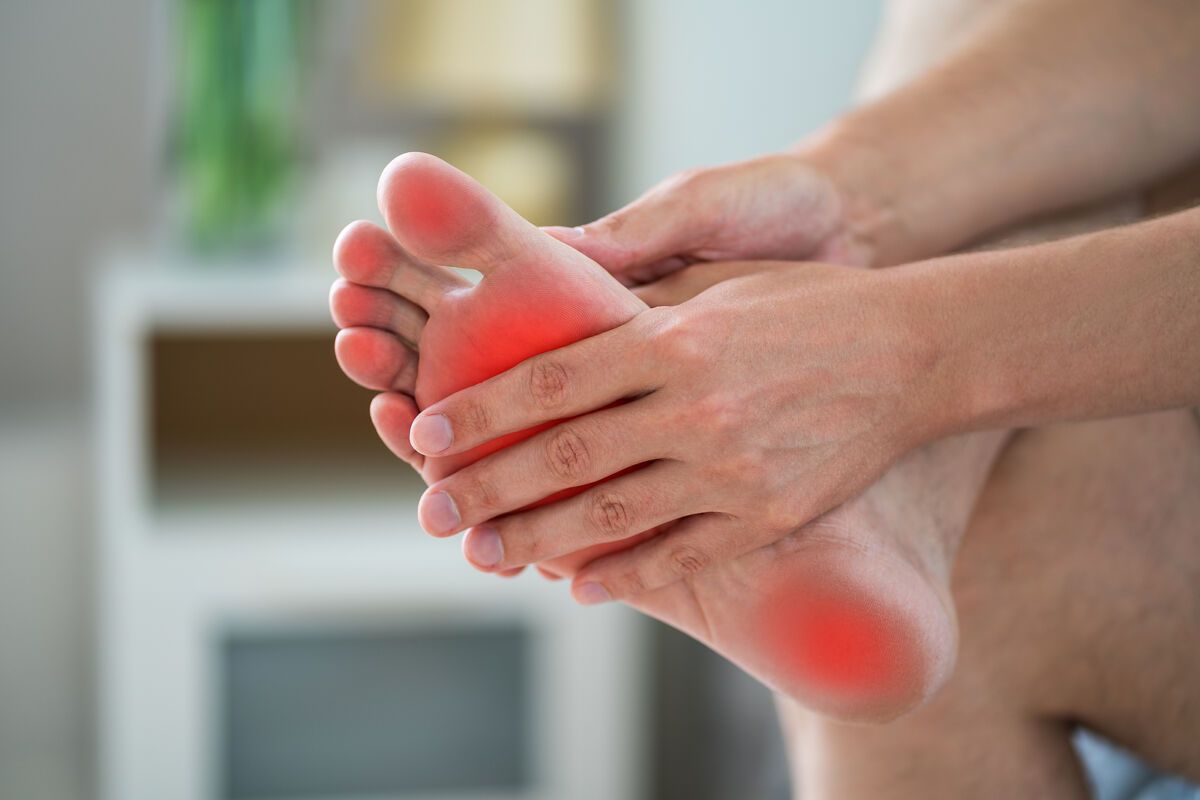
My mother-in-law has type 2 diabetes and suffers from painful peripheral neuropathy. Her doctor has suggested strong painkillers, but she’s worried about the side-effects. Are there any natural remedies that can help with the pain?
T.C., via email
Peripheral neuropathy is a common complication of diabetes—type 1 and type 2—occurring in up to half of patients.1 It refers to nerve damage affecting the body’s extremities, such as the hands and feet, and can lead to pain, numbness and tingling, loss of sensation, loss of balance and coordination, and serious foot problems such as ulcers and infections.
Besides methods to keep diabetes under control, like taking medication, maintaining a healthy weight, and not smoking or drinking, conventional treatment for neuropathy usually involves drugs to alleviate the pain, such as amitriptyline (an antidepressant), pregabalin (an anticonvulsant) and opioid-like medications like tramadol and tapentadol. But these can cause a long list of side-effects including drowsiness, dizziness, dry mouth and insomnia.2
Ideally, your mother-in-law should consult with a qualified naturopathic practitioner who can devise a holistic treatment plan to get her diabetes under control (there are plenty of natural options proven to work; see WDDTY September 2017) and check for nutritional deficiencies that may be contributing to her neuropathy symptoms. But here’s a general guide to what works.
Improved blood glucose control is associated with fewer diabetes complications,3 and eating the right diet is one of the best ways to do this. In general, focus on whole, unprocessed foods, including plenty of fresh fruits and vegetables, and limit refined carbohydrates. In particular, the following diets have proved to be beneficial for type 2 diabetics and may therefore help with neuropathy and other diabetes complications:
A low-GI diet, which involves eating foods with a low rather than a high glycemic index, a value based on how quickly foods increase blood glucose levels.4
A Mediterranean diet, which is rich in fruits, vegetables, fish, nuts and olive oil.5
A ketogenic diet, which is high in fat and low in carbohydrates.6
Both moderate and low-intensity forms of aerobic exercise, as well as strengthening exercises, seem to be beneficial for diabetic peripheral neuropathy. Exercise interventions have been found to improve nerve function and blood glucose control, plus reduce painful neuropathy symptoms.7
If exercise is a struggle due to pain, try low-impact forms such as walking, swimming or tai chi or yoga.
This mind-body technique may be useful for neuropathy, according to a small study of people with mild to moderate type 2 diabetes. The participants all took diabetic medication and followed a specific diet, but half performed a 30–40-minute sequence of yoga exercises for 40 days, and the other half did some light physical activity. Those in the yoga group saw improvements in blood sugar control and nerve function, while the control group had a deterioration in nerve function.8
Find a yoga class near you or consider online classes (try www.charlottewattshealth.com).
This traditional Chinese technique, which combines deep breathing and relaxation with gentle, flowing movements, improved glucose control, neuropathic symptoms and balance, as well as some aspects of quality of life, in diabetic patients with neuropathy. The effects were seen after three months of one-hour sessions twice a week.9
Dr Paul Lamb, a retired family physician and tai chi master, has developed a tai chi program for diabetes that can be learned via instructional videos, available on DVD or online. See www.taichiproductions.com.
According to herbalist Meilyr James, owner of the Herbal Clinic in Swansea, Wales (www.herbalclinic-swansea.co.uk), herbs can encourage circulation to the peripheral nerves and assist with healing. Use the following as a tincture:
• 3 parts Centella asiatica (Gotu kola), 1:4 tincture
• 2 parts Zanthoxylum americanum (Prickly ash), 1:4 tincture
• 20 drops per 50 mL of Capsicum frutescens (Chili pepper), 1:3 tincture
For example: 30 mL Centella asiatica, 20 mL Zanthoxylum americanum, 20 drops Capsicum frutescens.
Note: Tincture of capsicum is extremely strong when neat, so use with caution. It’s not suitable for those with duodenal ulcer or diarrhea.
James also recommends hot/cold immersion treatment. Immerse the affected area in hot water (as hot as can be comfortably tolerated) for three minutes, then place immediately into a cold bath for one minute. Repeat three times in short succession on a daily basis. This in combination with herbs and electroacupuncture can be very effective, says James.
This traditional Chinese technique can be effective for diabetic neuropathy.18 To find a qualified acupuncturist near you, visit www.acunow.org.
Several supplements have been found to help with diabetic neuropathy, but it’s important to first consult with a qualified practitioner, who can recommend the right supplements and dosages for you.
Acetyl-l-carnitine. A number of trials show this supplement is a safe and effective treatment for diabetic peripheral neuropathy. It’s been found to reduce pain by 20 percent compared to placebo.10
Suggested dosage: 500 to 1,000 mg three times daily
Magnesium. Low levels of magnesium have been linked to common diabetes complications, including neuropathy.11 In a five-year trial of type 1 diabetics with low magnesium levels, neuropathy symptoms reduced or stabilized in 88 percent of patients taking magnesium supplements, compared to 39 percent in those not taking a supplement. And 61 percent in the no supplement group saw their symptoms worsen, versus just 12 percent in the supplement group.12
Suggested dosage: 300 mg/day
Vitamin D. A deficiency in this vitamin is common in diabetic patients with neuropathy, and taking vitamin D supplements appears to alleviate pain.13 It’s best to get your levels tested first to determine the dosage you need. Home testing kits for vitamin D are available via the Vitamin D Society (www.vitamindsociety.org) and Better You (www.betteryou.com), along with personalized recommendations on how much to take.
B vitamins. A lack of vitamin B12 and folate (vitamin B9) has been associated with diabetic neuropathy. And the diabetes drug metformin is known to deplete B12 levels.14 Supplementing with these vitamins, as well as B6, in their active forms appears to have a positive effect on symptoms.15
Suggested dosage: Studies have used Metanx, a prescription-only US product containing 3 mg L-methylfolate (B9), 2 mg methylcobalamin (B12) and 35 mg pyridoxal 5-phosphate (B6). Speak to a qualified practitioner about whether taking these doses of B vitamins separately may be suitable for you
Coenzyme Q10. One trial suggests this vitamin-like substance can significantly reduce neuropathy symptoms in diabetics as well as improve nerve function.16
Suggested dosage: 400 mg/day
Omega-3s. Preliminary evidence suggests that the omega-3 fatty acids eicosapentaenoic acid (EPA) and docosahexaenoic acid (DHA) may be beneficial for diabetic neuropathy.17
Suggested dosage: Try Wiley’s Finest Peak Omega-3 Liquid, which supplies over 2,000 mg of EPA and DHA (from fish oil) per teaspoon
|
References |
|
|
1 |
Pragmat Obs Res, 2013; 4: 27–37; Curr Opin Endocrinol Diabetes Obes, 2017; 24: 103–11 |
|
2 |
Am Fam Physician, 2016; 94: 227–34 |
|
3 |
Br J Nutr, 2010; 104: 797–802 |
|
4 |
Nutrients, 2018; 10: 373; Cochrane Database Syst Rev, 2009; 2009: CD006296 |
|
5 |
Diabetes Care, 2014; 37: 1824–30 |
|
6 |
Cureus, 2020; 12: e10796 |
|
7 |
Acta Med Indones, 2018; 50: 82–7; J Pharm Pharm Sci, 2019; 22: 22–7; J Diabetes Complications, 2012; 26: 424–9; Cleve Clin J Med, 2017; 84(7 Suppl 1): S15–S21 |
|
8 |
Indian J Physiol Pharmacol, 2002; 46: 298–306 |
|
9 |
J Altern Complement Med, 2012; 18: 1172–8 |
|
10 |
J Pain Res, 2019; 12: 1341–51 |
|
11 |
Technol Health Care, 2018; 26(S1): 379–87; Diabetes Res Clin Pract, 2018; 146: 1–7 |
|
12 |
Magnes Res, 2004; 17: 109–14 |
|
13 |
Clin Nutr, 2020; 39: 2970–74 |
|
14 |
Acta Med Port, 2017; 30: 719–26; Mol Cell Endocrinol, 2017; 443: 72–9 |
|
15 |
Curr Med Res Opin, 2016; 32: 219–27; Rev Neurol Dis, 2011; 8: 39–47; Am J Med, 2013; 126: 141–9 |
|
16 |
J Diabetes Complications, 2012; 26: 352–8 |
|
17 |
Diabetes Metab Syndr Obes, 2019; 12: 109–20; J Diabetes Complications. 1996; 10: 280–7 |
|
18 |
Diabetes Res Clin Pract, 1998; 39: 115–21; J Acupunct Meridian Stud, 2010; 3: 95–103 |
What do you think? Start a conversation over on the... WDDTY Community

Great news! Discounts are available based on your cart total. Check the details below: