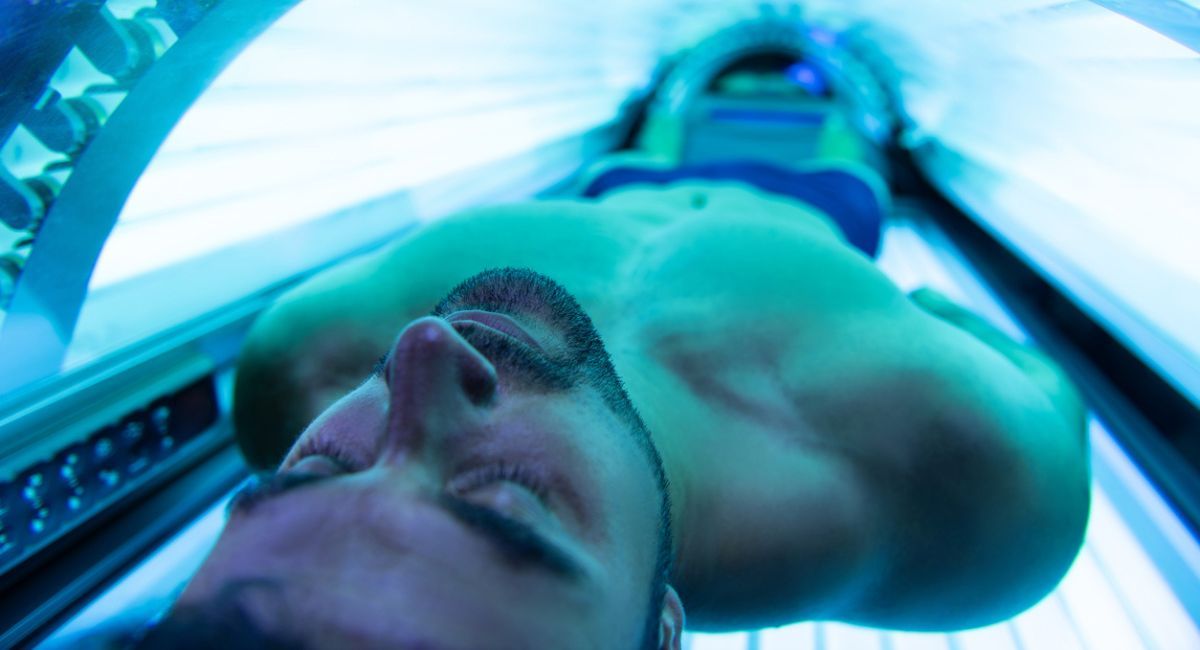
Ultraviolet light, known for thousands of years as a powerful healer, fell out of fashion with the rise of the drug industry but is now making a powerful comeback. Cate Montana investigates
Sunshine has long been understood to have curative powers. Hippocrates, the father of medicine himself, regularly included sunbaths as part of his therapy for a wide variety of health conditions.
In Notes on Nursing: What It Is and What It Is Not, published in 1859, Florence Nightingale famously stated, “It is the unqualified result of all my experience with the sick, that second only to their need of fresh air is their need of light . . . direct sun-light.” Around the same time, “heliotherapy” became popular at spas in Europe when Swiss researchers accidentally discovered that sunlight had a powerful antibacterial effect.
In 1903, Danish physician and researcher Niels Ryberg Finsen was awarded the Nobel Prize in Medicine and Physiology for his theory of phototherapy treatment of skin diseases, which he used with a 98 percent success rate. In particular, he treated lupus vulgaris (tubercular skin lesions) using focused light applications.
That the ultraviolet (UV) bandwidths of sunlight are the effective agent in treating infections wasn’t discovered until the 1870s. In the early 20th century, Seattle researcher Emmett K. Knott experimented with UV light irradiation of blood taken from dogs infected with Staphylococcus aureus bacteria. Once he figured out the optimum light dosage and the optimum amount of blood to be irradiated and reinfused (5–7 percent of blood volume), all the dogs in the experiment survived the infection and showed no side effects post treatment.1
The first human experiment in UV blood irradiation (UVBI) took place in 1928. A septic patient dying from hemolytic streptococcus septicemia was treated with it as a last resort and not only survived but thrived.
After that, up until the 1950s, UV blood irradiation was increasingly used to treat infections—everything from septicemia to arthritis, pneumonia, tuberculosis and even polio. But when antibiotics became overwhelmingly useful and popular, UV light treatment waned.
Today, UV therapies including UVBI (aka photoluminescence therapy) are still popular in Europe and have been approved by the US Food and Drug Administration (FDA). But they’re not very well known in the US except for dermatological use—treating skin conditions such as eczema, psoriasis and vitiligo, a chronic autoimmune disorder causing loss of skin pigmentation.
And yet UV light therapy could well serve as an effective countermeasure to the epidemic of modern antibiotic resistance, estimated to be responsible for the death of 1 million people worldwide every year since 19902—a figure the World Health Organization predicts could rise to 10 million per year by 2050.
In addition, it could well be the answer to accumulating evidence from health officials worldwide that a lack of sun exposure is responsible for approximately 340,000 deaths in the United States and 480,000 deaths in Europe every year. The deficiency results in cancer, cardiovascular disease, type 1 diabetes, hypertension, metabolic syndrome, multiple sclerosis and more. Studies aren’t finding vitamin D supplements prevent any of these illnesses, so there may be more to sunlight’s effects.3
Ultraviolet radiation forms a small part of the electromagnetic spectrum and has a wavelength of 10–400 nanometers (nm). These rays aren’t visible—they’re shorter than the wavelengths of visible light (400–700 nm) and longer than x-rays, which run between 10 nm and 10 picometers (pm).
UV radiation is divided into four distinct wavelength ranges:
As UVA is the longest wavelength, it’s the least energetic. VUV (vacuum UV), the shortest wavelength, can’t travel efficiently through air and requires a vacuum environment, which is free of all matter including air, for various applications.
About 95 percent of UV light hitting the earth is UVA, which penetrates the thickest layer of the skin and is mostly responsible for skin aging. It can also contribute to certain skin cancers.
The other 5 percent is UVB, the part of UV light that causes sunburn and is directly linked to most skin cancers. Precursor molecules in the skin absorb these rays and then convert their energies into the vitamin D3 we need for calcium absorption and bone mineralization.
UVC, the most energetic form of UV radiation, is extremely harmful but completely filtered out by the atmosphere. Despite its lethality, it has enormous antimicrobial properties. It effectively reduces or eliminates all pathogens—including SARS-CoV-2—if, for human use, optical filters block emissions above 230 nm (see below).4
Interestingly, bacteria and viruses in the bloodstream exposed to UV light absorb as much as five times more photonic energy than the white and red blood cells in our body. Pathogens literally come apart under this intense energy bombardment, which means the fragments of the dead infecting agents trigger a safe, autogenous (self-generating) vaccination-like response that activates the immune system in a highly specific manner.
“UV light can cause the cell membranes of the pathogenic organisms to rupture,” says Dr Howard Liebowitz, MD, clinical director of Liebowitz Longevity Medicine in Santa Monica, California (drhowardliebowitz.com). “So, you’ll have a part of this organism that was encapsulated, and now it’s ruptured open.
“The immune system now gets exposed to parts of the organism inside the cell rather than just what’s on the surface. And that tends to boost the immunity in the body to react more strongly to the organism.”
In other words, using UV therapy creates a one-two punch, killing infecting pathogens while stimulating the creation and delivery of needed antigens throughout the body. This approach is so potent that treating as little as 5–7 percent of blood volume with UVBI triggers a powerful system-wide immune response. Since the average person has about 5 L of blood, 5–7 percent is about 250 mL (just over a cup), though some providers claim treating just 35 mL (about an ounce) will do the job.
UVBI is effective against all multi-antibiotic-resistant strains of bacteria and other pathogens. Lower doses of UV light at lower wavelengths kill microorganisms by damaging their DNA. In the meantime, our human DNA, although affected, can be rapidly repaired by enzymes that recognize and remove segments bound to cancer-causing chemicals, correct sequences, and rejoin strand breaks caused by exposure to reactive oxygen species and radiation, including UV light.
UV radiation has an immunosuppressive effect on the skin that helps calm inflammatory responses, making it beneficial for certain skin disorders. And UVBI stimulates red blood cell production. It also increases blood oxygen levels,1 much like ozone therapy and other oxygen therapies.
Indeed, UV therapy, in particular UVBI, is frequently combined with ozone therapy to treat a large number of conditions. Ozone therapy uses medical-grade ozone to increase oxygen in the body, which boosts the immune system and assists healing through cell regeneration.
“I use a combination of UV light therapy and ozone for infectious processes,” says Liebowitz. “I treat about 2,000 cc of blood (8½ cups) each time, which could be a third or more of circulating blood volume. It’s highly effective for autoimmune diseases, inflammatory conditions, fibromyalgia, chronic Lyme, shingles and herpes infections, bronchitis and upper respiratory infections, Covid and long Covid.
“Basically, it helps the body get back to homeostasis. I see amazing results, often within 24 hours.”
Liebowitz recounts the case of a district attorney who had been dealing with terrible bronchitis for six weeks. “She came into the office saying, “I’ve been to every doctor I know. I’ve gotten antibiotics. I’ve gotten inhalers. I’ve gotten steroids. They’re throwing everything at me, and I’m not getting better. I’ve been coughing, short of breath, wheezing and feel horrible, but I can’t stay home. I have to go to work every day. Can you help me?'”
Liebowitz gave her the combo UVBI and ozone treatment, and when he called her the next day to see how she was feeling, she was ecstatic and completely cured. No symptoms whatsoever. “It was incredible,” he says. “After six weeks of suffering, the UV/ozone combo knocked it out overnight.”
A similar overnight cure happened to Dr Brian Cox of Pacific Naturopathic in Los Altos, California (pacificnaturopathic.com). “UV light literally neutralizes every type of pathogen,” he says. “When blood irradiation is used with ozone, it not only kills pathogens, it excites the ozone molecules, literally supercharging them to turn on the cells in the blood passing through the machine, stimulating mitochondria to create more cellular energy.”
Cox, who uses UV light in multiple treatments, including sanitizing water for colon hydrotherapy, talks about his own experience with Covid. Unable to function for three weeks, he was in so much pain, he was seriously worried he’d have to admit himself to the hospital.
“I did every alternative approach I could think of, and nothing worked,” he says. “Finally I dragged myself to my office, did a blood draw, and ran my blood through my UV light and ozone equipment. Three days later I tested negative and was back on my feet. Nothing else worked. And that was just one treatment.”
UVB therapy is far and away the most common UV therapy, although far-UVC radiation (200–230 nm) has been used to eliminate pathogens of the skin and eyes for almost 100 years and has tested effective against the coronavirus.4 Narrowband UVA light has been safely and effectively used for endotracheal (windpipe) treatment of patients with Covid.5
Study after study shows UV application works for infections of all types. As well, it improves wound healing.6 Narrowband UVB treatments are highly effective for healing a wide variety of skin conditions, including atopic dermatitis and mycosis fungoides (the most common form of cutaneous T cell lymphoma).7
A variety of UV light therapies have been developed specifically for psoriasis, such as UVB, photodynamic therapy, intense pulsed light and light-emitting diodes. UV light is primarily used for treating stable plaque psoriasis—the most common type of psoriasis involving red, scaly, thickened patches of skin, usually treated topically.
A treatment called psoralen ultraviolet A (PUVA) has a better cure rate than UVB for refractory or treatment-resistant psoriasis.8 Psoralens are photosensitizing agents found in plants that amplify the effects of UV light. They can be natural or lab-created.
UBVI has been shown to eliminate tuberculosis.9 And clinical trials of ultraviolet blood irradiation for hepatitis C have shown the treatment to be highly effective with no side effects.10 Because of its positive impact on several types of white blood cells, other immune cells, LDL cholesterol and lipids, many clinical studies are now encouraging the investigation of UVBI for novel viral infections from HIV/AIDS to Ebola, SARS, MERS and, of course, the Covid virus.11
UV therapy is also very effective for cutaneous T cell lymphoma. “In some circumstances, patients can experience a transition in which cutaneous T cell lymphoma becomes an internal cancer as well,” says Dr Dustin Portela, founder of Treasure Valley Dermatology in Boise, Idaho (drdustinportela.com).
“We routinely use UVB light for that, and it’s quite effective, especially when we combine it with other treatments, such as topical steroids, to help suppress the immune cells in the skin. Another treatment we use is a topical retinoid medication called Targretin that helps to normalize the cell turnover further.”
The use of UV therapy even has a positive effect on mood and is useful for treating depression.12 Side effects of UV therapy are rare; the most common are Herxheimer reactions (a temporary inflammatory response when an infection is under attack by the immune system) and pain and bruising at the injection site of UVBI.
Despite the lack of direct side effects, there are considerations to using UV therapy. Just like the sun, UV therapies have many benefits, and yet most doctors believe there are risks as well.
“I believe the threshold for PUVA treatments is about 300 total treatments,” says Portela. “It’s well documented that your risk for developing squamous cell carcinoma goes up quite a bit after that.
“You also have to monitor the total number of times somebody steps into the light box for regular UV therapy. Even though the UVB we use is a short range of light, it’s ionizing radiation that will increase their risk of aging and skin cancer with too many treatments.”
Generally, the number of UV treatments needed depends on variables such as the state of the patient’s immune system, the length of time they’ve been experiencing symptoms and the severity of the disease.
I asked the medical professionals I interviewed for this article about the dangers of sun exposure. All of them said the modern media hype about skin cancer and the need to slather your skin with high-SPF sunscreens the moment you walk out your front door is just that: hype.
“Vitamin D is probably one of the most important vitamins, and we can’t get it in our food,” says Liebowitz. “We get it in our skin from sun exposure. Basically, we were designed to be exposed to the sun, and blocking all that sun is blocking our vitamin D production. I see people with extremely low vitamin D levels all the time, and there’s all sorts of health consequences to it.”
Yes, too much sun exposure can lead us down the path to skin cancers and other problems. But, Liebowitz says, with common sense we can avoid skin cancer. Take sun in smaller doses and avoid the harshest midday hours, when the likelihood of getting burned is greatest.
Cox agrees. “Sunlight does not cause cancer. What causes cancer is cellular mutation caused by the lack of certain ingredients in the body’s system—vitamin D, for instance. Which you don’t get when you slather on a lot of sunblock.”
And finally, dermatologist Portela weighs in with this: “There are risks and benefits of being in the sun. People shouldn’t limit their lifestyle. They should enjoy life and take reasonable precautions.”
Lab studies in mice and human cells have now shown that narrowband (NB) UVA treatment can significantly reduce coronavirus spike protein production, increase mitochondrial antiviral-signaling proteins and decrease coronavirus-induced cell death.1 It has also been found to halt hypercytokinemia—the cytokine storm Covid is so well known for.
To quote one study using NB UVA: “Pro-inflammatory cytokines interleukin (IL)-6 and tumor necrosis factor (TNF), and chemokines IL-8, monocyte chemoattractant protein-1 (MCP1), and interferon gamma-induced protein 10 (IP-10), were significantly increased in CoV-229E-infected cells, and significantly decreased following NB-UVA treatment.”2
In plain English, that means if you get exposed to or infected with Covid, UVA light can save your bacon. It lowers spike protein production, calms the immune system and helps the body fight back.
Sunlight contains more UVA rays in the morning and evening, so be sure to get outside during those hours. And spend 15–20 minutes outside during peak hours to get your vitamin D, though it may take longer in the winter.
One of the obvious uses of UV light is not therapeutic but hygienic. Hospitals are notorious cesspools of infectious materials and pathogens. UVC irradiation in addition to cleaning protocols in medical facilities is proving highly effective to combat the spread of harmful microorganisms.
The effect of UVC against pathogens is well proven. It fights methicillin-resistant Staphylococcus aureus (MRSA) and drug-resistant enterococci, bacteria normally found in the human intestines and genital regions that tend to populate hospitals.1
Because of the risk of contamination and spread of disease, Dr Brian Cox says he’s happy to report that the recent installation of a new air conditioning system in his offices includes a UV light system specifically to kill viruses and bacteria. “It just makes so much sense,” he says.
Medical-grade, autonomous “disinfection robots” heavily dependent upon UV light technologies are now being developed and sold to help disinfect medical and public spaces. Of course, as one of the most effective technologies available for disinfecting drinking water without chemicals (which change the taste), UV water treatment has been used commercially in both urban and private water applications for decades.
For general health and even for some chronic diseases, simply getting more sun is the first thing to do, especially if you rarely spend time outside. Remember to start with short periods and work your way up, and use caution during peak hours. But for more targeted therapy, there are other options.
For going on 30 years, in-home UVB phototherapy units have been made to meet demand and serve greater patient convenience at a hopefully lower cost. Designed primarily for people with chronic skin conditions, most in-home protocols for personal targeted phototherapy (PTP) call for limited-area UVB light treatments, typically 15 seconds to a few minutes up to three times per week.
Of course, the main concern among health practitioners is that patients will approach treatment with a “more is better” attitude, leading to burns and possibly even skin cancer. That said, most home systems in the US that are FDA-approved have safety features designed to prevent misuse.
In addition to small handheld devices, some home phototherapy systems are full-body tanning beds or large flat-panel systems. Your choice of device should be based on the size of the area to be treated and the specific condition involved.
Other considerations include:
UVB therapy is commonly used to treat skin disorders such as psoriasis, eczema and vitiligo. If you’re looking to try this therapy for yourself, you’ll typically need a prescription from your doctor or dermatologist, as it’s a medical procedure designed to be used under the guidance of a health professional. Your doctor or dermatologist should be able to recommend or refer you to a clinic offering UVB therapy near you, or you can search online.
UVB therapy is also available at home via a UVB phototherapy device designed for home use. These are often handheld devices that use narrowband UVB (around 311 nm) and come with safety features such as built-in timers and locked controls. But again, you’ll usually need a prescription to buy one, especially if you live in the US. Here are a few devices available, all medically certified.
US
Yonker
YK-6000BT Handheld UV Device, $299
dermfix.us
UVTREAT
Pro Corded Narrowband Handheld UVB 311 nm Lamp, $309
uvtreat.com
UK
Dermfix
Dermfix 2000SX UK Version, £349
dermfix.uk
CareLamps
Derma UVB Narrowband Phototherapy Lamp, £169
carelamps.com
What do you think? Start a conversation over on the... WDDTY Community

Great news! Discounts are available based on your cart total. Check the details below: