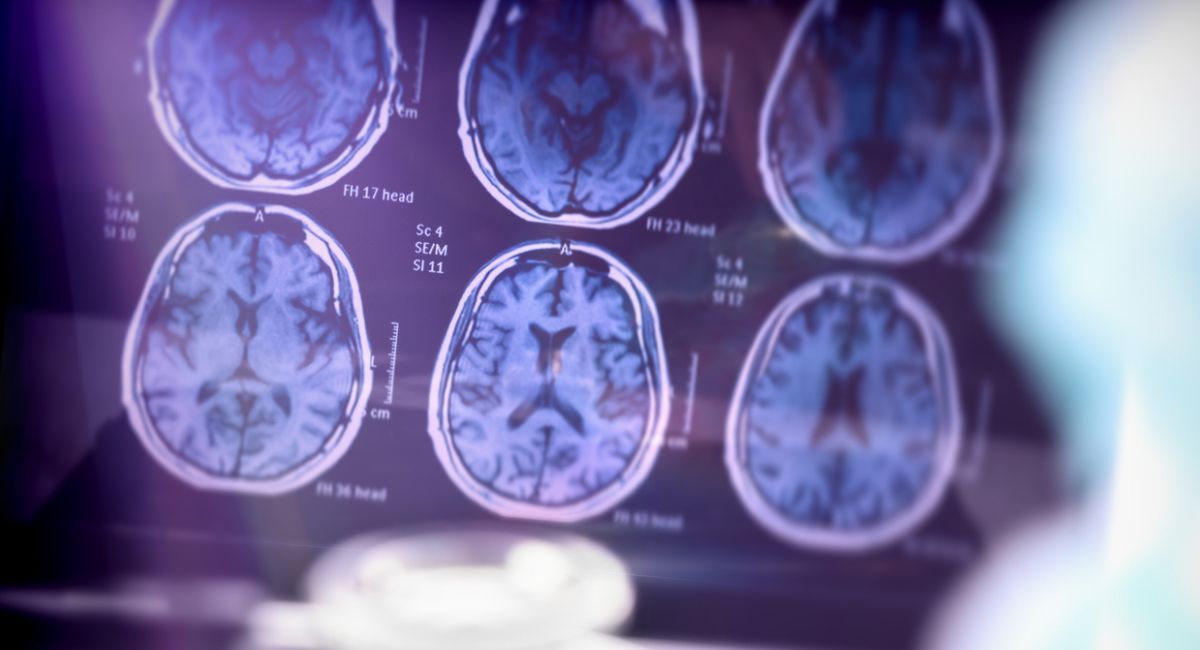
For the past 30 years, medical science has been convinced that amyloid-beta and tau protein plaques are responsible for Alzheimer’s disease. But the facts just won’t fit the theory, and different ideas can’t get a look in, Bryan Hubbard reports
When the UK’s Dementia Research Institute opened its doors in 2017, its founding director, Dr Bart De Strooper, pronounced that Alzheimer’s disease was probably the result of long-term inflammation. The amyloid hypothesis—the idea that deformed versions of amyloid and tau proteins were destroying brain cells—was a false trail.
This was a bold claim for a new organization that needed to attract funds. Around $2 billion (£1.5 billion) of funding has already been thrown at research projects that explore the amyloid hypothesis, leaving almost nothing for researchers who want to investigate other ideas.
When a new form of amyloid protein, amyloid-beta*56, was “discovered” in 2006, funding went from zero to $333 million in just 15 years as researchers scrambled to learn more about this new likely culprit. But there was nothing to learn: The protein’s claimed discovery was based on evidence that had been tampered with.
The researcher had deliberately placed brain scans on top of each other to reveal a “new” protein that wasn’t there—and the fraud was uncovered only in 2022. By then, the paper had been cited around 2,300 times by other researchers, who believed this “heavier” variety of amyloid protein was the real culprit behind the Alzheimer’s surge.
But the fraud isn’t an isolated case; Alzheimer’s research is riddled with fraud, coercion and bullying of alternative voices as medical science tries to shoehorn the amyloid theory into the top spot among the possible causes of Alzheimer’s. A new book—Doctored: Fraud, Arrogance and Tragedy in the Quest to Cure Alzheimer’s (Icon Books, 2025) by investigative journalist Charles Piller—makes this clear.
Drugs that target amyloid plaques in the brain aren’t even stabilizing symptoms, and the theory behind them is confounded by annoying facts. For example, 30 percent of people with plaques—clumps of amyloid protein that destroy brain cells—never develop Alzheimer’s, and 15 percent of people with symptoms don’t have plaques at all. One study of around 200 people diagnosed with the disease discovered that less than half had plaque formations in their brains.1
While medical science continues to gallop down the false amyloid trail, Alzheimer’s disease is becoming more widespread. It affects around one in nine people over the age of 65, and it’s already the world’s fifth major killer; these worrying statistics will only worsen, warn groups such as the UK’s Alzheimer’s Association and the National Institute on Aging (NIA) in the US, who say there is no cure in sight.
Around 10 percent of over-65s suffer from dementia, chronic and progressive cognitive decline that affects memory, reasoning and motor abilities. Scans reveal that around 70 percent of these people have brain damage, and the disease of this large subset is called Alzheimer’s, after the German psychiatrist Alois Alzheimer, who in 1906 discovered strange formations in the brain of a dementia patient.
He believed the clumps, or plaques, were responsible for the dementia. However, his colleague Claire O’Brien thought the patient had been suffering from vascular dementia caused by poor blood supply to the brain.
Other psychiatrists were also skeptical, but in 1984, researchers at the University of California at San Diego discovered the protein amyloid-beta, and soon after, other researchers isolated the tau protein. Although both of these proteins are essential for healthy brain functioning, when they start forming into “plaques and tangles,” they kill brain cells.
It looked like an open-and-shut case; the trouble was that nobody could prove it. More than 40 drugs have failed to win approval after failing to demonstrate any meaningful impact on Alzheimer’s symptoms.
In 2021, Aduhelm (aducanumab) became the first Alzheimer’s drug to be approved in more than 17 years, and in the US, it was controversially pushed through by Food and Drug Administration (FDA) executives who overruled its expert committee voted of 10 to one against granting approval. In trials with Alzheimer’s patients, Aduhelm’s effectiveness improved symptoms by just 0.4 points on an 18-point assessment. Despite achieving this unlikely breakthrough, the drug’s manufacturer, Biogen, pulled the drug last year after it was found to cause brain shrinkage, or atrophy, seen only in people with advanced Alzheimer’s.
The same year that Aduhelm won its controversial approval, a team led by medical researcher Sarah Ackley carried out a meta-analysis—a review of previously published trials—of Alzheimer’s drugs. They identified 34 trials to review, but the manufacturers refused to release data on 20 of them. Even with the limited data that they could review, they concluded that the use of anti-amyloid drugs is “not a viable strategy for the prevention or treatment of Alzheimer’s disease and that other potential targets may merit more attention.”2
But if the data doesn’t fit, cheat. That seems to be the modus operandi of some researchers who just can’t accept that beta-amyloid isn’t causing Alzheimer’s, says Piller in his new book. He played a big part in exposing the fraud of the amyloid-beta*56 brain scans published in the prestigious journal Nature in 2006.3
But it wasn’t an isolated case. Hoau-Yan Wang, a professor at the City University of New York (CUNY), faces charges of major fraud after he was accused of producing fraudulent research findings that supported the effectiveness of simufilam, a new Alzheimer’s drug produced by Cassava Sciences.
Wang “made false, fraudulent and misleading statements about the mechanism by which drug A (simufilam) was designed to treat Alzheimer’s disease, and the improvement of certain indicators associated with advanced Alzheimer’s disease neurodegeneration in patients treated with drug A,” the charging document alleges.
He received about $16 million in research grants from the National Institutes of Health between 2017 and 2021.
A minority of voices has expressed concerns about the amyloid hypothesis. Henry Paulson, director of the Michigan Alzheimer’s Disease Center, says he has spent years looking for a cause of Alzheimer’s that goes beyond plaque: “It’s true that amyloid plays a role in the brain and dementia, but Alzheimer’s disease is complicated and there’s much more to it than one molecule.”4
Sir Professor John Hardy, one of the world’s leading scientists investigating the amyloid plaque theory, said he was never convinced by the possibility of an amyloid subset. “I myself did not believe it and I know others . . . including Professor De Strooper, were also skeptical of it from the start.”5
Drug researcher Derek Lowe agrees: “Every single Alzheimer’s trial has failed. I think that any ultimate explanation of Alzheimer’s disease is going to have to include beta-amyloid as a big part of the story—but if attacking the disease from that standpoint is going to lead to viable treatments, we sure as hell haven’t been seeing them.
“We have to put money and effort down on other hypotheses and stop hammering, hammering, hammering on beta-amyloid so much. It isn’t working.”6
Medical researcher Patrick Holford, who runs the charity Food for the Brain, reckons that amyloid and tau protein plaques are, at best, fellow travelers of Alzheimer’s. They may increase the chances of developing the disease, but they aren’t directly responsible for it.
Instead, he says, the amino acid homocysteine plays a far bigger part in the disease’s development, and levels of it can easily be reduced by the combination of B vitamins and omega-3 fats. High homocysteine levels account for around 22 percent of all Alzheimer’s cases, he argues in his new book Alzheimer’s: Prevention Is the Cure (Holford Press, 2025), and insulin resistance—fueled by a high-sugar diet—is another likely culprit.
Another theory links it to other inflammatory diseases, such as heart disease, and to metabolic conditions like diabetes and obesity. In short, it’s to do with inflammation, just as De Strooper declared when he opened his new research initiative.7
Alzheimer’s disease isn’t usually just one of those random things that can happen to any elderly person. The idea that our genes are responsible is also untrue: They account for fewer than 1 percent of all cases.
Instead, it’s a complex and multifactorial disease that can be traced back to diet and lifestyle. Try the following if you’re starting to forget where you left the keys:
As always, it’s wise to check with your practitioner before taking any supplement to be sure it’s safe for you.
What do you think? Start a conversation over on the... WDDTY Community

Great news! Discounts are available based on your cart total. Check the details below: