Covid-19 brought with it a tsunami of fear. For some people, it brought fear of the virus. Fear of illness and death. For others, it brought fear of government responses to the virus. Fear of lockdowns and the loss of freedom. Fear of financial ruin. Fear of isolation and unremitting diktats and restrictions.
Whatever its cause, in fear’s wake is stress, and long-standing stress, as a huge body of research attests, is about as good for us as a night-shift job in a uranium mine. It saps joy from living, making us more prone to mood disorders and aggression, weakens immune function, can lead to chronic disease, and shaves years off of our life expectancy in the process.1 The devastating impact of stress on mental and cardiovascular health and even cancer is well documented. A new field of study looks at the “brain-skin axis”: researchers are studying the complex ways that stress activates a cascade of negative hormonal, nervous system and immune system changes, confirming the common experience of flaring rashes, breakouts of acne or itchy eczema accompanying the death of a loved one, a divorce or a lockdown.2
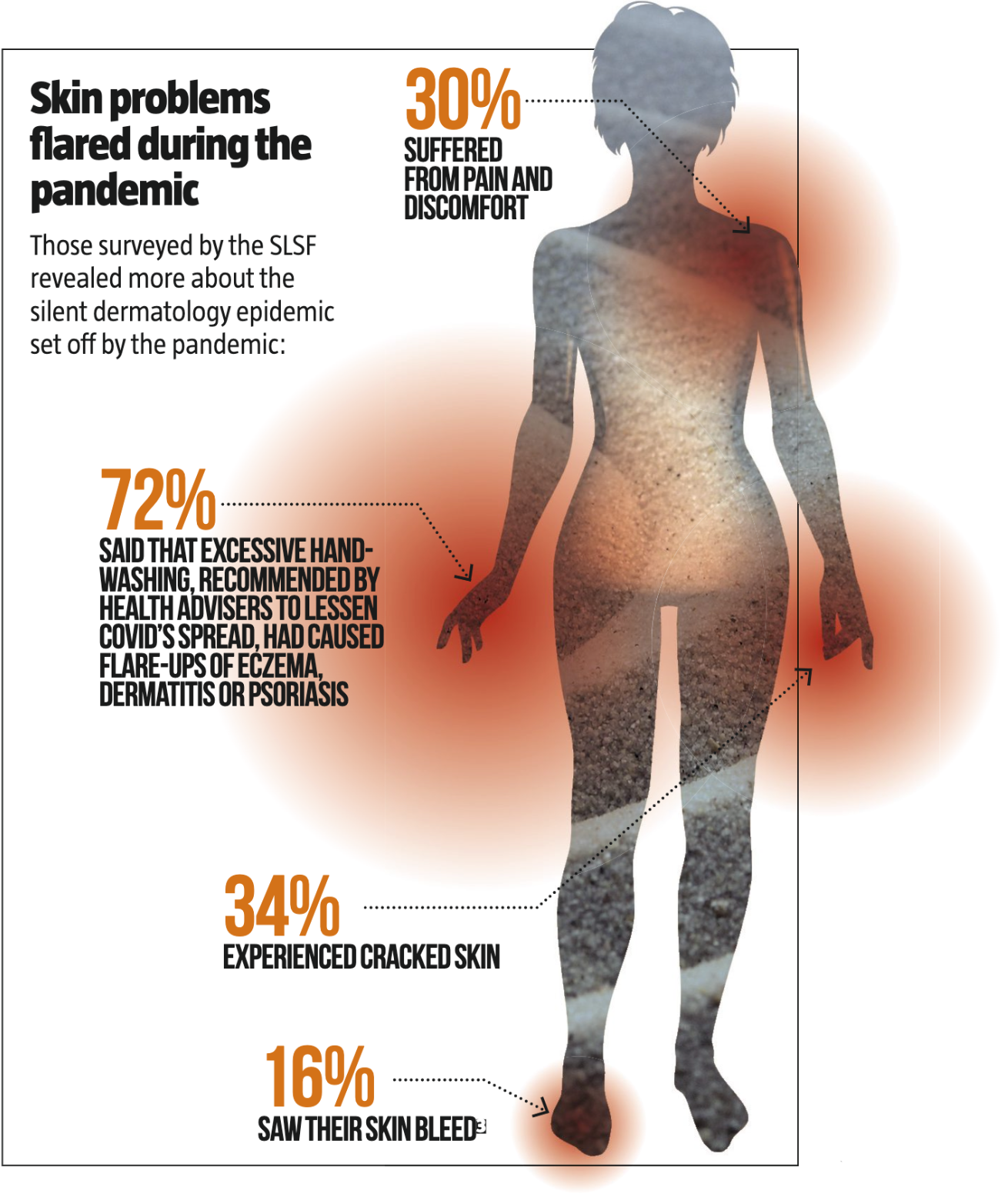
During the Covid pandemic, diagnoses of inflammatory skin conditions such as eczema soared, according to data from a recent survey of 1,000 Britons by the Skin Life Sciences Foundation (SLSF).
Rates of eczema quadrupled during Covid restrictions, with more than 40 percent of all Britons suffering from skin issues, compared to the 10 percent reported by the National Eczema Society. Of those, 66 percent of those suffering from eczema, dermatitis or psoriasis blamed their condition on stress and anxiety, with many citing the Covid pandemic as the cause.
“We were already seeing a significant increase in problems, but when Covid-19 reached the UK we saw an explosion in skin issues, largely a result of extra hand washing and use of hand sanitizers,” according to Dr Nisa Aslam, a London physician with the skin foundation.
The latest drug to hit the eczema market, with FDA approval in 2017, is dipulimab (trade name Dupixent) from Sanofi and Regeneron. It is a monoclonal antibody therapy delivered by injection, and the clinical trial results are modest: 36 percent of adults saw “clear or almost clear skin” after 52 weeks when taking Dupixent, compared to just 13 percent of those on topical corticosteroids only.1 Some dermatologists are now wondering what to do with the 64 percent of patients in the dupilumab “failure” group, including those who experienced adverse events from the drug including “paradoxical” head and neck eczema, psoriasis, eye disorders, arthritis, hair loss, infection, pancreatitis and a “serum sickness reaction.”2
Typically, steroids are prescribed to treat the itch and calm eczema, but these should only be used in the short term because of their side-effects. Systemic steroids prescribed for eczema and used long-term have led to documented adverse reactions, including detached retina leading to blindness, spinal osteoporosis and bone fractures. (All of these were recorded in one 28-year-old who was still covered in eczema despite the treatment.)1
Topical steroids are not without problems, either. Topical steroid withdrawal, a condition denied by many doctors a few years ago, has gained traction in the medical literature and is now recognized among people who have been misprescribed topical steroids for long periods (sometimes many years), resulting in a boomerang effect of increased swelling, blistering and itchy rashes once withdrawn. It can be very painful to overcome the addiction to steroid creams and sometimes take years for symptoms to abate after they are discontinued.2
Five-year-old Grace Ferris of Grimsby in the UK was returning home from school in 2021 with hands “red raw” and in pain from eczema caused by soap and sanitizers at her school, her mother told the BBC.
The British Skin Foundation warned that almost a quarter of children were suffering from eczema on their hands because of enforcement of government handwashing recommendations.
Face masks also added to the dermatology burden across the country; 51 percent of those surveyed told the SLSF that masks aggravated their eczema, dermatitis or psoriasis.
But masks and handwashing were only part of the problem. Many people blamed the stress of the Covid response itself.
“We should not underestimate the increased social impacts of life under lockdown and other restrictions,” says Dr Aslam. “The pandemic has also led to much higher levels of depression and anxiety, a worrying increase in unhealthy levels of alcohol consumption and additional weight gain—and all of these factors are helping to fuel what has become an epidemic within the pandemic.”
Skin conditions and stress compound each other. Studies have shown that eczema (atopic dermatitis) symptoms can lead to poor self-esteem and increased suicidal ideation.4 In a recent study published in the Journal of the American Academy of Dermatology, researchers at the George Washington School of Medicine and Health Sciences found that fluctuating bouts of eczema—itchy, dry inflamed skin—correspond to bouts of depression.5
There is evidence, too, that stress and depression can shift the microbiome and increase gut barrier permeability. “The result, a ‘leaky gut,’ allows bacteria to seep into circulation, producing an inflammatory response,” wrote Ohio State University College of Medicine researchers Annelise Madison and Janice K Kiecolt-Glaser in their 2019 review of the phenomenon.6 While stress can cause cortisol to spike and ignite an inflammatory response from the immune system, which may be beneficial for fighting off infections in the short term, if it is long-lasting, it can lead to inflammatory and autoimmune chronic disease.
Eczema—sometimes called dermatitis—causes chronic itchy and inflamed patches of skin that weep and is one of these complex chronic diseases. It results from a combination of an aberrant immune system and skin barrier dysfunction that allows water to escape and environmental triggers to enter through the skin.
Eczematous skin has been found to lack normal amounts of cathelicidin, a natural antimicrobial that wards off pathogens.7 It has also been found that in many people, the skin—particularly that affected by eczema lesions—is populated with abnormally high levels of some bacteria, especially Staphylococcus aureus.8
A 2017 study of 149 infants whose skin was sampled seven times during their first two years detected elevated levels of S. aureus on the skin of 36 babies before they developed immune-mediated atopic dermatitis, the most common form of eczema. Another bacteria, Staphylococcus hominis, was found to be less abundant than in healthy controls, leading the researchers to wonder if it wasn’t a key competitor that kept opportunistic S. aureus in check.9 S. aureus is a troublemaker, notorious for its ability to resist antibiotics and morph into deadly superbug strains within an impenetrable fortress of biofilms. On the skin, it secretes multiple “virulence factors” including one called toxic shock syndrome toxin-1 and other enterotoxins that can disrupt the skin barrier and induce inflammatory responses in skin cells directly exposed to microbes.
Just why some people are more prone to having their skin colonized by S. aureus is open to debate, but a leading contender is the widespread use (or misuse) or antibiotics in childhood. This is because antibiotics act like napalm on the teeming metropolis of the body’s microbiome, which exerts influence on the immune system.
Antibiotics can wipe out entire species from an individual’s microbe profile, and this can allow opportunistic bad players, like S. aureus, to move in and colonize the space. Antibiotics can alter gut permeability, too,10 leading to a “leaky gut” implicated in almost every chronic inflammatory disease, including eczema.
Perhaps this is why children who have used antibiotics face a 40 percent higher risk of eczema compared to those who haven’t.11 In the US alone, doctors write an average of 47 million unnecessary prescriptions for antibiotics each year, so it’s reasonable that the drugs are a leading suspect in the epidemic of allergy and atopic dermatitis that was problematic even before Covid hit.12 The medical response to S. aureus in eczema has been to assault the system with more and various topical and systemic antibiotics (and even diluted bleach baths), with some reported success.
In most cases, however, S. aureus is intransigent, and it is not clear whether treatment eradicates it or pushes it closer to superbug status, or whether beneficial bacteria (its natural competition) are harmed in the process.
While doctors are looking for answers and more drugs, some researchers are looking for ways to address the microbiome disruption underlying disorders like eczema.
A few recent studies have looked at “skin microbiome transplants,” in which beneficial bacteria or those with strong antimicrobial activity against S. aureus colonization are applied or sprayed onto the skin with beneficial effects.13 In one trial, children or their caregivers sprayed a solution of sugar water containing live Roseomonas mucosa—a bacterium naturally present on the skin, originally isolated from healthy volunteers and grown under carefully controlled laboratory conditions—onto areas of skin with eczema twice weekly for three months and every other day for an additional month.
“Most children in the study experienced substantial improvements in their skin and overall wellbeing following R. mucosa therapy. Encouragingly, the therapeutic bacteria stayed on the skin and continued to provide benefit after therapy stopped,” said Ian Myles of the US National Institute of Allergy and Infectious Diseases, the principal investigator of the trial.
Seventeen of the 20 children felt a greater than 50 percent improvement in eczema severity on all treated skin sites after treatment, and most of them needed fewer steroids to manage their condition.
The NIAID researchers also reported increases in the skin’s barrier function—its ability to seal in moisture and keep out allergens. These benefits persisted after treatment ended, and the therapeutic R. mucosa strains remained on the skin for up to eight months.14
Another study tested a cream containing the benign bacteria Vitreoscilla filiformis found in thermal springs, which have traditionally been used in treating dermatological diseases, and demonstrated that it improves skin in patients with eczema.15
While these types of trials are ongoing, some skin creams are providing prebiotics—food for good bugs—that are able to interact with skin components with promising results.
One such cream, Lipikar Balm AP+M body lotion by La Roche Posay, contains prebiotics that support V. filiformis. In one study, researchers isolated V. filiformis from Lake Erie and grew it in LaRoche Posay spring water, which is used in all its skincare products.16
Here are more nonpharmaceutical interventions that, according to evidence and experience, may help someone suffering from eczema:
The raft of chemicals in laundry detergents, soaps and cosmetics are a minefield for people with a battle already raging on their skin. Give them a pass and only put on your skin what you would put in your mouth.
Traditional oral probiotic approaches rather than topical ones have seen some success, and many people who have put their eczema behind them say a good probiotic mix of Lactobacillus and Bifidobacteria was part of their healing regime.
Probiotics take time to work, however, and the most promising studies followed patients for as long as three months, so giving a probiotic at least that long to see improvement is reasonable.
A 2022 review of research on the skin microbiome in atopic dermatitis notes that in animal studies, Lactobacillus paracasei KBL382, L. sakei WIKIM30 (isolated from kimchi), L. rhamnosus IDCC 3201 and L. plantarum LM1004 all ameliorated symptoms or improved immune system measures related to the condition.17
A 2021 meta-analysis looked at nine studies including a total of 2,093 infants and concluded that a probiotic mix of Lactobacillus and Bifidobacterium could prevent eczema in infants under three years of age compared to a placebo.18 In another 2022 study, children and adolescents with eczema saw a significant clinical response (reduction in SCORAD and steroid use) after six months of treatment with a mixture of probiotics (L. rhamnosus, L. paracasei, Lactobacillus acidophilus and Bifidobacterium lactis.)
The University of Sao Paulo Brazil researchers noted that most of the clinical benefit occurred after the first three months and persisted three months after the probiotics were stopped.19 Kaitlyn Fenley, a microbiologist who specializes in fermentation, healed her own eczema, in part by consuming a lot of homemade probiotic foods from kimchi to sauerkraut, which provide a greater diversity of beneficial bugs than expensive probiotics on the market. For recipes and know-how from her, visit her Instagram feed (@cultured.guru).
Vitamin D, the sunshine vitamin, impacts two key players in eczema: the immune system and skin barrier function. It may be why many people with eczema see their condition improve in summer months with sunshine exposure. Studies have pointed to low vitamin D levels and higher incidence and severity of eczema symptoms.
Vitamin D deficiency has been linked to an increased risk of having skin lesions containing more virulent (aggressive) forms of S. aureus bacteria—the main villain associated with eczema.20 Another study found that vitamin D supplementation in children reduced colonization with S. aureus as well as the severity of atopic dermatitis.21
The Vitamin D Council recommend a dose of 5,000 IU/day of vitamin D in the form of vitamin D3 supplements for the average adult. But, depending on factors including size, ethnicity and lifestyle, taking up to 10,000 IU/day may still be safe.
For more information about dosing, visit www.vitamindcouncil.org.
Light therapies—also called photobiomodulation—have been shown to improve skin conditions including eczema. Some dermatologists use narrow-band UVB light therapy with reported good effects, though like sunlight, it carries the risk of burns and skin aging.22 Low-level laser therapy (LLLT)—the use of red and near-infrared light—is a fast-growing technology that is used to stimulate healing and relieve pain by reducing inflammation and is without reported side effects.23 In dermatology, LLLT is being used for wound healing and to minimize wrinkles and scars, and it has been shown to reduce UV damage as both a treatment and preventative. Inflammatory skin conditions show benefit, too.24 Fitness coach Marisa Chaela of Marina Del Rey, California, says she noticed a “huge” impact on her severe eczema and topical steroid withdrawal when she began sitting in front of a red-light box a few times a week, for about an hour at a time, targeting different areas of her body. “It definitely helped with the itching, and the next day I would wake up and my skin would definitely have an improved texture,” she says.
Vitamin E is an antioxidant that can prevent reactive oxygen molecules from forming and curbs inflammation. Since the early 1990s, several studies have looked at its use in eczema treatment.
In one study, 96 people with eczema were split into two groups: 50 who took 400 IU of oral vitamin E once daily for eight months and 46 who took a placebo. Four subjects treated with vitamin E worsened, compared to 36 in the placebo group; six people in the vitamin E group and five in the placebo group showed no change; 10 people in the vitamin E group and four in the placebo group saw slight improvement in their skin; 23 of the 50 subjects treated with vitamin E experienced “great improvement,” compared to just one in the placebo group; and seven of the 50 vitamin E testers saw “almost complete remission of atopic dermatitis,” while no one getting a placebo saw remission.25 More recently, a clinical trial split a group of 70 people with eczema into two groups and gave one group 400 IU of oral vitamin E and the other group a placebo for three months. Those getting the vitamin E saw major improvements in their eczema symptoms, including itchiness, compared with those getting the placebo.26 As a caution, some studies have shown that high doses of vitamin E can cause bleeding and disrupt blood clotting, and vitamin E supplements may interfere with antiplatelet medications, anticoagulants and chemotherapy drugs.
Foods rich in vitamin E include seeds (particularly sunflower seeds), nuts such as almonds, hazelnuts and peanuts, and dark, leafy greens.
In 2016, researchers at the University of Sheffield Medical School in the UK found that 83 percent of 90 children being treated for eczema had low serum levels of vitamin D.
Treating 47 of these children for two months with supplemental vitamin D (cholecalciferol 6,000 IU daily for ages 1–12 years; 10,000 IU daily for ages 12–18 years) led to a 42 percent reduction in average SCORAD (atopic dermatitis severity score) and a fourfold increase in antimicrobial cathelicidin on the skin, suggesting a causal relationship.1 Researchers from the University of Surrey and the University of Hong Kong reported in a 2019 article that just 1,600 IU per day for up to three months led to clinical improvements in children with eczema with low vitamin D levels.2
This heavy emollient oil extracted from castor beans (Ricinus communis) has been used traditionally to treat a variety of skin conditions. It has potent antibacterial, anticancer27 and antiviral properties,28 and its component ricinoleic acid can soothe inflammation and relieve pain.29 There are numerous anecdotal stories of people healing their eczema with castor oil, too.
“I would use this every single night before going to bed and whenever I was itchy,” says blogger Thao Huynh, who suffered from eczema on her lower legs, back, elbows and face and around her fingers for years that left her with sleepless nights and afraid to go out in a short-sleeved shirt.
She found over-the-counter creams and prescribed steroid creams could make her eczema worse or thin her skin, but not castor oil. “After a week, I noticed huge improvements in my skin. After two weeks, my eczema was completely cured.”
Myrrh, a famed gift of the Magi at the nativity, is recognized as an anti-inflammatory and antimicrobial agent that’s been traditionally used for embalming, wound treatment and to treat various skin conditions and parasitic infections.
A 2019 study of myrrh demonstrated how compounds within myrrh act at the cellular level to reduce itching and thus may be useful to help alleviate itching in eczema.30 As myrrh is strong, it may be best to dilute it in a carrier oil such as castor or jojoba oil. A 2 to 4 percent diluted solution is made using three to six drops of oil per teaspoon of carrier oil.
There are claims that apple cider vinegar alleviates itching from eczema and reduces inflammation. Some speculate that the vinegar alters the pH of skin and affected microbes including common eczema pathogens, like S. aureus.
However, a 2021 study by University of Virginia researchers, published in PLoS One, looked specifically at the microbiome of skin in people who immersed their arms in a solution of raw cider vinegar daily for two weeks and found no significant alterations in the composition of microbes.31 Nevertheless, there are many anecdotes from people who say that consuming apple cider vinegar, rather than applying it topically, was critical in curing their eczema. Nina Gilmour, from Toronto, Canada, noticed a difference in her eczema while she was visiting France. When she returned home, her eczema returned within days. She wondered if it was the salt air or healthier French food that she was missing.
She remembered that in France she ate salad twice a day with apple cider vinegar dressing, and she started to drink a big glass of water with a tablespoon of raw apple cider vinegar (with the mother) at least once every day. Within days she noticed her eczema fading away, and it eventually completely healed.
It may be that apple cider vinegar is able to directly impact the gut microbiome more easily than the skin microbiome. Vinegar has been demonstrated to alter the gut microbiome in mice, ameliorating kidney damage as a result, for example.32
Few studies have looked at the role of vitamin B12 in skin disorders, though it is known to affect the skin.33 Italian doctors from the University of Verona published an interesting case study in 2020 describing an 18-year-old patient who had suffered from severe atopic dermatitis since he was 15. He had skin lesions on his eyelids, head, and neck; in the folds of his arms; and on the backs of his knees, and he needed to use topical steroid creams continuously along with five to six rounds of different oral steroids each year just to keep it under control.
Like many children with eczema, the young man also suffered from hay fever as well as mold sensitivity, and he was diagnosed with chronic antral gastritis, an autoimmune condition that causes inflammation of the stomach, which accounted for his chronic anemia and vitamin B12 deficiency.
At the time the study authors evaluated him, he had been off topical steroids for two weeks and had a five-week “wash-out” of systemic steroids. Blood tests confirmed his anemia and severe vitamin B12 deficiency (46 pmol/L, normal values range from 133–675 pmol/L,) but ruled out a vitamin D deficiency.
The young man was prescribed a moisturizer and topical steroid therapy for 15 days and, for the first time, vitamin B12 supplementation (50 mcg/day dissolved under the tongue).
Four months later, his clinical severity score (SCORAD) had dropped from 82 to 10, and he reported that he had no need for topical or oral steroids. His serum levels of vitamin B12 were 213 pmol/L. The doctors told the patient to stop the vitamins and to take vitamin B12 from food only, and they suggested he keep up his moisturizers.
Three months later, he returned to the center because his eczema had flared up (SCORAD of 50). In parallel with the rise in eczema, his blood vitamin B12 level had plummeted to 97 pmol/ L, with normal vitamin D levels again recorded. A one-week topical steroid trial and vitamin B12 oral supplementation but at a higher dose (cyanocobalamin 500 mcg/ day) was prescribed.
After one month, his SCORAD fell back to 20 and vitamin B12 levels normalized. The steroids were stopped, vitamin B12 supplementation was continued, and one month later the patient registered a SCORAD of five. The oral B12 supplementation of 500 mcg twice a week was maintained as a chronic treatment.
As doctors Davide Chesini and Marco Caminati concluded: “Our report suggests an association between vitamin B12 blood levels and atopic dermatitis, in terms of severity. It also highlights the potential relevance of vitamin B12 supplementation in the management of atopic dermatitis, as a non-pharmacological treatment.”34
Oil of East Indian sandalwood (Santalum album) is known to be anti-inflammatory.
A 2018 clinical trial used three topical sandalwood oil formulations with 0.1 percent colloidal oatmeal, a powder made from finely ground oat kernels, to significantly reduce eczema symptoms in a group of 25 children with mild to severe eczema.
All but one patient (who had an unrelated allergic reaction prior to their final visit) showed an improvement in their condition, and 87.5 percent of patients achieved a 25 percent reduction in their clinical symptom score.
The average reduction in overall severity score was 67.8 percent, and three quarters of the patients saw their eczema symptoms reduced by half. Nearly one-fifth (18.8 percent) experienced complete remission of their symptoms. The researchers also reported on the underlying cellular mechanisms of the sandalwood oil that explain its effects.35
German dermatologists have been using black tea compresses to treat facial eczema and dermatitis for decades. They don’t know how it works but think it may have to do with the astringent and anti-inflammatory properties of tannins in the tea.
A study by researchers from the University of Lübeck, Germany, published in 2019 in the Journal of Dermatological Treatment looked at the effect of black tea compresses followed by application of peanut oil-based cold cream moisturizer (purified to be nonallergenic, according to the study) daily over six days on 22 patients with facial eczema.
The study reported a “dramatic and highly significant reduction”—12–31 percent improvement of disease activity scores—within the first three days of treatment, and the patients continued to improve through day 6.
“This therapy is cheap, universally available and practically free of side-effects,” the researchers concluded. While their pilot study was limited by a small sample size and uncontrolled design, it was the “first formal proof of efficacy for black tea dressing treatment.”1
Main article
|
References |
|
|
1 |
Annu Rev Clin Psychol, 2005; 1: 607–28; BMJ Open, 2020; 10(3): e033741 |
|
2 |
Int J Mol Sci, 2022; 23(2): 669 |
|
3 |
Skin Life Sciences Foundation, “Covid and Skin Problems.” slsf.uk |
|
4 |
J Invest Dermatol, 2014; 134(7): 1847–54 |
|
5 |
J Am Acad Dermatol, 2022 May 9; S0190-9622(22)00792-7. |
|
6 |
Curr Opin Behav Sci, 2019; 28: 105–10 |
|
7 |
Ann Dermatol, 2012; 24(2): 126–35 |
|
8 |
Postepy Dermatol Alergol, 2019; 36(1): 11–7 |
|
9 |
J Invest Dermatol, 2017; 137(12): 2497–504 |
|
10 |
PLoS One, 2015; 10(12): e0144854 |
|
11 |
Br J Dermatol, 2013; 169(5): 983–91 |
|
12 |
US Centers for Disease Control and Prevention, “Antibiotic Use in the United States, 2018 Update: Progress and Opportunities,” 2019. www.cdc.gov |
|
13 |
Sci Transl Med, 2017; 9(378): eaah4680 |
|
14 |
Sci Transl Med, 2020; 12(560): eaaz8631 |
|
15 |
Br J Dermatol, 2008;159(6): 1357–63 |
|
16 |
Clin Cosmet Investig Dermatol, 2013; 6: 191–6 |
|
17 |
Int J Mol Sci, 2022; 23(7): 3503 |
|
18 |
Nutrients, 2021; 13(5): 1461 |
|
19 |
Front Nutr, 2022; 8: 833666 |
|
20 |
Pediatr Dermatol, 2015; 32(4): 506–13 |
|
21 |
J Med Assoc Thai, 2015; 98 Suppl 9: S23–30 |
|
22 |
Br J Dermatol, 2015; 172(2): 462–6 |
|
23 |
AIMS Biophys, 2017; 4(3): 337–61 |
|
24 |
Semin Cutan Med Surg, 2013; 32(1): 41–52 |
|
25 |
Int J Dermatol, 2002; 41(3): 146–50 |
|
26 |
J Res Med Sci, 2015; 20(11): 1053–7 |
|
27 |
BMC Complement Altern Med, 2016; 16: 211 |
|
28 |
J Ethnopharmacol, 2021; 271: 113878 |
|
29 |
Eur J Pharmacol, 2000; 407(1-2): 109–16 |
|
30 |
Exp Ther Med, 2019; 18(3): 1914–20 |
|
31 |
PLoS One, 2021; 16(6): e0252272 |
|
32 |
Food Funct, 2020; 11(3): 2639–53 |
|
33 |
Am J Clin Dermatol, 2015; 16(1): 27–33 |
|
34 |
J Diet Suppl, 2022; 19(2): 238–42 |
|
35 |
Front Pharmacol, 2018; 9: 200 |
The eczema rebound drug
|
References |
|
|
1 |
dupixident.com, “Results in Adults,” January 2022 |
|
2 |
J Am Acad Dermatol, 2022; 86(3): 628–36 |
Hooked on steroids
|
1 |
Hautarzt, 2021 Dec 14. doi: 10.1007/s00105-021-04922-1 |
|
2 |
J Dermatolog Treat, 2021 Feb 4; 1-6 |
Vitamin D: the missing link?
|
References |
|
|
1 |
J Allergy Clin Immunol, 2016; 138(6): 1715–9.e4 |
|
2 |
Nutrients, 2019; 11(8):1854 |
Cure with a cuppa?
|
References |
|
|
1 |
J Dermatolog Treat, 2019; 30(8): 785–9 |
What do you think? Start a conversation over on the... WDDTY Community

Great news! Discounts are available based on your cart total. Check the details below: