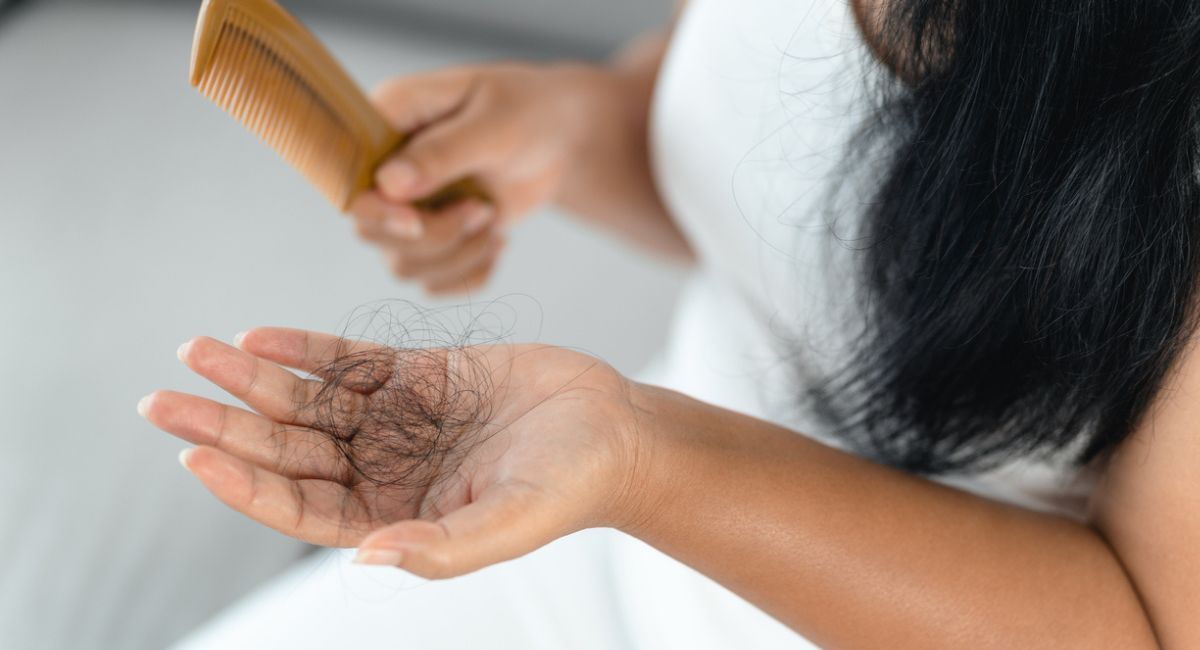
Hair loss in women is often caused by hormonal imbalances, says Marcelle Pick. Here’s how to identify and address underlying issues for a healthier head of hair
Hairstyle options are endless and, for many women, a way to express individuality. That’s why it can be so startling and emotional when clumps of hair suddenly begin to fall out without warning.
This problem is more common than you may think. I see so many women in my practice who are in tears because they’re losing their hair and they don’t know why.
Sometimes women tell me they feel silly for reacting this way. “It’s only hair,” they say in the midst of their breakdown. But I reassure them that there’s more to their reaction than vanity.
Hair loss can be one of the earliest signs of hormonal imbalance, nutritional deficits and disease. So understanding how hair grows and being sensitive to changes in that growth is a good thing.
The good news is, often this kind of hair loss is temporary, and there are things you can do to make it stop. But first you need to know what’s behind hormonal hair loss. Often, rebalancing your hormones can help bring back your full head of hair.
Hair is made up of keratin, a tough protein. Each hair is held in place by a hair follicle, with a hair bulb at its base.
Inside this hair bulb, living cells are at work dividing and growing to form the hair shaft. These cells are fed through blood vessels, which also release hormones that change hair growth at different stages.
Like any living thing, hair has a growth cycle with distinct phases. There are three main phases: anagen (growth), catagen (transition), and telogen (resting).
The growth phase usually spans many years, two to six on average for hair on the head, but it can extend to as many as nine years. This is when hair is getting nourished and can flourish.
The transition phase usually lasts two to three weeks. This phase is exactly what it sounds like: a time of change and preparation to shed. As cells become inactive, the roots cease growth.
In the resting phase, hair doesn’t grow, and it easily sheds during washing or brushing. Sometimes it doesn’t fall out in the telogen phase, and when the anagen phase begins again, it will be pushed out by new hair in that same follicle.
Hair growth is continuous, but not all strands are in the same phase at the same time. That’s why you usually don’t notice normal hair loss; it doesn’t all happen in one spot. However, if too many follicles in the same area are resting at the same time, bald patches can appear, or you might notice a large clump of hair falling out at once.
Typical hair loss in humans is 50–100 strands per day. But these strands are distributed throughout your scalp, so it’s unlikely you’ll even notice. If you’re seeing huge clumps of hair in your drain after showering, bald patches or noticeably thinner hair all of a sudden, it’s time to pay attention.
Sadly, many conventional healthcare practitioners dismiss hair loss as part of getting older. Typical treatments are topical products—and while these may make your existing hair appear fuller, they do nothing to stimulate new growth or address the root cause of the hair loss.
That means your hair will continue to thin, and you’ll have to keep trying to mask it. But so often, something is going on—particularly during menopause—that can be resolved when you look at the whole picture.
Now I certainly can’t say I know the magic cure for hair loss, and I advise you to be very skeptical of anyone who claims to have the secret. But women who find themselves balding shouldn’t think their only solution is to wear scarves or hats or to go out wig shopping. There are ways to promote natural hair growth and halt excessive loss, especially when we’re talking about hormonal hair loss.
Why can some women endure so many issues and still have a full, healthy head of hair, while others start finding clumps in their brush after the slightest bit of stress? And why can hair thin on your head while growing lush and thick in other (perhaps unwanted) areas?
Just like hairstyles, the causes of hair loss in women are highly individual. Genetics can play a role, as can many health problems, including autoimmune diseases, psoriasis, anemia, thyroid disorders and polycystic ovary syndrome (PCOS).
Dramatic weight loss in a short period of time can prompt hair loss. So can physical trauma, like surgery or extreme illness, and extreme stress.
There are so many possibilities, it can take a while to determine what you’re dealing with, especially since hair loss can result from some of these events weeks or even months after the fact.
The issues I’d like to focus on are changes in hormonal levels brought on by any number of things: stress, androgen sensitivity, insulin sensitivity, hormonal birth control, thyroid disorders and nutritional deficiencies, to name a few.
Symptoms are your body’s way of letting you know something isn’t right, and excessive hair loss is no exception. But remember that some hair loss is normal, and your hormones naturally fluctuate, particularly during different phases of your menstrual cycle. So for you, it may be typical to lose more hair at particular times of the month—or even in different seasons.
That’s why it’s so important to pay attention and know what your normal is. But here are some of the key hormones to look at if you’re suddenly experiencing greater hair loss.
Thyroid hormones. Your body knows when things aren’t right, and it will intuitively try to make up for imbalances caused by stress, poor nutrition or other issues. When your system detects fluctuating levels of thyroid hormones, it will channel its energy toward critical matters like getting those levels under control.
That means processes like hair growth, which aren’t essential to survival, are left behind. Often the thinning hair women experience as part of aging can be attributed to low thyroid hormone levels.
Estrogen. Estrogen, when properly balanced, helps women feel amazing. When you have the right amount, you’ll have more energy, a stable mood and a healthy sex drive.
But too much estrogen can be a real problem. And the balance can be tipped by so many things: endocrine disruptors, weight gain, perimenopause and much more.
If you have too much estrogen, your hair may begin to thin. Pregnancy is a great example of this—estrogen levels peak and then fall quickly, causing many pregnant women to experience sudden hair loss.
Testosterone. This one may come as a surprise since testosterone usually makes people think of men—big, strong, hairy men. But women make testosterone, too, and when they make too much, many undesired effects occur.
The most common are changes to hair growth. When too much testosterone is at play, you might end up with hair where you don’t want it (such as your chest or face) and less where you do want it—on your head.
Insulin. Insulin is an essential hormone responsible for regulating blood sugar levels. But it’s involved in a lot of other body functions as well, including hair growth. One Finnish study showed that women who have some insulin resistance markers are at greater risk for female pattern baldness, known as androgenic alopecia (AGA).1
The good news is that hormonal hair loss doesn’t have to be permanent. Understanding that shifting hormonal levels lead to hair loss allows you to consider what comes next. You—not your hormones—can be in control.
But it does take some hard work and some knowledge of what could be throwing your hormones off in the first place.
Stress is one of the biggest factors in hormonal imbalance—and little everyday stressors can be as impactful as one large, traumatic incident.
Nutrition is also closely related to hormone levels in your body. And while fluctuations during perimenopause and menopause are normal, you don’t have to just suffer through the symptoms.
Remember, the resting phase of hair growth is supposed to be temporary, but stressors like poor diet, illness or traumatic events can send your hair follicles into this phase all at once. So removing those stressors is key to reversing the problem.
At the same time, it’s important to note that there could be more serious underlying health problems. That’s why I look at the whole picture when I treat patients for any symptoms, including hair loss.
Understanding how hormones impact hair growth is the first step in turning things around. If you want to rejuvenate your full head of hair, you must address what’s throwing your hormones off.
That’s why turning to topical solutions for hair loss—despite what their advertisements boast—is not the answer. They won’t promote hormonal balance or new hair growth, so at best they’ll change the appearance of your hair while doing nothing to solve the underlying issues.
What works better is taking a hard, honest look at lifestyle and dietary choices you’re making. How much stress are you under? And how do you support your body through that stress?
If the answer is comfort foods filled with simple carbs or other unhealthy habits, it’s time to make a change. Here are a few small steps to get you started.
Eat to promote hair growth. A well-balanced diet rich in whole foods is a great place to begin. Be sure to eat plenty of protein and avoid refined sugar and simple carbohydrates. See ‘Eating for hormonal balance,’ below, for some general guidelines.
Consider vitamin and mineral deficiencies. Vitamins C, D and E, plus B vitamins like biotin, promote healthy hair. Calcium, magnesium, copper, zinc and iron are all important nutrients for hair health as well.
Not getting enough of these nutrients could therefore play a role in hair loss. Consult with a qualified practitioner who can recommend the right tests for you and the best supplements to address any deficiencies.
Address hormonal imbalances. You might need to dig a little deeper with your practitioner to discover exactly which hormones are behind your hair loss. Once you know what you need, you can talk to your practitioner about the best approach to fixing it.
Reduce stress and address emotional health. Have you ever heard someone say they were so stressed they were “tearing their hair out”? If stress is constant, they probably don’t have to tear too hard—the hair will fall out all on its own.
Finding ways to relax and reduce stress can be so impactful when it comes to hair loss. And allowing yourself to express your feelings in healthy ways, rather than keeping them bottled up inside, can also go a long way.
Consider alternative therapies. Stimulating blood flow to your scalp supports normal follicle functioning. Scalp massage and acupuncture are two gentle ways to get this blood flowing.
You should see fairly quick (within six months) resolution to your hair loss through reduced stress, healthier habits and optimal nutrition. If you don’t, be sure to talk to your practitioner again and explore testing if you haven’t already done so.
The tips above can help improve mild to moderate hair loss. But if you have bald patches and more dramatic hair loss, you may need to look further.
In this case, I recommend discussing a range of tests with your practitioner, including a full hormone panel, thyroid testing, a metabolic panel to look at kidney and liver functioning, ferritin stores to determine iron levels, allergy testing, a fasting insulin test and a complete blood count with differential.
If you aren’t seeing a functional medicine practitioner, it’s also important to note that conventional doctors often consider a much wider range of results “normal.” But let’s think about that.
If there’s a range from one to 100, and anything in between is considered normal, even women with levels at the top or bottom of the range are told they’re within the normal range. And while that may be true, when you get that close to the edge, I’d prefer to keep you from falling off.
When I do testing, I’m looking for numbers to be somewhere in the middle. If they aren’t, I’ll take a closer look.
I always remind my patients who are bemoaning hair loss that what’s happening on the outside is a good indication of what’s happening inside the body. And you can’t be truly healthy until you address both.
It only makes sense to consider natural options that nurture your whole health before spending a lot of money on expensive shampoos, conditioners and hair-thickening products. Nurturing yourself from the inside out, including emotionally, should improve the quality and quantity of your hair as well as your overall quality of life.
Try this test to determine whether you’re losing more hair than you should be. Take a small section of hair and pull firmly but gently.
With normal hair loss, you can expect five to eight hairs to come out if the section is approximately 60 strands; on average, 10 percent of hair follicles are in the transition phase at once. But if you pull substantially more strands loose (more than 15) you may be facing a more serious issue.
These suggestions are based on years of research into healthful eating for hormonal balance.
What do you think? Start a conversation over on the... WDDTY Community

Great news! Discounts are available based on your cart total. Check the details below: