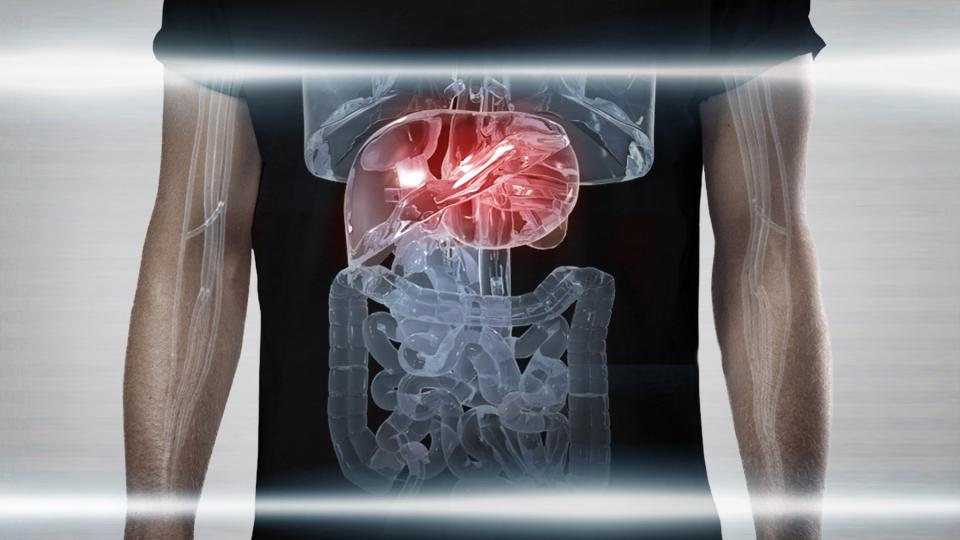
In searching for a cure for long Covid, Traditional Chinese Medicine practitioners found answers with Gu syndrome treatment, an ancient protocol for intractable conditions. Cate Montana investigates
Since 2020, many Traditional Chinese Medicine (TCM) practitioners around the world have been turning to classical Chinese medical texts, looking for viable treatment strategies for long Covid. At the top of the list are protocols for treating Gu syndrome (Gu zheng).
For 3,500 years, this condition has been portrayed by a Chinese hexagram with two or three worms squirming in some sort of vessel. At first glance, it seems to mean Gu is simply an aggressive parasitic affliction. And yet it’s much more.
Gu zheng translates as “black magic” or “possession syndrome” because its symptoms are so intense; so widespread, affecting both body and mind; so diverse and mercurial, shifting from one presentation to the next and then back again; and so utterly untreatable that the patient feels as though someone put a hex on them.
Healers are equally frustrated by Gu. They can’t see what’s really going on or effectively treat a condition with symptoms ranging from chronic pain to seizures to chronic fatigue to light sensitivity to chronic diarrhea and constipation to depression to hallucinations and suicidal ideation. They describe their increasingly ill patients as “having their bodies hollowed from the inside out by dark, invisible yin forces.”
Ancient medical texts compare the body to a mountain and describe Gu as a condition in which “a feeble wind cannot penetrate the dense area at the mountain’s base, creating a place that does not receive air and thus becomes decayed and rotten.”
In other words, as Heiner Fruehauf, PhD, a licensed acupuncturist and renowned expert on Gu syndrome (thehealingorder.com), puts it, “Gu marks a state of extreme stagnation where corruption and decay have already manifested and can no longer be ignored. Gu, in short, is the ancient Chinese symbol for extreme pathological yin, the dark side of life, the worst nightmare of . . . progressive organ decay accompanied by torturous pain and insanity.”
This seems to be an extreme statement describing no real disease until you look at the health—or lack of health—in Western nations today. Since Covid, the numbers of people suffering chronic pain have jumped dramatically.
Over 43 percent of UK adults live with chronic, unrelenting pain. Sixty percent of US adults live with at least one chronic disease, and 40 percent have two or more—conditions that account for 70 percent of deaths annually. In the UK, nearly one in three working-age people have a long-term, basically untreatable health condition. As many as 25 million Americans suffer from conditions that are undiagnosable.
Meanwhile diagnoses are thrown at patients seemingly as a last resort. Conventional medicine appears to hope that somehow a label can relieve the myriad mysterious and debilitating symptoms that come and go for decades without respite.
These symptoms are truly a kind of dark nightmare from which people can’t awaken, driving many to the brink of sanity and beyond.
Into this scenario comes Gu (pronounced “goo”), an ancient diagnosis with profound modern applications. A superficial look at it through the modern medical lens seems to point solely to aggressive parasitic infestations—protozoan, fungal, helminthic, spirochete or viral infections—addressed through equally aggressive use of anthelmintic and antiprotozoal agents and antibiotics.
After all, humans host more than 70 species of single-celled parasitic organisms and nearly 300 kinds of parasitic worms, aka helminths. Parasitic infections are among the most common health issues on earth, affecting some 3.5 billion people; about 450 million experience prominent symptoms.1
Doctors have been treating such infestations for decades with anthelmintic and antiprotozoal agents like oral albendazole, mebendazole, ivermectin and pyrantel, and antibiotics like tetracycline and erythromycin. Functional medical doctors and alternative practitioners often turn to nonmedical parasite cleanses using herbs, wormwood, extracts of wormwood called artemisinins, black walnut tincture and cloves.
All these treatments, medical and alternative, are effective . . . until they’re not.
“Typical parasite cleanses, whether involving antiparasitic drugs, antibiotics or the common herbs introduced by Dr Hulda Clark, unfortunately still involve Western medical thinking—I gotta kill, kill, kill the pathogen,” says Fruehauf. “And they all have this very depleting and cooling kind of effect. Yes, they may help at a certain point. But over time they’re actually making things worse.”
These harsh approaches stress the body. And research shows that powerful antiparasitic drugs, though successful at first, can eventually force protozoan organisms and yeasts deeper into the body, where they become systemic, wreaking havoc on internal organs.2 As well, they do not address the autoimmune complexity of Gu cases, which, according to Fruehauf, is the heart of the matter.
“Gu syndrome is not just driven by the toxins produced by parasites themselves,” he says. “Immune deficiency, chronic inflammation and autoimmune hyperreactivity together make standard treatment impossible.”
This deadly recipe is responsible for what many TCM practitioners term “the 20,000 symptoms of Gu,” which should perhaps nowadays be renamed mysterious undiagnosable disease syndrome (MUDS). Unfortunately, the Western medical approach, going after each symptom as if it’s a little stone dropped in a bag of flour that can be easily extracted, is exactly the wrong course, according to TCM.
With Gu, you’re not dealing with one stone. It’s 20,000 stones in an ever-shifting, complex dance. Fruehauf likens its biological complexity to a gallon of oil poured into that bag of flour. How do you get it out?
“Gu syndrome seems like this exotic, bizarre diagnosis and protocol,” says Eric Grey, a licensed acupuncturist and the owner of Watershed Wellness in Astoria, Oregon (watershedwellnessastoria.com). “And yet when I step back, it’s absolutely addressing what humanity is facing today.”
We have stress. There’s chronic inflammation caused by all the antibiotics, steroids and vaccines we’re given as children and adults. We use drugs and alcohol and eat processed foods filled with sugar, pesticides and additives that drive inflammation into compromising the immune system.
Low-grade autoimmune complications then arise, and colds and infections become common. We don’t want to miss a day of work with a sore throat, so we take endless rounds of drugs until the immune system is driven into hyperactivity.
“So many people endure this kind of immune system degeneration with no recourse,” says Grey. “You feel completely debilitated or trapped in illness, the psychological element becomes really powerful and mental complications arise.
“Symptoms keep adding up, and the likelihood of proper diagnosis and treatment from the Western model is nil. It’s a truly scary situation.”
People with chronic conditions—mystery illnesses—usually end up wrestling with the mental and emotional consequences. Living in constant pain and fatigue while remaining undiagnosed and, worse, improperly treated takes its toll.
But on top of that stress, there’s the little-known fact that parasites affect the consciousness of their hosts. Hence the surprising accuracy of the ancient Chinese label “possession syndrome.”
Inflammation caused by parasite infections affects the brain and central nervous system via the blood-brain barrier, activating the vagus nerve, immune cells and genes linked to mental illness.3
Studies show certain parasites can increase aggressive traits, impair memory and trigger a rapid decline in executive function. They can stimulate paranoia and/or paranoid hallucinations,4 schizophrenia and bipolar disorder5—even suicidal behavior.6
They also drive behavior on the physical level, making us crave foods that are bad for us but good for them. Sugar cravings, for example, drive us to eat sweets and carbs that parasites love, making the body more acidic and thus more prone to infection.
Gu syndrome is not a specific disease or pathogen but a systemic pattern. It can affect any bodily system but is most closely associated with digestive and neurologic issues. Common misdiagnoses are Lyme disease, Epstein-Barr, chronic Candida, pernicious anemia, chronic fatigue syndrome, autoimmune disorders, IBS and other chronic digestive issues or pain syndromes.
Fruehauf says a classic sign of Gu is treating symptoms like diarrhea with specific diarrhea formulas with no results. “Chinese master physicians have continuously pointed out that Gu-induced chronic diarrhea, ascites [fluid buildup in the abdomen], wasting syndrome, mental symptoms, etc. must be diagnosed and treated completely differently from the general occurrence of these disorders.”
Grey says he knows it’s Gu syndrome when a patient has had endless doctors and treatments, but nothing works. They’ve done 900 different diets. They’re at their wits’ end. And if they try ginseng, their symptoms get worse.
This is something people suffering from Gu need to watch out for. The symptom of fatigue goes hand in hand with inflammation and autoimmune disorders.
And when alternative practitioners hear the word tired, they want to give patients stimulating tonics like Cordyceps mushroom, ginseng or astragalus, which normally give a healthier person more energy. But in someone with Gu, these tonics also tonify the viruses, bacteria and spirochetes, causing symptoms to worsen.
The first stage of treating Gu syndrome is educating the patient about what they’re dealing with and how long it’ll take to get better—which both Fruehauf and Grey say can take anywhere from one to five years. “I tell people up-front it’s going to get worse before it gets better,” says Grey. “And you’re going to be in this for a real long time.”
Second is getting them off prescribed drugs—anything that’s telling their immune system to calm down. Even though these do make them feel better, it inevitably makes the course of the disease worse.
The trouble is, when people get off these medications, everything erupts. That means the first six months of treatment often focus on treating the rebound symptoms and improving their diet.
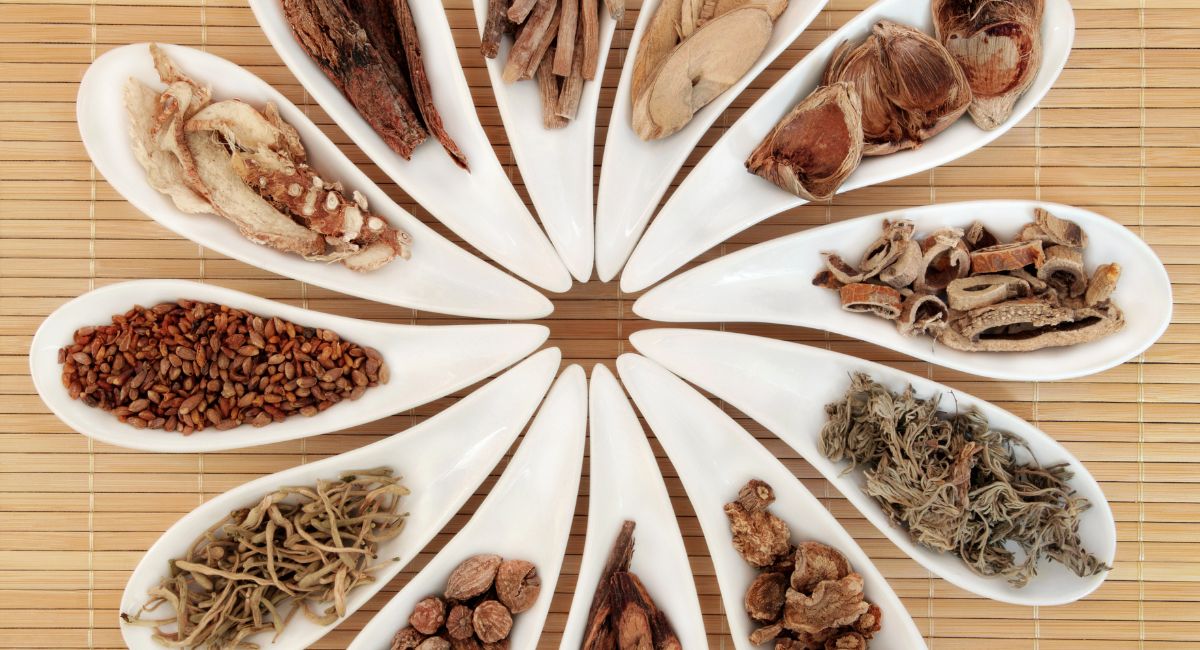
After that, five actions are needed to treat Gu. They combine anti-Gu herbs with tonics that boost the body’s source qi (or chi, energy), strengthening the patient’s health defenses while fighting parasites.
Fruehauf has created a specialty line of formulas to treat the many variations and presentations of Gu; the main two are Thunder Pearls and Lighting Pearls. These are currently available only to licensed TCM practitioners, but they contain many of the herbs listed below.
1. Disperse Gu toxins (san du)
Detox the body with diaphoretic (sweat-generating) herbs to maintain a balanced body temperature and promote overall health, while incorporating cooling herbs.
These herbs’ sweat-inducing properties are much weaker than those of standard diaphoretics like Ma Huang (Herba Ephedrae, Chinese ephedra) or Gui Zhi (Ramulus Cinnamomi Cassiae, cinnamon twigs), and they carry a strong fragrance and penetrating energy that can go deep into the body where Gu pathogens hide.
Zi Su Ye, Folium Perilla Frutescentis, Chinese basil (diaphoretic)
Zi Su Zi, Folium Perillae Frutescentis, Shiso seed (diaphoretic)
Bo He, Herba Menthae, wild mint (diaphoretic)
Bai Zhi, Radix Angelicae, wild angelica root (diaphoretic)
Zi Su Ye, Folium Perillae Frutescentis, Chinese basil (cooling)
Bo He, Herba Menthae, wild mint (cooling)
Bai Zhi, Radix Angelicae, wild angelica root (cooling)
Lian Qiao, Fructus Forsythiae Suspensae, forsythia fruit (cooling)
Gao Ben, Rhizoma et Radix Ligustici Sinensis, Chinese lovage root and rhizome (cooling)
Sheng Ma, Rhizoma Cimicifugae, black cohosh rhizome (cooling)
Ju Hua, Flos Chrysanthemi Morifolii, chrysanthemum flower (cooling)
2. Kill parasites (sha chong) and expel demons (qu gui)
Raw garlic (Da Suan) is often recommended as the most effective single remedy for Gu syndrome. The herbs below can also help.
Da Suan, Bulbus Alli Sativi, garlic
Yu Jin, Tuber Curcumae, wild turmeric root
Ku Shen, Radix Sophorae Flavescentis, sophora root
Huai Hua, Flos Sophorae Japonicae Immaturus, pagoda tree flower bud
She Chuang Zi, Fructus Cnidii Monnieri, cnidium fruit
Jin Yin Hua, Flos Lonicerae Japonicae, honeysuckle flower
Qing Hao, Herba Artemisiae Apiaceae, sweet wormwood
Shi Chang Pu, Rhizoma Acori Graminei, sweetflag rhizome
Ding Xiang, Flos Caryophylli, clove
He Zi, Fructus Terminaliae Chebulae, myrobalan fruit
Lei Wan, Sclerotium Omphaliae Lapidescens, thunderball fungus mycelium
Bing Lang, Semen Arecae Catechu, betel nut
Ku Gua, Momordica Charantia, bitter gourd
3. Calm the spirit (an shen)
Calming herbs work by nourishing the qi and yin of the lung and heart. The first two herbs below are key; Huang Jing is an energy tonic and antiparasitic that promotes calm meditation, and Bai He is effective for anxiety.
Huang Jing, Rhizome Polygonati, Solomon’s seal rhizome
Bai He, Bulbus Lilii, lily bulb
Bei Sha Shen, Radix Glehniae Littoralis, upright ladybell root
Xuan Shen, Radix Scrophulariae Ningpoensis, black figwort root
Sheng Di Huang, Radix Rehmanniae Glutinosae, rehmannia root
Xi Yang Shen, Radix Panacis Quinquefolii, American ginseng root
Fu Shen, Poriae Cocos Pararadicis Sclerotium, poria mushroom with hostwood
Jiang Xiang Lignum, Dalbergiae Odoriferae, scented rosewood
4. Tonify qi and blood (bu qixue)
Here, pungent and detoxifying herbs do the work. The pungent Dang Gui and the detoxifying Gan Cao feature prominently. He Shou Wu is best left out in cases with prominent diarrhea.
Dang Gui, Radix Angelicae Sinensis, dong quai root
Gan Cao, Radix Glycyrrhizae Uralensis, Chinese licorice root
He Shou Wu, Radix Polygoni Multiflori, Chinese knotweed root
Bai Shao, Radix Paeoniae Lactiflorae, white peony root
Huang Qi, Radix Astragali, astralagus root
Wu Jia Pi, Cortex Acanthopanacis Radicis, Siberian ginseng root bark
5. Move qi and blood (xingqi poju)
In addition to antiparasitic qualities, these herbs are crucial for relieving symptoms such as bloating, swelling and pain. And they address the stagnation caused by internal scar formation and the ongoing encystment of parasitic organisms.
Chuan Xiong, Radix Ligustici Wallichii, Szechuan lovage root
Chai Hu, Radix Bupleuri, Chinese thorowax root
E Zhu, Rhizoma Curcumae Zedoariae, zedoaria rhizome
San Leng, Rhizoma Sparganii, burr-reed rhizome
Chen Pi, Pericarpium Citri Reticulatae, tangerine peel
Mu Xiang, Radix Saussureae seu Vladimirae, costus root
Ze Lan, Herba Lycopi Lucidi, Chinese bugleweed
San Qi, Radix Notoginseng, pseudoginseng root
It’s as if Gu is the perfect dark storm—the virulent result of bad diets, pollution, too much stress, way too many pharmaceutical drugs and interventions throughout life, and chronic inflammation that’s barely detectable by Western medical titers (measurements of antibodies in a person’s blood). Autoimmune complications go undetected and we’re given false diagnoses.
All of it takes place under the aegis of a Western medical model that takes a shotgun approach to health, dealing with isolated symptoms rather than root causes. All the while, it ignores the intricate, interdependent, holistic nature of life and the body itself.
“In Buddhist terms, there’s this concept of yin guo, which is karma. It means, literally, seed and fruit,” says Fruehauf. “You plant a banana seed, you harvest a banana. You plant a bitter gourd, you harvest a bitter gourd. We’ve planted the seeds of Gu and are reaping the harvest of Gu.”
Here are the major characteristics of Gu syndrome compiled by Heiner Fruehauf. They cover a wide range, but the most consistent element is “the distinct presence of mental symptoms,” he says, “usually in combination with digestive problems.”
Intestinal symptoms
Neuromuscular symptoms
Mental symptoms
Constitutional indicators
Both Heiner Fruehauf and Eric Grey insist that dietary changes are an essential part of Gu syndrome treatment.
The number one no-no is sugar, and number two is alcohol. “If I can get patients away from those substances,” says Grey, “it’s incredible how quickly things start to clear up.”
Besides sugar and alcohol, avoid these:
Be sure to include these:
If you can’t find a TCM practitioner familiar with Gu syndrome, make sure any herbal formulas they prescribe are pungent in taste. It’s the aromatics that really treat Gu.
Besides treating classic Gu, Eric Grey treats long Covid patients using the Gu protocol because “Covid is just a very weird pathogen with a type of inflammatory process that is like nothing we’ve seen really. And it has a pernicious nature that opens the door for lots of other pathogens and secondary infections in multiple organ systems, which makes treatment exceptionally complex—just like Gu.”
His first long Covid case was a woman with a horrible bacterial lung infection. Nine courses of antibiotics hadn’t helped. Very weak and stressed, she had trouble breathing at night and suffered from brain fog, migraines and vomiting on and off for hours. She also caught every cold or virus that passed by.
Grey got her off the antibiotics, persuaded her to change her diet and treated her using Fruehauf’s Thunder Pearls, changing the formula as needed. (It helps to switch formulas every six weeks or so to ensure the parasites don’t adapt—which they’re very good at.)
She was rigorous with the regime, all her symptoms went away, and he stopped treating her after nine months. “I didn’t see her again until I ran into her at her place of work, and she looked like a different person,” he says.
Grey recalls a woman in her mid-50s who came to him with digestive complaints that seemed food allergy related but couldn’t be identified despite years of different doctors, testing, elimination diets and more. Most worrisome was her severe loss of appetite and concomitant weight loss that had even her primary care physician worried.
“She came to me after a ‘natural medicine’ OTC parasite cleanse that ended up doing more harm than good, and she was just miserable,” he says. The first two to three months of treatment were rocky, trying to find the right herbal formula. It ended up being Fruehauf’s Thunder Pearls based on a classical formula called Lizhong Wan, which is very gingery.
Three months in, she had markedly fewer symptom flare-ups, even eating food she normally wouldn’t. Then, because she was feeling so much better, she started experimenting with big allergens like gluten.
“This happens in about one out of three patients,” Grey says. “And it set us back. But we developed some agreements about experimenting, and after another solid six months her appetite truly returned.”
She continued his protocol for another three to four months and gained at least 10 pounds in that time frame before ending treatment. “This was in 2022,” he says. “I just heard from her last week and she’s had no major flareups since. She’s up to her goal weight and just ran a half-marathon. She’s over the moon.”
If you’re looking for a practitioner of Traditional Chinese Medicine, visit the websites of these professional organizations. All have a “Find a practitioner” search function to help you locate a qualified TCM practitioner near you.
US
National Certification Commission for Acupuncture and Oriental Medicine (NCCAOM)
nccaom.org
Practitioners listed in the NCCAOM directory, which includes over 20,000 acupuncturists, have completed accredited training, passed national board examinations and maintain ongoing certification in acupuncture and/or Oriental medicine. They also adhere to NCCAOM’s professional and ethical standards.
UK
The Association of Traditional Chinese Medicine and Acupuncture (ATCM)
atcm.co.uk
One of the main self-regulatory bodies that govern the practice of TCM in the UK, the ATCM has over 700 TCM practitioners as members. All members have completed at least three years of training in traditional Chinese acupuncture, Chinese herbal medicine or both.
The Register of Chinese Herbal Medicine (RCHM)
rchm.co.uk
The more than 300 members of the RCHM have high minimum standards of training and adhere to the RCHM code of ethics and practice. You can also search for a practitioner under the RCHM Approved Suppliers Scheme, which audits herbal medicine suppliers to check that they adhere to stringent quality standards.
What do you think? Start a conversation over on the... WDDTY Community

Great news! Discounts are available based on your cart total. Check the details below: