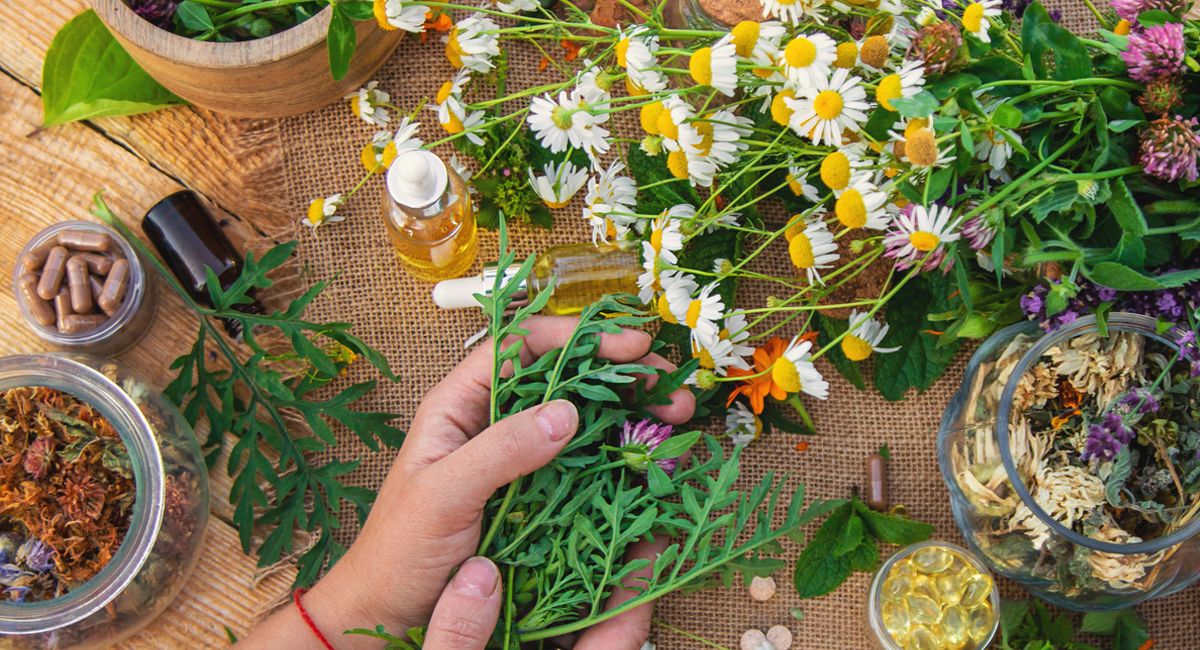
Herbalist Christine Herbert shares seven go-to herbs plus herbal recipes for treating all manner of digestive problems, from bloating and constipation to IBS and IBD
During my 25 years of herbal practice, the subject that’s come up most among my patients is digestion. Digestive complaints account for about 30 percent of health consultations with professionals, and more than 40 percent of other consultations end up being gut-related.
Apart from causing all sorts of digestive symptoms, such as diarrhea, constipation, nausea and bloating as well as gastrointestinal disorders like irritable bowel syndrome (IBS) and inflammatory bowel disease (IBD), an unhealthy gut can contribute to a wide range of chronic health issues, including obesity, metabolic disease, heart disease, chronic fatigue and mental health problems.
Recent evidence indicates a link between gut and lung health,1 and increasing reports show the gut and brain are constantly in communication. The microbiome is at the center of this web, as more research is showing.
Whatever the symptoms I see at my practice, I always consider the digestive system as part of my holistic approach. And I find the best place to start is the gut. Here are seven of my most trusted herbs for treating common digestive ailments.
Chamomile has been used for generations to treat tension, digestive pain and insomnia. It’s an antispasmodic (reduces smooth muscle spasms) rich in aromatic, volatile oils that stimulate digestion, ease gut inflammation, reduce digestive gas and relax cramping.
Chamomile is also inflammation-mediating and cooling, acting on the digestive and nervous systems to relax and calm the whole body. It’s a first-choice herb for gas, bloating and pain, although it’s high in salicylates (natural chemicals made by plants), so those who are hypersensitive to salicylates shouldn’t use it.
It can calm the liver and gallbladder, relieve pain and spasm, and treat mouth ulcers. One study found chamomile mediates inflammation similarly to non-steroidal anti-inflammatory drugs (NSAIDs).2
This is the herb to try first as a tea (maybe with ginger) for most cramping digestive pains as well as earache, toothache, headache, menstrual pain and nightmares.
Chamomile has an affinity for the vagus nerve and helps improve its tone. When it’s the right herb, it creates a feeling of calm, relaxation, and easy and prolonged sleep.
How to take: I tend to use German chamomile, but the medicinal actions of Roman chamomile (Anthemis nobilis) are pretty much the same. Both can be used as a tea, tincture or essential oil.
Dandelion is a bitter tonic herb that acts as an alterative (an herb that can restore proper functioning of the body) to improve liver and kidney function. It’s an excellent and safe diuretic, and it cools and calms the liver in those with hypertension and high cholesterol.
It’s also helpful for heartburn and acid reflux. A gentle laxative, it moves constipation without becoming habit-forming. The root contains inulin, which supports the microbiome, and sustained use benefits most chronic digestive disorders, such as IBS.3
Dandelion is a cholagogue, meaning it stimulates the gallbladder to contract and secrete bile. It’s also useful in cholestasis, in which bile has become thick and sludgy and there’s a risk of gallstone formation.
It has been shown to mediate inflammation and oxidation, and it may be an excellent anti-diabetic herb. Many of its constituents have blood-sugar-lowering and lipid-reducing properties.4
How to take: The root can be taken as a decoction, roasted or not, while the leaves can be eaten or made into an infusion, and both can be made into a tincture. Dandelion is generally safe in pregnancy but, like most herbs, is best avoided in the first trimester.
Ginger is a warming, stimulating, antispasmodic herb that acts first on the digestive system and then on the whole body. It increases blood circulation, improves digestion and reduces nausea.
Ginger is excellent for pain relief when pain is due to inflammation, bruising, digestive colic or menstruation.5 It may be one of the most potent anti-inflammatory herbs, as well as having antioxidant and anticancer actions.6
A study of healthy people given 100 mg of ginger daily found it made their white blood cells less likely to cause inflammation and autoimmune disease.7 Another study found gut flora improved in those drinking ginger juice.8
Ginger is useful for almost any chronic inflammatory condition, but it should be avoided, apart from occasional use, by anyone who is constitutionally hot.
How to take: Take as a tea or powder, or use as a poultice. Be cautious if you’re on blood-thinning medication.
Yellow dock root is a cooling, stimulating bitter hepatic and cholagogue that works as an alterative on the lymphatic, liver and digestive systems. It’s useful for inflammation and overactivity in the digestive system, indicated by symptoms such as acid reflux, heartburn, excess saliva and strong appetite. The bowels may be loose or constipated.
For overactivity, yellow dock should be given in drop doses as it is quite stimulating. Larger doses (2–5 mL of tincture) can be used where stimulation is needed, such as for chronic inflammation where the liver, bowels and lymph need their function enhanced to clear stagnation and remove toxins.9
So it’s useful for chronic constipation or liver congestion, which might present with headaches, indigestion, jaundice or hormonal problems. Yellow dock root is also ideal for skin conditions such as eczema or acne that are secondary to digestive or liver problems.10
How to take: Taken as a powder or tincture, yellow dock is safe in moderation.
Licorice is a mucilaginous herb that protects and heals mucous membranes and other body tissues. It mediates inflammation and is widely used, partly because its sweetness improves the taste of other herbs.
It’s a gentle laxative and an adaptogen (non-toxic herb that allows the body to normalize its physiology in response to stressors) that can restore and regulate the hypothalamic-pituitary-adrenal axis.
Licorice is useful for all conditions of inflammation and irritability of most mucous membranes of the body, so it helps with gastritis, IBS, IBD, peptic ulcers, gastrointestinal infections and so on. Most gut-related problems can benefit from licorice, although it’s important to use it with caution.
Licorice can act like a steroid, likely because it inhibits the breakdown of corticosteroids in the body, which assists the anti-inflammatory effects of cortisol and adrenocorticotropic hormone (ACTH). This means it can aid withdrawal from steroid medication, but it restores adrenal function, unlike steroid medication, which suppresses it.
As an adaptogen, licorice can increase or decrease cortisol as needed. It balances adrenal hormones and is excellent for all kinds of allergic reactions. It’s even a good antiviral.
But it can also enhance aldosterone (a steroid hormone that helps regulate blood pressure), which can cause high blood pressure, so it’s contraindicated for those with hypertension. No one should take licorice in large amounts long-term.
How to take: Take as a tincture, tea or powder.
Rhubarb root (not to be confused with edible garden rhubarb) is a bitter herb that contains the irritant laxative anthraquinone emodin. As you’d expect, it’s useful for treating constipation, but it also has an astringent effect (shrinks or dries tissues), so it can be used for diarrhea and gastrointestinal bleeding, too.
Small doses are astringent and calming for diarrhea, while larger doses are stimulant and laxative for constipation. A small dose is 5–10 drops of tincture, and a large dose is 20 drops or more.
Herbalist Peter Holmes considers rhubarb root the best laxative for long-term use and safe for any age group. He calls it “one of the best gastric, biliary and pancreatic stimulants.”11
Several anthraquinone constituents of rhubarb root have anticancer properties. Emodin, for instance, is anti-metastatic, induces apoptosis (cell death) and inhibits cellular proliferation.12 Rhubarb root also shows antimicrobial activity against bacteria, viruses, fungi and parasites.
How to take: Take as a powder or tincture. Rhubarb root is contraindicated in pregnancy and lactation.
Plantain is one of the most useful first aid plants and can be found growing in most parts of the world at most times of the year. It’s cooling, moistening, antiseptic (when fresh), antihistamine and anti-inflammatory.13
Plantain is mucilaginous; this and other properties make it useful for healing an inflamed or leaky gut as well as gastric ulcers.
It’s an excellent remedy when combined with marigold (Calendula officinalis). You can make a strong decoction of the dried or fresh herbs by simmering them for 20–30 minutes.
Ideally this would be drunk on an empty stomach after at least a 12-hour fast. Make it the night before and drink the next morning. A handful of the dried herbs in about 250 mL of water daily would also work.
Plantain is an excellent drawing agent, too. It can be used on dirty wounds and abscesses; spider, insect and snake bites and stings; and tooth abscesses to draw out infection, dirt and venom.
It calms inflammation and irritation of the upper respiratory tract and lungs.
How to take: Use as fresh leaves, if possible. It can be added to a green smoothie (see recipe, below) or made into an infusion or tincture. It can also be used as a poultice—apply well-chopped or chewed leaves directly to the skin.
Some fresh herbs, like dandelion or plantain, can simply be eaten in a salad or added to a green smoothie (see recipe, below). But there’s a variety of other ways to get your dose.
Teas or infusions
Pour a cup of boiling water onto a teaspoon of dried herbs or a small handful of fresh herbs and leave to sit until cool enough to drink. Drink hot or cold.
You can use single herbs, such as chamomile or ginger, or herbal combinations. A little licorice root is a good addition if you like a sweet taste (but use sparingly if you have high blood pressure).
Generally, infusions are made with the soft aerial parts of plants, such as leaves and flowers. Sometimes an infusion can be made with cold water overnight; mucilaginous herbs, such as marshmallow, do well with a cold infusion.
Decoctions
To make a decoction, simmer harder plant materials, such as seeds, barks and roots, gently for anything from five minutes to half an hour. This might be the technique used for burdock or dandelion root. Again, add a little licorice if desired. Spices are also nice here, such as cardamom or cinnamon.
Tinctures
Herbs can be given as liquid extracts in the form of tinctures by following these steps:
The liquid tincture will keep for several years in a cool, dark place. It doesn’t need refrigerating.
Glycerates
A glycerate is made in exactly the same way as a tincture but greatly reduces or eliminates the alcohol. I suggest replacing the alcohol in the tincture instructions above with the following:
You can replace the vodka in a glycerate with water or an herbal tea, but the glycerate is then prone to fermentation unless kept in the fridge. Liquid herbal extracts can be made in cider vinegar in the same way but will need to be refrigerated to keep for longer than a few months.
Powders
These can be mixed into any liquid and are particularly effective taken in a green smoothie (see recipe, below). Powders can also be put into empty capsules.
Healthy sweets
You can add any herbal powders to the following recipe:
These will keep in the fridge for the week.
Dosages
Dosage is variable for all herbs. Some people do well with drop doses of liquid extracts, and others need teaspoonfuls two to four times a day. Likewise, powdered herbs might work well at one capsule or half a level teaspoonful daily for some, while others may need four times that amount a day.
It’s best to see a qualified herbalist for individual advice, but generally you should start with a low dosage and slowly increase to see what works.
The ultimate health drink, green smoothies are good for everyone and are an easy way to get a daily dose of vitamins, minerals and beneficial enzymes. They’re also an excellent way to take the more palatable herbs.
Use raw, ideally organic ingredients that are as fresh as possible. The ingredients below are optional, except the green plants—make it with what you can find and what you like.
Ingredients
Any green leafy vegetable, such as spinach, kale, arugula (rocket) or lettuce
Wild herbs, such as dandelion leaves, plantain leaves, cleavers, hawthorn buds and leaves, stinging nettles or ground ivy
Cultivated herbs, such as lemon balm, rosemary, mint, chives or parsley
Any sprouted seeds, such as alfalfa
Peas in an edible pod, such as snow peas, sugar snap peas or mange tout peas
Cucumber
Pea shoots
Broccoli
Celery and celery leaf
Fennel bulb
Avocado
1–5 g chlorella (start low and build up)
Any commercial green superfood
Pinch of salt
Fresh juice of a half to one lemon, plus a little zest if it’s organic/unwaxed
Garlic to taste
Any prescribed herbs or herbs of your choice (fresh or powdered)
Olive or hemp seed oil and/or fish oils
Method
As we age, digestion becomes less efficient, and you may find you can’t eat the way you used to. As a young person, you might have been able to eat a big meal at 9:00 p.m., go to bed within an hour or so, and have no problem.
But as an older adult, you may find you don’t sleep well if you eat late because your digestive system is still trying to process your dinner, or you may suffer indigestion. Often this is due to low stomach acid, or hypochlorhydria.
Here are a few simple steps to improve your digestion.
Spice it up
This simple mixture will stimulate digestion. Combine fresh ginger with salt, lime juice, and fresh or dried coconut and mix with a mortar and pestle. Take a teaspoonful (or less) before eating. It will store in the fridge for a few days.
The following is the most popular formula I’ve ever made, and hundreds of people have found it useful. It’s a mix of bitter and aromatic herbs, which together really help digestion.
This balanced formula suits most people as it contains both warming and cooling herbs. I make it using tinctures of the following:
3 parts artichoke (Cynara scolymus)
2 parts angelica (Angelica archangelica)
2 parts blessed thistle (Carbenia benedicta)
1 part bitter orange peel (Citrus aurantium fr.)
1 part centaury (Centaurium erythraea)
1 part fennel seed (Foeniculum vulgare)
1 part gentian (Gentiana lutea)
1 part ginger (Zingiber officinale)
Take anything from 20 drops to a teaspoonful in a little water as needed.
This works best as a tincture as it’s quite unpleasant as a cup of tea. As a tincture it’s pleasant to take, if a little bitter to those who are not used to bitter tastes. Everyone gets used to it after a few days.
Adapted from Digestion, the Key to Good Health by Christine Herbert (Aeon Books, 2024), available to order at aeonbooks.co.uk. Enter code DG20 to save 20 percent until November 30, 2024
What do you think? Start a conversation over on the... WDDTY Community

Great news! Discounts are available based on your cart total. Check the details below: