
Many who need to go to the ER, or to A&E in the UK, have reacted badly to a medical procedure, drug or vaccine—and it’s happening more and more. Bryan Hubbard reports
Have you had the bad luck to visit the emergency room (ER) or A&E of late? You’d have noticed they’re busy places. But why? Are people incredibly accident prone, falling on sidewalks and off ladders at a moment’s notice?
Yes, some are there because of a broken arm or sprain, or they have breathing problems, cuts and bruises, and concussions. But an increasing number are there because they’ve had a bad reaction to modern medicine: a medical device, surgery, drug or vaccine. And it’s a trend that is worsening.
The ID Band Company, which makes personalized medical bracelets, has analyzed National Health Service data on admissions to A&E in the UK over the past six years. Although the figures will be much higher in the US, the overall trend is likely to be very similar.
In those six years, the number of people who have suffered “misadventures during surgical and medical care”—a phrase for medical error that hides a thousand sins—has increased by 180 percent, while the number of people who have had an “abnormal reaction” to a medical procedure, which could include a prescription drug or surgery, has risen by 150 percent.
The one bright point is the number of people self-harming or attempting suicide from drug overdose has fallen dramatically.
“The sharp rise in admissions related to medical devices and procedures suggests a need for better monitoring systems,” says ID Band consultant Paula Lingard.
A gloomy picture, for sure, but at least you’ll know how to strike up a conversation with the person next to you should you ever find yourself in the ER again: “What drug or medical procedure are you reacting to, then?”
Hospitals in the UK see about 3.5 million admissions per year. The numbers in this table don’t reflect all the reasons a person visits A&E or all those admissions—only the ones that have seen the sharpest increases or decreases over the past few years.
The ID Band Company identified these trends by analyzing hospital-admitted patient care data from the National Health Service.
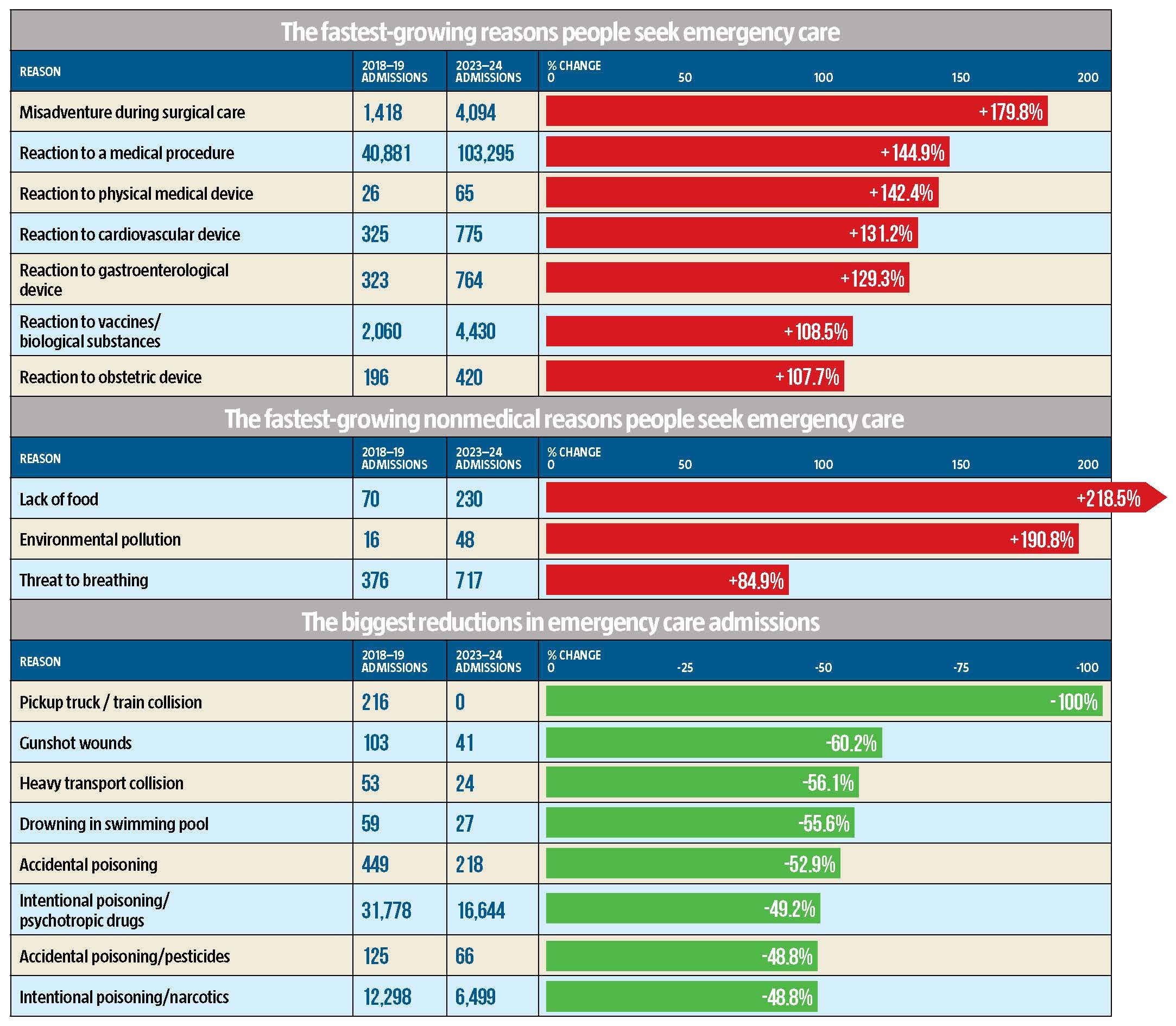
Source: ID Band Company, 2025
What do you think? Start a conversation over on the... WDDTY Community

Great news! Discounts are available based on your cart total. Check the details below: