DELIVERING HEALTH INFORMATION
YOU CAN TRUST SINCE 1989
Join the enews community - Terms
MEMBER
MENU
Filter by Categories
Blog
General
Lifestyle

Multivitamins: The missing link to optimal nutrition

Reading time: 4 minutes

Sponsored content

While food serves as the foundation for your nutrient requirements, multivitamins can fill in some nutritional gaps, thereby enhancing wellness alongside a healthy varied diet. There are several reasons why even individuals who consume a healthy varied diet may not meet their nutritional needs.

If chosen well, a carefully formulated multivitamin formula can be a beneficial tool to support various health aspects, such as stress management, immune system, hormonal balance and many more. Furthermore, they can be beneficial during different, and important life stages, such as fertility (for both males and females), pregnancy, childhood and menopause.

Why do we need a multivitamin?

Alcohol intake: Excessive alcohol intake can also hinder nutrient absorption in the gastrointestinal tract, increasing the risk of deficiencies in essential nutrients such as B vitamins, magnesium and zinc.1,2,3,4,5,6,7,8,9,10,11,12

Reduced sunlight:  Many people do not get enough vitamin D due to sedentary lifestyle and confinement; excessive use of sunscreen; dark skin as high melanin content blocks the absorption of UVB radiation; and covering of the skin due to religious reasons. Winter season and high latitude locations also affect vitamin D synthesis. Supplementation can help bridge this gap. 13

Poor gut function: Conditions such as small intestinal bacterial overgrowth (SIBO), Irritable Bowel Syndrome (IBS), atrophic gastritis, dysbiosis, celiac disease and Crohn’s disease have been associated with reduced absorption of many nutrients.  Therefore, supplements can be used to address these nutritional gaps.14,15,16,17,18,19,20,21

Busy and stressful lifestyle: A demanding lifestyle can deplete essential nutrients, including B vitamins and magnesium, thereby significantly increasing our nutritional requirements.

Dietary restrictions: Adopting a gluten-free, dairy-free, or vegan/vegetarian diet without careful planning may lead to insufficient intake of vital nutrients such as vitamin B12, folate, iron, or zinc.22,23,24,25,26

Being overweight or obese: Research indicates that being overweight or obese can elevate the requirements for certain vitamins and minerals.27,28,29

Age: As we age, the intake and absorption of many nutrients tend to decline, placing older individuals at a higher risk for deficiencies. 30,31,32,33,34,35

Medication: Certain medications may deplete nutrient levels and/or interfere with their absorption, and lead to a higher risk of several nutrient deficiencies. 36,37,38,39,40,41,42,43,44,45,46,47,48,49,50
Pure Encapsulations Multivitamin Supplements: What Are They & Why They Are Worth It

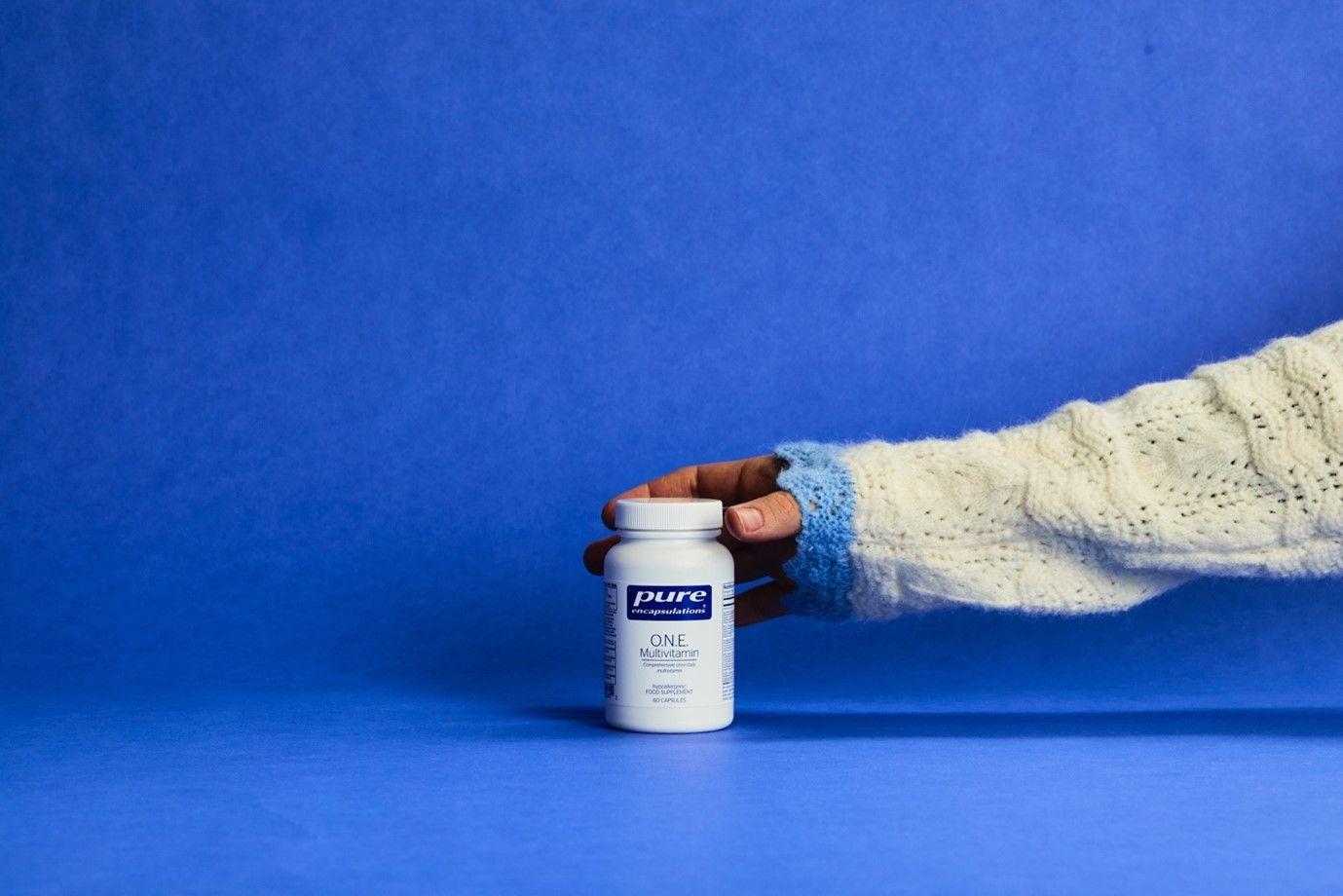
In today’s wellness-conscious world, the demand for dietary supplements has surged, presenting consumers with an overwhelming array of choices. Amidst this vast selection, Pure Encapsulations stands out for their unwavering commitment to quality and efficacy. These supplements are formulated with precision and undergo rigorous testing to ensure they meet high standards. They are crafted to deliver consistent and reliable results, which can be crucial for individuals with specific health needs or conditions. Enhanced quality control measures ensure that these supplements are free from unnecessary fillers, binders, preservatives and artificial colours in a cleaner, more effective product.51

How do you choose the right multivitamin formulation for you?

Not all multivitamins are created equal; therefore, it is essential to make informed choices and consider the following factors:

High-Quality Ingredients: Pure Encapsulations emphasizes the use of high-quality, pure ingredients. Their evidence-based formulations often include clinically proven ingredients supported by research, ensuring effectiveness and alignment with the latest advancements in nutritional science.

Hypoallergenic Formulations: Individuals with allergies and sensitivities must exercise caution when selecting supplements. Pure Encapsulations utilises ingredients that are tested for identity, potency, microbial contaminants, heavy metals, solvent residue and allergens. Their products are free from unnecessary additives, fillers, and artificial ingredients, ensuring a clean formulation. Additionally, Pure Encapsulations products are certified by the Gluten-Free Certification, an internationally recognised and trusted symbol, signifying that the products meet the highest quality standards for gluten-free certification.

Research-Driven Formulations: Pure Encapsulations continuously invests into clinical research, having conducted over 40 peer reviewed clinical trials, to study their ingredients and finished formulations. This commitment to high-quality research has helped them build a robust and growing body of published research and has fuelled significant discoveries in nutrition science, resulting in new peer-reviewed publications in top scientific journals, each year. This focus on scientific backing ensures that their products are both effective and reliable.

Transparency and Testing: Pure Encapsulations is dedicated to transparency in labelling and ingredient sourcing. They conduct rigorous testing for potency and purity. All production lots are tested by accredited and cGMP compliant laboratories to verify product quality. Consumers can trust that the label accurately reflects the product’s contents, without hidden ingredients or misleading claims.

Professional Endorsements: Pure Encapsulations supplements are formulated by nutritionists, PhDs and leading medical experts and are frequently prescribed or recommended by healthcare providers who trust their efficacy, purity, potency, and bioavailability.52  The brand’s use in clinical settings further enhances its credibility.

Comprehensive Range: Pure Encapsulations offers a diverse array of supplements, including vitamins, minerals, herbal extracts, and specialty formulations. This extensive range allows consumers to find products tailored to their specific health needs.

Sustainability and Ethics: Pure Encapsulations is committed to sustainable practices, reflected not only in their products but also in their corporate practices. They continually strive to reduce their environmental footprint by minimizing plastic wrapping on their bottles and eliminating hard-to-recycle and single-use plastics.53

An Investment in Your Health

Think of multivitamins as an investment in your well-being. These products utilise quality ingredients, adhere to strict operating procedures, and maintain high standards for purity and potency.

With numerous options available in the supplement market, choosing pure products is a straightforward way to ensure you receive the quality and value you deserve.

You can find out more about Pure Encapsulations here: www.pure-encapsulations.co.uk

What do you think? Start a conversation over on the... WDDTY Community

References
  1. Ayo-Yusuf OA, Olutola BG. Epidemiological association between osteoporosis and combined smoking and use of snuff among South African women. Niger J Clin Pract 2014; 17:174–177.
  2. Waugh EJ. et al. Risk factors for low bone mass in healthy 40-60 year old women: a systematic review of the literature. Osteoporosis Int 2009; 20:1–2.
  3. Benson BW, Shulman JD. Inclusion of tobacco exposure as a predictive factor for decreased bone mineral content. Nicotine Tob Res 2005; 7:719–724.
  4. Krall EA, Dawson-Hughes B. Smoking increases bone loss and decreases intestinal calcium absorption. J Bone Miner Res 1999; 14:215–220.
  5. Mikosch P. Alcohol and bone. Wiener medizinische Wochenschrift 2014; 164(1-2):15–24.
  6. Pardo-Cabello AJ. et al. Vitamin B12: For more than just the treatment of megaloblastic anemia? Rev Clin Esp (Barc). 2023; 223(2): 114-119.
  7. Rivlin RS. Magnesium deficiency and alcohol intake: mechanisms, clinical significance and possible relation to cancer development (a review). J Am Coll Nutr 1994; 13:416–23.
  8. Vamvakas S. et al. Alcohol abuse: potential role in electrolyte disturbances and kidney diseases. Clin Nephrol. 1998; 49: 205–213.
  9. Navarro S. et al. Role of zinc in the process of pancreatic fibrosis in chronic alcoholic pancreatitis. Pancreas 1994; 9:270-74.
  10. Menzano E, Carlen PL. Zinc deficiency and corticosteroids in the pathogenesis of alcoholic brain dysfunction--a review. Alcohol Clin Exp Res 1994; 18:895-901.
  11. Kang YJ, Zhou Z. Zinc prevention and treatment of alcoholic liver disease. Mol Aspects Med 2005; 26:391-404.
  12. McClain C. et al. Role of zinc in the development/progression of alcoholic liver disease. Curr Treat Options Gastroenterol 2017; 15:285-95.
  13. Naeem Z. Vitamin d deficiency- an ignored epidemic. Int J Health Sci (Qassim). 2010; 4(1): V-VI.
  14. Ao M. et al. High prevalence of vitamin B-12 insufficiency in patients with Crohn’s disease. Asia Pac J Clin Nutr 2017; 26: 1076-81.
  15. Bledsoe AC. et al. Micronutrient deficiencies Are common in contemporary celiac disease despite lack of overt malabsorption symptoms. Mayo Clin Proc 2019; 94: 1253-60.
  16. Ward MG. et al. Prevalence and risk factors for functional vitamin B12 deficiency in patients with Crohn’s disease. Inflamm Bowel Dis 2015; 21: 2839-47.
  17. Pan Y. et al. Associations between folate and vitamin B12 levels and inflammatory bowel disease: A meta-analysis. Nutrients 2017; 9: 382.
  18. Swaminathan R. Magnesium metabolism and its disorders. Clin Biochem Rev. 2003 May;24(2):47-66.
  19. Siva S. et al. Zinc deficiency is associated with poor clinical outcomes in patients with inflammatory bowel disease. Inflamm Bowel Dis 2017; 23:152-7.
  20. Ehrlich S. et al. Micronutrient Deficiencies in Children With Inflammatory Bowel Diseases. Nutr Clin Pract 2020; 35:315-22.
  21. Olmedo Martín RV. et al. Vitamin D deficiency in outpatients with inflammatory bowel disease: prevalence and association with clinical-biological activity. Rev Esp Enferm Dig. 2019 ; 111(1): 46-54.
  22. Herrmann W et al. Vitamin B-12 status, particularly holotranscobalamin II and methylmalonic acid concentrations, and hyperhomocysteinemia in vegetarians. Am J Clin Nutr. 2003;78(1):131-6.
  23. Melini V, Melini F. Gluten-Free Diet: Gaps and Needs for a Healthier Diet. Nutrients. 2019;11(1):170.
  24. Pawlak R. et al. The prevalence of cobalamin deficiency among vegetarians assessed by serum vitamin B12: A review of literature. Eur J Clin Nutr 2014; 68: 541-8.
  25. Ryu M-S & Aydemir TB. Zinc. In: Marriott BP, Birt DF, Stallings VA, Yates AA, eds. Present Knowledge in Nutrition. 11th ed. Cambridge, Massachusetts: Wiley-Blackwell; 2020:393-408.
  26. Foster M. et al. Effect of vegetarian diets on zinc status: a systematic review and meta- analysis of studies in humans. J Sci Food Agric 2013; 93:2362-71.
  27. Rude RK. Magnesium. In: Ross AC, Caballero B, Cousins RJ, Tucker KL, Ziegler TR, eds. Modern Nutrition in Health and Disease. 11th ed. China: Williams & Wilkins; 2014:159-175.
  28. de Oliveira LF. et al. Obesity and overweight decreases the effect of vitamin D supplementation in adults: systematic review and meta-analysis of randomized controlled trials. Rev. Endocr. Metab. Disord. 2020; 21: 67–76.
  29. Walsh JS. et al. Vitamin D in obesity. Curr Opin Endocrinol Diabetes Obes. 2017; 24(6): 389-394.
  30. Ford ES, Mokdad AH. Dietary magnesium intake in a national sample of U.S. adults. J Nutr 2003; 133: 2879-82.
  31. Musso CG Magnesium metabolism in health and disease. Int Urol Nephrol 2009;41:357-62.
  32. Barbagallo M. et al.Magnesium homeostasis and aging. Magnes Res 2009; 22: 235-46.
  33. Cavalcoli F. et al. Micronutrient deficiencies in patients with chronic atrophic autoimmune gastritis: A review. World J Gastroenterol 2017; 23: 563-72.
  34. Kalkan Ç. et al. Factors related to low serum vitamin B12 levels in elderly patients with non-atrophic gastritis in contrast to patients with normal vitamin B12 levels. Geriatr Gerontol Int 2016; 16: 686-92.
  35. Weck MN. et al. Epidemiology of chronic atrophic gastritis: Population-based study among 9444 older adults from Germany. Aliment Pharmacol Ther 2007; 26: 879-87.
  36. Suliburska J. et al. Diuretics, Ca-Antagonists, and Angiotensin-Converting Enzyme Inhibitors Affect Zinc Status in Hypertensive Patients on Monotherapy: A Randomized Trial. Nutrients. 2018;10(9).
  37. Khedun SM. et al. Zinc, hydrochlorothiazide and sexual dysfunction. Cent Afr J Med 1995; 41:312-5.
  38. Wester PO. Urinary zinc excretion during treatment with different diuretics. Acta Med Scand 1980; 208:209-12.
  39. Golik A. et al. Hydrochlorothiazide-amiloride causes excessive urinary zinc excretion. Clin Pharmacol Ther 1987; 42:42-4.
  40. Jung SB. et al.  Association between vitamin B12 deficiency and long-term use of acid-lowering agents: A systematic review and meta-analysis. Intern Med J 2015; 45: 409-16.
  41. Lam JR. et al. Proton pump inhibitor and histamine 2 receptor antagonist use and vitamin B12 deficiency. JAMA 2013;310:2435-42.
  42. van Oijen MG. et al. Association of aspirin use with vitamin B12 deficiency (results of the BACH study). Am. J. Cardiol. 2004; 94 (7): 975−977.
  43. Miller JW. Proton pump inhibitors, H2-receptor antagonists, metformin, and vitamin B-12 deficiency: Clinical implications. Adv Nutr 2018; 9: 511S-8S.
  44. Dunn CJ, Goa KL. Risedronate: A review of its pharmacological properties and clinical use in resorptive bone disease. Drugs 2001; 61:685-712.
  45. Arayne MS. et al. Interactions between ciprofloxacin and antacids--dissolution and adsorption studies. Drug Metabol Drug Interact 2005; 21:117-29.
  46. Sarafidis PA. et al. Diuretics in clinical practice. Part II: electrolyte and acid-base disorders complicating diuretic therapy. Expert Opin Drug Saf 2010; 9:259-73.
  47. U.S. Food and Drug Administration. Proton Pump Inhibitor Drugs (PPIs): Drug Safety Communication—Low Magnesium Levels Can Be Associated With Long-Term Use.external link disclaimer March 2, 2011.
  48. Ayuk J., Gittoes N.J. Contemporary view of the clinical relevance of magnesium homeostasis. Ann. Clin. Biochem. 2014;51:179–188.
  49. Gröber U. Magnesium and Drugs. Int. J. Mol. Sci. 2019; 20: 2094.
  50. Compston J. Glucocorticoid-induced osteoporosis: an update. Endocrine. 2018;61(1):7-16.
  51. Dwyer JT. et al. Dietary Supplements: Regulatory Challenges and Research Resources. Nutrients. 2018;10(1):41.
  52. In the U.K. and Ireland, as voted by health professionals, IHCAN Magazine 2017; O.N.E. Multivitamin, 2018: Digestive Enzymes Ultra, 2019; Liver-G.I., 2020; Magnesium (Glycinate), 2021; PureDefense, 2022; CogniActive, 2023; Poly-Proflora Powder.
  53. Integrative Healthcare and Applied Nutrition Magazine, 2023
Article Topics:
  • Recent Posts

  • Copyright © 1989 - 2026 WDDTY
    Publishing Registered Office Address: The Landing, Tileman House, 131 Upper Richmond Rd, London SW15 2TL
    Skip to content