Fish may be good for us, but regulators allow levels of methylmercury, a neurotoxin, up to three times higher in bigger fish, such as tuna and swordfish—and they could be higher still in canned tuna. Bryan Hubbard reports
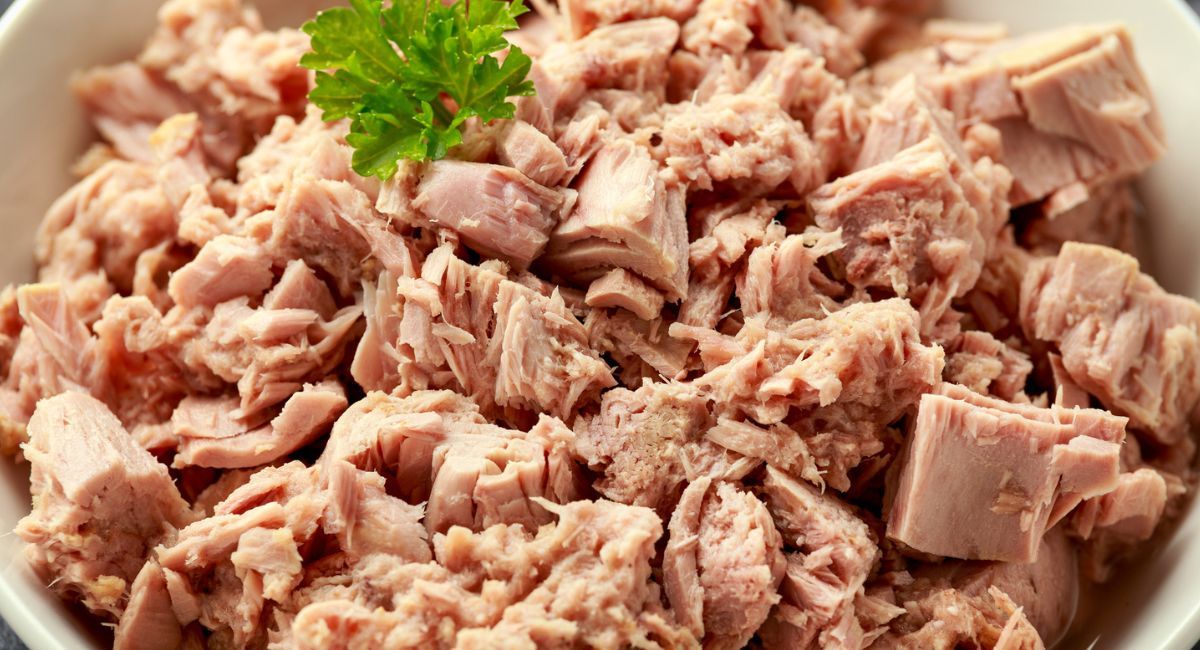
Should we stop eating tuna? It contains more methylmercury—a neurotoxin from the mercury in our environment—than smaller fish, and some canned varieties have levels that are way above safe limits, a new study has discovered.
A can of tuna is a staple in most kitchens, but the argument that tuna is still a healthy option because of its omega-3 oils is questionable as it contains lower amounts than smaller, oilier fish such as sardines, herring and mackerel.1 Canned tuna—one of the most popular ways we consume fish—can contain more methylmercury than a tuna steak, although opting for a “lighter” variety, such as skipjack, can reduce the amount.
Bloom, the marine conservation group, analyzed 148 cans of tuna that it bought in supermarkets in England, Germany, Italy, France and Spain. It found over half exceeded the safe limit for smaller fish, and one had almost four times the limit for tuna.2
Health agencies have given tuna something of a free pass because it’s higher up the food chain and is a predator that consumes smaller fish. They set a tolerable weekly intake (TWI) of methylmercury from tuna nearly three times the safe upper limit from smaller fish, such as cod. The overall safe limit for each serving of fish is 0.3 mg of methylmercury per kilogram of body weight, they say—following that logic, a heavier person can consume more mercury.
But the TWI for tuna and other large predatory fish, such as swordfish and shark, is 1 mg/kg, which doesn’t make a great deal of sense as it’s the amount of methylmercury we consume that counts, not the fish we’re eating. Compared to small fish at the bottom of the food chain, tuna can contain 10 times the level of methylmercury.
One can of tuna that Bloom analyzed contained 3.9 mg/kg of methylmercury, and the agency argues that the canned fish industry is exploiting a legal loophole that measures levels only in fresh fish. Canned tuna is never checked, and yet Bloom’s scientists reckon methylmercury is more concentrated in cans because canned tuna contains less water than a tuna steak. Once it’s canned, tuna’s methylmercury level can rise to 2.7 mg/kg from the 1 mg/kg permitted in fresh tuna.
So, a person weighing less than 70 kg (154 lb) could exceed their safe weekly intake by consuming just 3.5 oz (100 g) of tinned tuna that was at the upper end of TWI for fresh tuna, as defined by all the health agencies in the West. That includes the European Food Safety Authority, the UK Food Standards Agency, and the US Environmental Protection Agency and Food and Drug Administration.
The European Parliament has started to question the decision that allows us to consume tuna, swordfish and shark with more than three times the levels of methylmercury allowed in smaller fish. Bloom reckons it’s down to money: Global tuna sales are around $40 billion (£31.7 billion) a year, and it’s an industry that’s vital to Europe. European countries own 39 of the 50 largest tuna fishing operations, which account for 20 percent of all tuna catches around the world.
This has helped shape European regulations, which in turn have been aided by the United Nations Food and Agriculture Organization (FAO) and the World Health Organization (WHO). Some members have a conflict of interest and are receiving payments from the tuna industry, while the Codex Alimentarius, launched in 1963 by the FAO and WHO to establish international food standards, is also under the influence of the tuna lobby.
The group responsible for monitoring food contaminants, the Codex Committee on Contaminants in Foods (CCCF), is led by the Netherlands, a major player in commercial fishing. Moreover, tuna giants regularly have direct representation among the national delegations at CCCF meetings.
A central actor in the health scandal and an institution still largely unknown to the public is the European Union’s PAFF Committee (Standing Committee on Plants, Animals, Food and Feed), which is responsible for setting maximum levels of contaminants in food products. Made up of representatives from EU member states, the committee operates with total opacity: The European Commission refuses to reveal the identities of its members, its voting results, or the details of its discussions.
This lack of transparency also affects the working groups advising the PAFF Committee. Meeting minutes and reference documents are not disclosed, a policy actively maintained by the Commission, which denies access even in response to formal transparency requests. The European Parliament, kept out of discussions and decisions related to food safety standards, has been attempting for years, without success, to regain some oversight of the PAFF Committee’s choices.
Overall, the level of methylmercury we can safely consume is determined by the ALARA (as low as reasonably achievable) method. So, the safe levels in cod are lower because, as a species, it has absorbed less mercury from the oceans. Tuna and swordfish naturally have higher levels, and so the allowable amount is higher because it’s still “as low as reasonably achievable.”
It’s a policy adopted by the UK’s Food Safety Agency, which maintains it regularly checks tuna stocks for ALARA levels through spot checks carried out by trading standards authorities. But it emphasizes that businesses are responsible for ensuring their products contain amounts below the maximum level, suggesting it’s down to the tuna industry to monitor itself.
Food lobby groups have responded to the Bloom report. About Seafood, a US National Fisheries Institute blog, argues that “scare reports” about methylmercury discourage people from eating fish, a rich source of omega-3 oils that support cardiovascular health. Pregnant women should be eating up to three servings of fish every week, according to dietary guidelines.3
The safe upper limit has a 10-times built-in tolerance, and so we would need to eat far more than the recommended amounts to see any adverse effects, the institute argues. Even then, researchers haven’t found any direct neurotoxic damage caused by eating fish, it says. But studies have excluded tests on newborns and small children, whose developing brains and nervous systems are the most likely to be affected by methylmercury, a neurotoxin.
The fish industry is losing the PR war over methylmercury, the Institute says. Christina Vogel, director of the US Center for Food, Nutrition and Agriculture Policy, agrees. “The government’s communications strategy on the risks and benefits of eating fish has not worked. People are confused.
“What has been lost in the emphasis on risk from mercury . . . is the fact that many types of fish, especially those high in omega-3 fatty acids, have significant health benefits. People lose out on those benefits if they decrease fish consumption because they’re getting a mixed message,” she says.
This is possibly true, and fish is certainly an important element in any carnivore’s diet. But the agencies and lobby groups fail to answer the concern that tuna is allowed to have far higher levels of methylmercury than smaller fish.
So, if fish is good for our health, why eat tuna? Why, indeed, take the risk?
All fish contain some amount of methylmercury, but to avoid higher levels, the maxim is to eat smaller fish and avoid large predatory fish such as tuna, swordfish and shark. If you do want to eat canned tuna, choose varieties such as skipjack, which is a smaller member of the tuna family.
Health agencies recommend we don’t eat more than four cans of tuna, or two tuna steaks, a week, and that’s for a grown adult. To be safe, it’s advisable to give far less to small children, whose brains are still developing.
Nurseries have started to ban canned tuna. Acorn Nurseries, which runs 11 nurseries in South Wales and southwest England, has stopped giving tuna to the children and has replaced it with pilchards and mackerel.
“We are offering other oily fish such as pilchards and mackerel, which support the growth and development of children,” said Cherie Wilson, a director, who described the tuna ban as “an easy decision.”
Mercury is one of the top 10 substances of “major public health concern,” according to the WHO.
Mercury gets into our atmosphere due to various natural phenomena, such as volcanic eruptions and forest fires, and due to human activity such as coal burning and mining. Once in the atmosphere, it spreads around the planet and into the oceans. Bacteria in low-oxygen areas of the seas transform it into methylmercury, its most toxic form.
Fish are bio-accumulators that ingest the methylmercury and can store it indefinitely. Predatory fish accumulate the greatest amount and can have methylmercury levels that are 10 times those of the smaller fish they eat.
In humans, methylmercury can affect the neurological and cognitive functions of the growing fetus. It may also affect children’s cardiovascular, immune, renal and reproductive systems. Methylmercury may also cause cancer. The International Agency for Research on Cancer has classified it as “a possible carcinogen.”
If you’d rather avoid eating fish, you can still get those all-important omega-3s by taking a supplement. See Healthy Shopping: The Best Omega-3 Supplements for what to look for and a few top brands to try.
What do you think? Start a conversation over on the... WDDTY Community

Great news! Discounts are available based on your cart total. Check the details below: