If you’re following a plant-focused diet, combining the right foods and nutrients is vital to ensure healthy bones. Dr Laura Kelly, Helen Bryman Kelly and Jummee Park show you how
Plants and bones are the perfect pair. Plant foods are rich sources of the very vitamins, minerals, enzymes and protein-building amino acids that help bones grow strong and stay dense.
Despite that, there is evidence that bone density is lower and fracture risk is higher among people who rely mostly or solely on plant foods.1 This perplexes physicians and patients alike and raises the question: Can people who wish to eat more, mostly or solely plant foods have healthy bones?
Our answer is yes, it’s entirely possible to maintain bone health on a plant-forward diet. The key is to get to know the food combinations you need to meet your nutritional needs.
Here are four nutrients you need to pay special attention to on a vegan or predominantly vegan diet and how to make sure you’re getting enough.
Our bodies are 20 percent protein. A complete protein is 20 amino acids. Of the 20, our bodies make 11; the remaining nine—called essential amino acids—we must obtain from food.
Although complete protein exists in all animal foods, the complete set of amino acids required to make a protein is present in only a few plants. So what’s a vegan to do?
The answer is to combine plants to make up the complement of amino acids you need. You can do this by using a nutrition calculator, such as MyFoodData (myfooddata.com), to check foods for the completeness of the amino acids they provide.
Yes, initially it’s time-consuming to look up the nutrient contents of food and figure out combinations that meet your needs. But if you write down or save the ones you find, in a few weeks you’ll have a long list of bone-healthy food combinations you love.
A rich diversity of plant foods in your daily diet will provide you with the whole array of amino acids. Get familiar with the plants highest in protein (see ‘High-protein plant foods and fungi,’ below) as well as some protein-rich combinations you enjoy eating.
Why proteins matter
Proteins matter directly in bone health because they make up the collagen scaffold that holds the hydroxyapatite, the mineral component of bone that is measured by a DEXA scan (a type of x-ray that measures bone mineral density). Proteins are the fundamental component of all bone tissue.
Proteins are also involved in the body’s every metabolic process, such as digestion, energy production, and DNA replication. Proteins act as enzymes that catalyze chemical reactions in the body.
Our bodies can’t function properly unless they have a steady supply of all the amino acids they need to make complete proteins. Vegans and those who eat very little animal foods must learn to combine plants that together provide amino acids in the amount and ratios needed to offer a complete protein.
Keep in mind that when you read that a plant food contains protein, the percentage matters. If a plant food contains only 2 percent protein, for example, that means it has a relatively low amino acid content.
Processing and protein
Each protein is unique in the number and types of amino acids it contains, the organization of those amino acids into chains and the way the protein folds into a three-dimensional form as it performs its function.
Scientists can identify the function of a protein by its shape. So it’s important that a protein not only includes its full sequence of amino acids but also folds into its genetically designated shape.
Processing foods using techniques such as pasteurization (exposure to heat) very often destroys the delicate protein folds. Most biological protein substances lose their function when they lose their form. This is called denaturing, and it reduces the nutrient benefits a food provides.
For example, pineapple contains bromelain, a powerful digestive enzyme. During pasteurization—all commercially available pineapple juice is pasteurized—the bromelain is destroyed. All plant enzymes are destroyed at temperatures above 104°F (60°C).
When a protein or an enzyme is exposed to high heat, it can lose its form. So including sources of fully functioning proteins in your diet is essential.
Sprouts are king
Sprouts top our list of bone-healthy protein-rich foods even though legumes and beans contain more protein per serving. (Sprouted seeds and nuts contain 4–8 g per quarter cup, while soaked cooked beans contain 7–8 g per half cup.)
You may raise a cheer when you see how dense with protein lentils and beans are. However, they also contain a panoply of antinutrients (see ‘What are antinutrients?’ below) that kidnap not only minerals but other nutrients too, and thus much of the benefit ends up being excreted.
Effectively, then, the amount of bioavailable protein in lentils and beans is considerably less than nutrition tools report. Cooking will weaken some antinutrient effect, though the amount of protein available is not predictable.
Sprouts, however, are king. Sprouting signals the plant to release its nutrients so they will be available for the new seedling. The nutrients become bioavailable and thus are readily absorbed.
Try sprouting some seeds (see ‘Home sprouting 101,’ below), such as organic peas, mung beans, soybeans or adzuki beans. Use the lovely crunchy sprouts to top appetizers, sandwiches, salads or just about anything.
Iron is vital for bone health, and a deficiency is associated with reduced bone density.2 While iron is plentiful in plant foods, the issue for vegans is iron absorption.
The iron in animal tissue is called heme iron; the iron in plant foods is called non-heme iron. Humans can absorb up to 40 percent of heme iron consumed in animal products but only just under 5 percent of non-heme iron from plant foods.
Heme iron consumed with non-heme iron promotes non-heme iron absorption, so for those who include animal food in their diet, the plant iron will have a ready boost. But what if you’re vegan?
Fortunately, there’s a simple way to promote the absorption of non-heme iron: combine it with vitamin C.
Vitamin C (ascorbic acid) is the only nonanimal substance known to promote non-heme iron absorption.3 See ‘Perfect partners,’ below, for foods that contain non-heme iron and those high in vitamin C, plus some tasty combinations incorporating both.
Vitamin B12, a cofactor for healthy bone density, is water soluble and is sourced almost entirely from animal food—milk, eggs, offal and meat. A specific strain of bacteria that thrives in mammalian digestive tracts makes vitamin B12. Some types of anaerobic bacteria also produce vitamin B12 in the human gut, and some vegetarian animals eat their feces as a source of vitamin B12.
The good news for vegans and vegetarians is that many plant foods provide small to tiny amounts of natural vitamin B12. Fermenting vegetables also increases vitamin B12 content because some bacterial strains, such as lactic acid bacteria, produce vitamin B12.
The top choices to include in your diet include dried shiitake mushrooms, lion’s mane mushrooms, nori seaweed, algae, nutritional yeast and Mankai duckweed, although this is hard to get hold of.
Runners-up, containing only tiny amounts, include hawthorn berries, hops (in beer), bladderwrack (a type of seaweed) consumed primarily as a supplement and white oak bark as tea.
Docosahexaenoic acid (DHA) is an essential (meaning our bodies can’t make it) omega-3 fatty acid that regulates inflammation and brain function. It’s also important for bone health and turnover.4
Because DHA is found primarily in fish and fish oil, those on plant-only diets risk DHA deficiency unless they supplement with the proper microalgae (see Healthy shopping: The best omega-3 supplements for some vegan omega-3 supplement options).
DHA is found as alphalinolenic acid (ALA) in plants such as flaxseeds, chia seeds, walnuts and hemp. However, the conversion of ALA to DHA is not efficient, and relying on these sources only may not be sufficient.
Hemp seed oil has a perfect omega ratio and can be a good vegan base for omegas. Getting your omega levels tested is a good idea. Be aware that it takes four months for your body to become replete if you’re deficient.
Complete proteins
The following plant foods are complete proteins providing all nine essential amino acids. Include some of these foods in your diet every day:
High-protein plant foods and fungi
By combining these high-protein plant foods strategically, you can supply your body with the building blocks for complete protein:
For example, legumes plus nuts create a complete protein, as do legumes plus grains. As you try different combinations, you’ll learn the amounts of each needed to complete the protein.
The plant foods you combine to make protein will almost always need to be prepared by soaking, fermenting or sprouting not only to release the minerals but also to make the amino acids fully bioavailable.
Among the protein-rich beans, make sure to consume them fully cooked. Cooking reduces the antinutrients and also defangs any naturally occurring toxins. When cooked, most of the plant foods in the following list supply about 14 g of protein per cup:
Every growing plant contains an army of chemicals that protect it from predators and continue its duties even after the plant is harvested and headed for the digestive tract. These chemicals are called antinutrients because they inhibit or interfere with nutrient absorption and/or irritate gastrointestinal tissue.
There are several kinds of antinutrients, including lectins, which you may have heard of as a possible cause of leaky gut. The good news is that you can weaken the effects of antinutrients by preparing plant foods properly before eating them, such as by soaking, cooking, sprouting or fermenting.
Here’s how to combine oatmeal with mixed seeds and nuts for a full complement of amino acids.
Combine an ounce of each of the following seeds in a bag with a good seal and put it in the freezer. Each week, pour some of the mixture into a jar on your kitchen counter to thaw.
Add 1 teaspoon of the mixture to 1 cup of oatmeal (heaping, not instant); there you have a ready source of your base of 56 mg of protein for each day. For maximum nutrient bioavailability, soak whole oats or steel-cut oats (porridge oats) overnight in warm water with ½ teaspoon organic apple cider vinegar; the following morning, pour off the liquid, rinse the oats in warm water and cook as you wish.
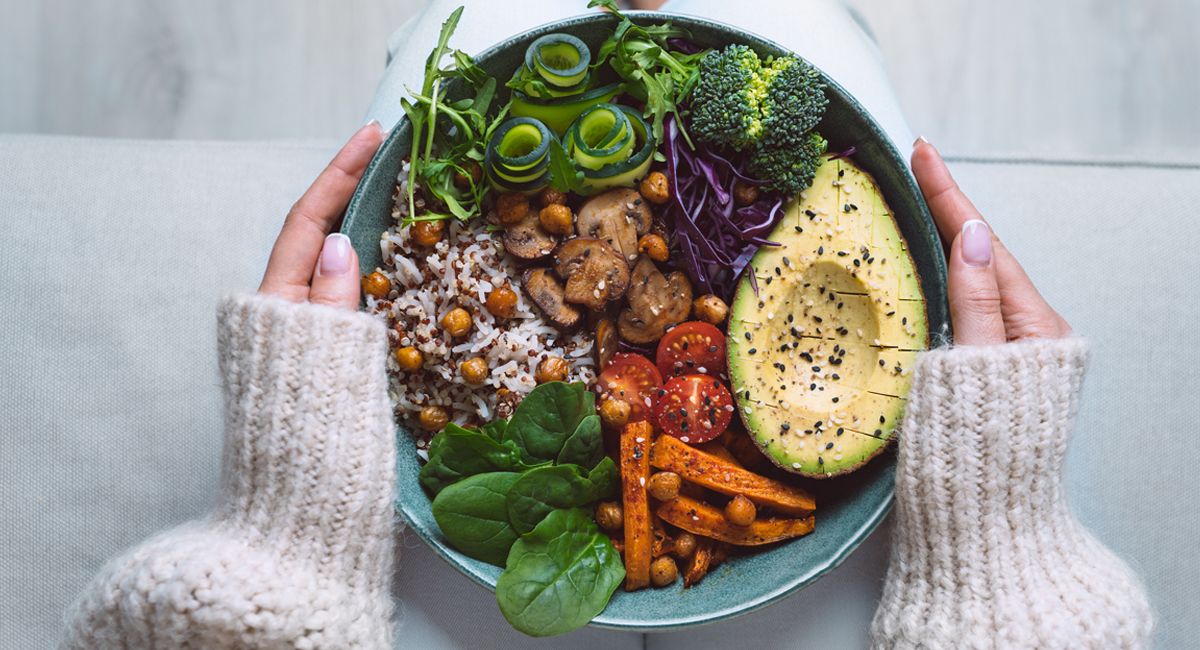
Without the oatmeal, you’re short only one amino acid: lysine. Lysine is scarce in plant foods, but the mighty avocado steps in. With avocado and a big pinch of seeds on a salad, you’re rich in complete protein in one dish.
Consume non-heme iron sources with vitamin C–rich foods to boost nutrient absorption.
Sources of non-heme iron
Morel, oyster, maitake and shiitake mushrooms
Dried mulberries
Onions (also contains vitamin C)
Fennel (also contains vitamin C)
Chickpeas
Dark chocolate
Dried beans
Lentils
Molasses
Pine nuts
Pistachios
Spinach
Tofu
Tomato puree
Asparagus
Lima beans
Swiss chard
Kimchi
Peas
Foods high in vitamin C
Bell peppers
Broccoli
Brussels sprouts
Cauliflower
Citrus fruits
Guava
Kale
Kiwifruit
Mango
Papaya
Peaches
Pineapple
Strawberries
Try these tasty food combinations:
Lemon vinaigrette with wilted spinach
White mushrooms with bell pepper, garlic, onion and fennel
Dark chocolate fondue with strawberries
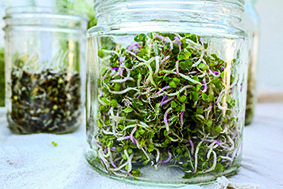
Makes five 1 quart (1 L) jars
Follow these instructions for growing delicious fresh sprouts. You can use any type of seed listed below, though the ones in bold sprout easily and grow fast:
Alfalfa
Arugula
Beet
Black lentil
Broccoli
Cabbage
Cilantro
Dill
Fenugreek
Kale
Lettuce
Mung bean
Mustard
Pak choi
Pumpkin
Radish
Spinach
Sunflower
Swiss chard
Turnip
METHOD
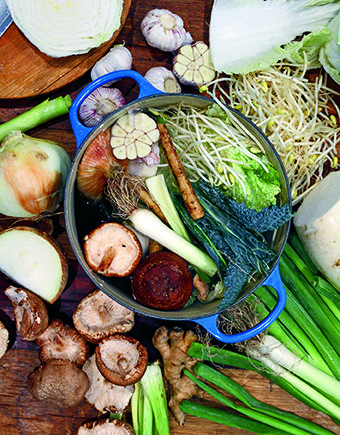
Makes 12 quarts (11.4 L)
This mineral broth is a key recipe for keeping bones healthy while providing a good source of potassium and supporting digestion. You can enjoy it on its own or as a base for any soup to add flavor and nutrition.
This recipe makes a very large batch, so you can store it in your freezer for when you need it. You can also cut the recipe in half if you don’t have the equipment or the wish to make 12 quarts at one time.
INGREDIENTS
13 quarts (13 L) filtered water
¼ cup (25 g) bean sprouts
4 pieces dried kelp (3 in. or 8 cm square)
4 medium shiitake mushrooms
2 kale stalks with stems
2 whole scallions or ½ leek
1 small carrot
1 leaf Napa cabbage or green cabbage
1 piece fresh ginger (2 in. or 5-cm)
1 Korean radish (3 in. or 8 cm long) sliced into 1 in. (2.5 cm) rounds
½ celery rib
½ medium onion
½ garlic head
¼ fresh burdock root, cut into 3 in. or 8 cm pieces
METHOD
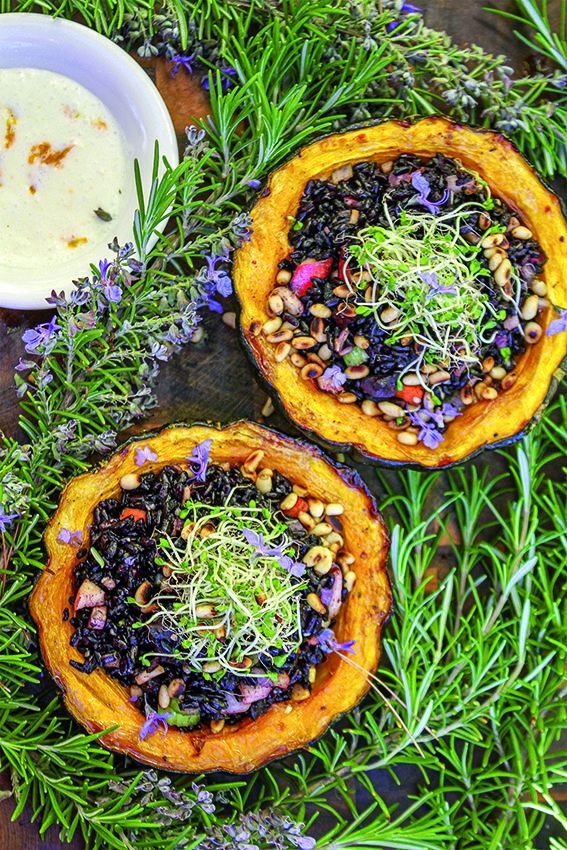
Makes 2 servings
This exquisite dish is perfect for impressing loved ones and guests during special gatherings. Sweet and nutty squash pairs wonderfully with high-protein forbidden rice (also known as black rice), which adds a nice texture.
INGREDIENTS
Acorn squash (5 in. or 13 cm diameter)
1 Tbsp sunflower oil
⅛ tsp ground cinnamon
Sea salt
Cracked black pepper
For the rice stuffing:
1 cup (200 g) forbidden rice, soaked for 30 minutes
2 cups (480 mL) filtered water
3–4 oz (90–120 g) dried licorice root, sliced
2 Tbsp crushed, soaked walnuts
1 Tbsp psyllium
1 Tbsp chopped sun-bathed mushroom
1 Tbsp minced apple
1 Tbsp minced celery
1 Tbsp minced red onion or shallot
1 Tbsp minced carrot
1 Tbsp hemp seed oil
1 Tbsp liquid aminos
1 Tbsp nutritional yeast
Sea salt
Cracked black pepper
For the orange-coconut ranch dressing:
⅓ cup (80 mL) coconut milk
3 Tbsp fresh orange juice
2 Tbsp hemp seed oil
1 Tbsp hemp seeds or toasted pine nuts
1 medium garlic clove
⅛ tsp fennel seed
Lava salt
Cracked black pepper
1 tsp grated orange zest
For garnish:
Handful broccoli sprouts
Handful sauerkraut
2 Tbsp toasted pine nuts
METHOD
For the squash:
For the rice stuffing:
For the dressing:
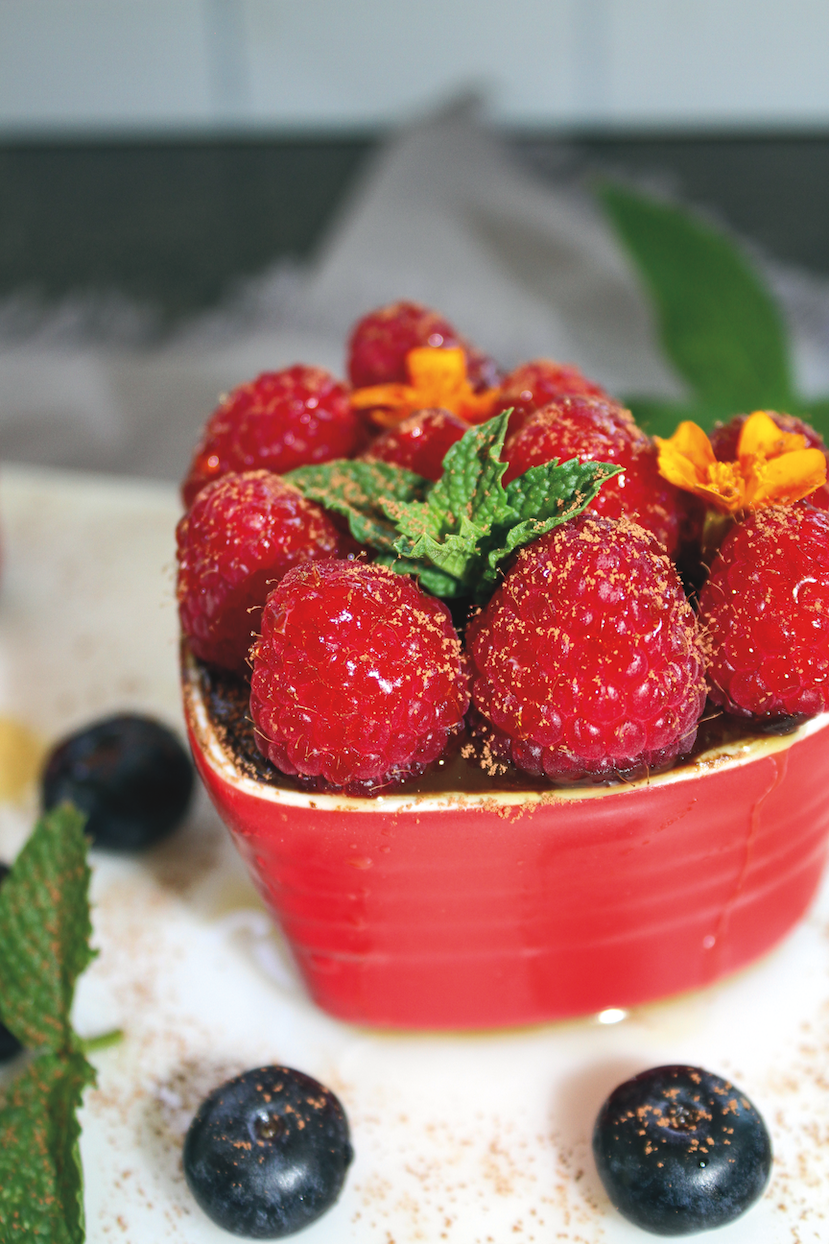
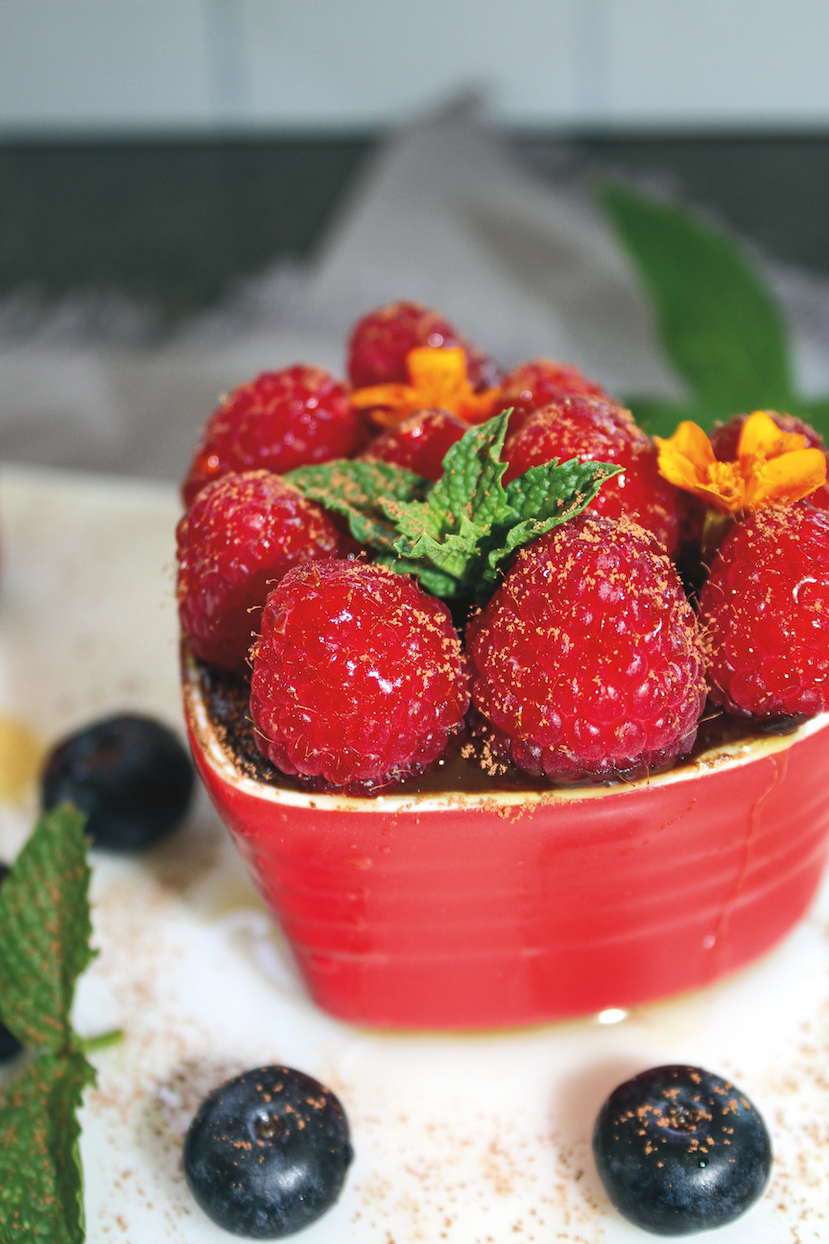
Avocados provide not only their unbelievably smooth texture but also a bonus of great nutritional benefits. This mousse contains good fats that supercharge your body’s nutrient absorption and is loaded with almost 20 vitamins, minerals and phytonutrients.
INGREDIENTS
1 large, ripe avocado
⅓ cup (35 g) cacao powder
3 Tbsp coconut milk
3–7 medium pitted dates, soaked
2 Tbsp maple syrup or 1 Tbsp honey
1 tsp vanilla extract or seeds scraped from half a vanilla bean
⅛ tsp freshly grated nutmeg
⅛ tsp ground cinnamon
Fresh lemon juice
Salt
Hulled strawberries, raspberries or blueberries
Mint leaves or edible flowers
Maple or date syrup (optional)
Goji berry powder or ground cinnamon (optional)
METHOD
Adapted from The Healthy Bones Plant-Based Nutrition Plan and Cookbook: How to Prepare and Combine Plant Foods to Maintain Optimal Bone Density and Prevent Osteoporosis by Dr Laura Kelly, Helen Kelly and Jummee Park (Chelsea Green, 2024). For 30 percent off the book, use code WDDTY30 at chelseagreen.co.uk
Photography: Jummee Park
What do you think? Start a conversation over on the... WDDTY Community

Great news! Discounts are available based on your cart total. Check the details below: