Naturopathic doctor and post-traumatic stress specialist Heather Herington reveals how cold-water therapy can heal the mind
Hydrotherapy—the use of water to treat symptoms—is perhaps the simplest therapy of all. But it’s a powerful tool for mental health, especially for treating post-traumatic stress (PTS), adverse childhood experiences (ACEs) and associated problems.
Although bathing in hot mineral springs can feel fabulous, it’s cold water that brings big benefits. Cold water, after the initial plunge or application, has a calming effect and opposes the heat and inflammation generated in the body by anxiety and mental anguish.
Even if you simply put a cloth dipped in cold water on your face or take a swim in a cold swimming pool, you can reap the rewards of this physiological magic.
Almost all cultures have used hydrotherapy (or hydropathy, as it was known in the 1800s) instead of pills to settle a rattled nervous system. In England, there were writings of illnesses cured by cold water as early as 1773.1
Now, in the 21st century, medical research confirms specific benefits of cold-water therapy for those suffering from PTS and other mental health conditions. Hydrotherapy can relieve anxiety and depression2 and help regulate the neuroendocrine response,3 or the nervous system’s reaction to stress. For example, it can reduce the “stress hormone” cortisol4 and manipulate neurotransmitters like norepinephrine.5
Thanks to proponents like Wim Hof, the Dutch extreme athlete noted for his ability to withstand low temperatures, and the naturopathic profession, the cold-water cure is seeing a surge in popularity today.
According to one study, a lack of physiological stress can interfere with well-being as it leaves the body underchallenged. A brief change in body temperature, caused by a cold shower or cold swim, for example, can affect the body and mind profoundly—even counteracting depression.5
“Hormetic stress,” as it’s known—short, intermittent bursts of a certain stressor—is the sweet spot where stress is ideal, waking you up but not blasting you out of your seat.
Immersion in cold water is one way to do this.
Even if applied only to the face, it engages the bloodstream to amplify the transportation of oxygen and other nutrients to cells, specifically those in the endocrine system or neural pathways that are so important in calming the mind and emotions.2
Basically, you want the cold to constrict blood vessels enough for norepinephrine to be triggered and then afterward for vessels to expand, enabling the calming effect of the neurotransmitters GABA and serotonin while improving circulation and optimizing the lymph system.
Cold water constricts blood vessels and increases blood flow, triggering cellular mechanisms and signaling pathways that
These are all positive benefits for someone suffering from PTS.
Hydrotherapy works by changing temperature and pressure in the body. These changes are sensed by nerve endings in the skin and muscles and result in neural “reflex effects” that are controlled by the brain and spinal cord.
The most important of these effects are vasodilation and vasoconstriction, which respectively relax or tense the blood vessels. This physical change causes changes in the rate of blood flow and then in any metabolic functions related to blood flow. The changes can happen systemically (whole body) or locally (in one area of the body).
Cold water and ice cause the body to try to conserve heat. Blood vessels constrict, decreasing the amount of blood that flows through them. Blood flow is then diverted from the extremities (less essential) to the core of the body and its organs (more essential to the body as a whole).
The pores of the skin close, sweat glands shut down and muscles tense, yet certain organs, like the adrenal glands, become more active. This can be useful for short periods of time.
Hormonally, cold water triggers the sympathetic nervous system’s production of norepinephrine, a neurotransmitter that helps us focus and regulates energy. Then, by way of the frontal vagus nerve and GABA, the parasympathetic nervous system conversely helps us relax. Blood vessels dilate, boosting circulation, driving nutrients into cells and flushing out toxins.
This is all helpful for those with PTS, who commonly have anxiety and trouble sleeping and concentrating.
Cold water causes norepinephrine to be released into the bloodstream and the locus coeruleus region of the brain, which regulates crucial functions like attention and wakefulness.6
Norepinephrine helps regulate mood, including in depression and anxiety. It decreases brain inflammation, countering inflammatory molecules that encourage anxiety and depression by keeping nerve cells from releasing serotonin.7
There are also cold shock proteins called RBM3 that, as a neuroprotective activated by cold,8 may have benefit in severe anxiety as well.
The heart rate slows quickly when the face meets cold water. The trigeminal facial nerves (the fifth cranial nerves) relay the information to the brain, which harnesses the vagus nerve (the tenth cranial nerve), causing the slow heart rate and peripheral vasoconstriction. This has a calming effect.
Temperature is paramount. The colder it is, the faster the reaction, and anything over 70°F (21°C) has no effect. Vasoconstriction away from the arms and legs is more gradual, allowing the most vital organs—the brain, heart and lungs—to maintain dominance.
The following are options for cold-water treatment. Always make sure to be well hydrated when undertaking any of these, and if you choose full immersion, make sure you do so safely. Research any risks first, especially if you’re open-water swimming.
Caution: If you decide to try full immersion outdoors in the winter, it’s best to work your way up to it, such as by starting with partial immersion. Going slowly helps lower your risk of suffering hypothermia or heart problems.
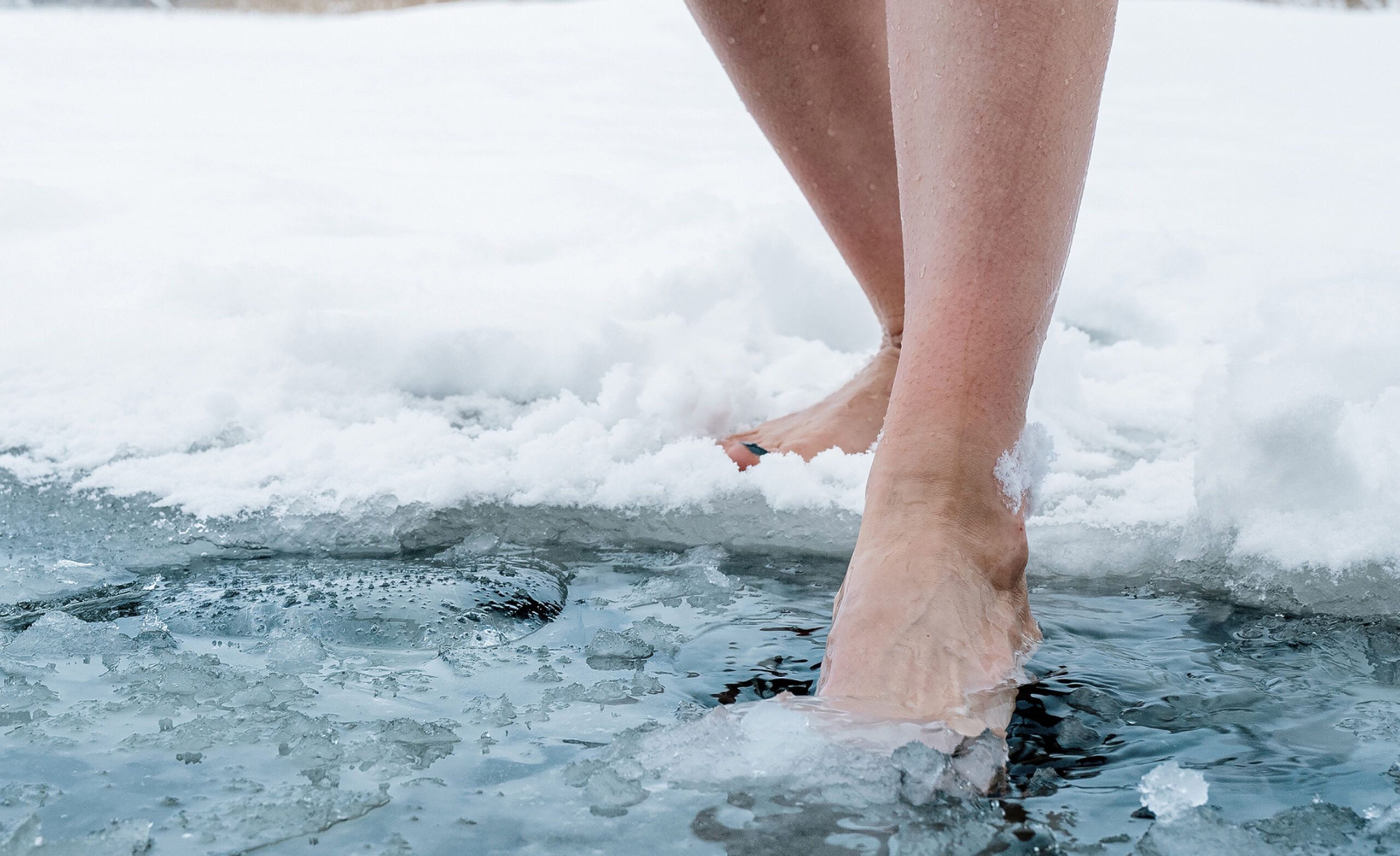
Full immersion. Full immersion in lakes, rivers, oceans or a cold swimming pool or drenching with buckets of ice is what works best to boost your immune system and parasympathetic nervous system and firm up your capillaries.
Wim Hof recommends five minutes at a water temperature of 59°F (15°C) or less. If it’s colder, say 35°F (2°C), make it three minutes. If you can manage it, don’t dry off. Put your clothes back on and let your body dry itself.
For a contrast plunge, sit in an infrared or other sauna for five to 15 minutes before going into the cold water for three minutes. Work up to 10 minutes or more depending on how your body copes.
Partial immersion. If full immersion isn’t for you, here are some alternatives to try:
Another alternative to full immersion is a simple hot-and-cold alternating shower. It can work wonders not just to boost the circulation and immune system but also to calm the mind.
Face dipping. Another simple option is to dip your face in cold water for up to five minutes, two to three times a week. The cold water sends a profusion of electrical impulses to the brain, which boosts alertness and energy and triggers calm.
Wet sheet and wet socks. Both of these treatments allow the body to settle, coax the immune system by amplifying white blood cells if needed, and call forward the parts of the brain and body that calm an agitated state.
For the wet sheet treatment, you’ll need a cotton sheet, a bucket of ice water, a wool blanket and someone to help you.
You can also do the wet socks treatment using organic cotton and heavy wool socks instead of a sheet and blanket: Put the cotton socks in ice-cold water followed by the wool socks. First put on the cotton socks, then the wool. Then lie back and enjoy your body heating the socks till they’re dry.
It’s my belief that psychological trauma is a natural response to an adverse event, whether experienced or witnessed. So I have shortened the term PTSD (post-traumatic stress disorder) to PTS, dropping the D and siding with military vets who feel ostracized by calling a natural response a disorder.
Lingering psychological trauma often goes unnoticed or is not spoken about with a clinician. For this reason, unexplained psychological and physiological symptoms become key to digging further to the root cause.
There are so many symptoms and signs—even diseases and conditions—that may have their basis in PTS and in ACEs (adverse childhood experiences). Here are some common ones I’ve noted in my three decades of clinical experience.
Adapted from Transforming Trauma: A Drugless and Creative Path to Healing PTS and ACE by Heather Herington (Hammersmith Health Books, 2022)
What do you think? Start a conversation over on the... WDDTY Community

Great news! Discounts are available based on your cart total. Check the details below: