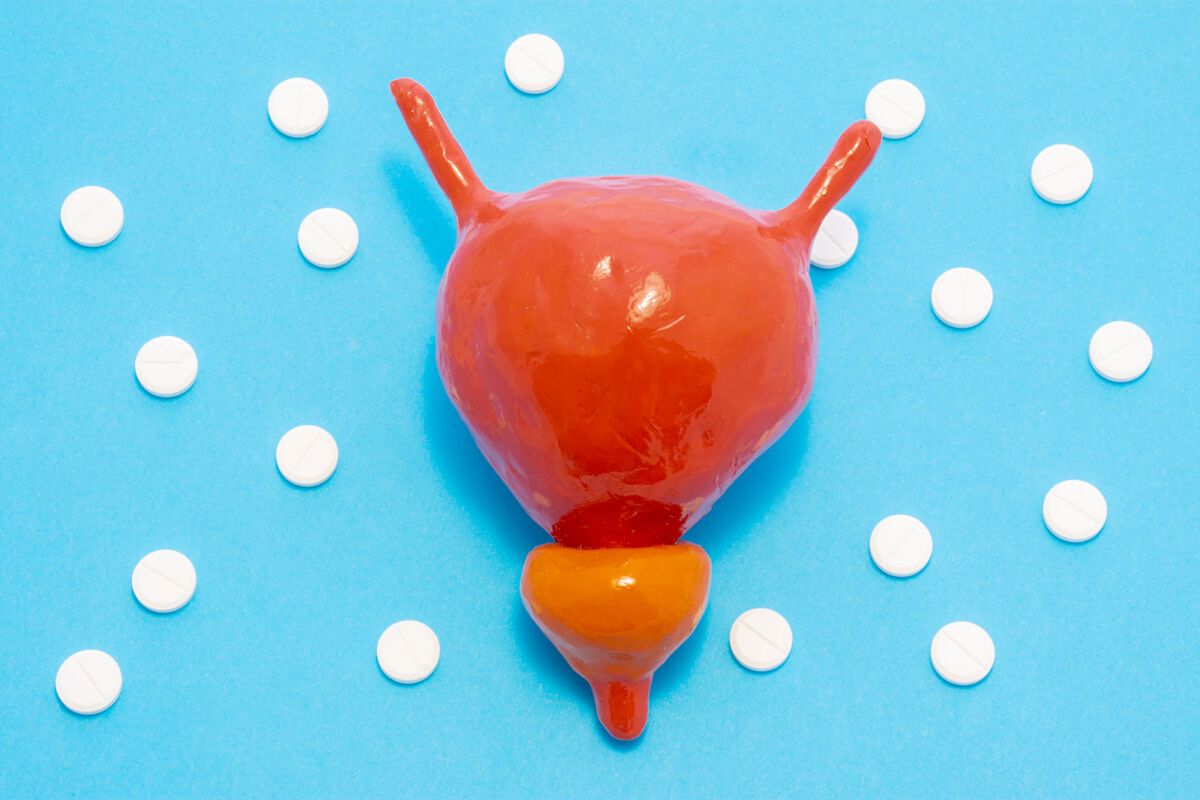
I’m 67 and have just been diagnosed with benign prostatic hyperplasia. I’d like to avoid drugs if I can, as I don’t like the sound of the side-effects. Can you suggest any effective alternatives?
More than half of men in their sixties suffer from benign prostatic hyperplasia (BPH),1 an enlarged prostate gland that can cause a long list of urinary symptoms including increased frequency (the need to urinate a lot), incomplete emptying (when the bladder feels full after urinating), intermittency (the need to stop and start several times while urinating) and nocturia (waking up more than once to urinate at night).
The usual treatment is drugs like alpha-blockers and 5‑alpha-reductase inhibitors, but these can come with a range of nasty side-effects, from lack of energy and low blood pressure to loss of libido and sexual dysfunction.2
Many alternative practitioners, however, are successfully treating the condition with natural remedies, such as herbal extracts and nutritional supplements. In fact, in many parts of Europe, herbal supplements are considered standard medical treatment for BPH, and some half of German urologists prefer prescribing plant-based extracts to synthetic drugs.3
We would advise you to consult with a qualified naturopathic practitioner who can recommend a holistic approach and the right supplements, herbs and dosages for you as an individual, but here’s a general science-based guide to the best natural options for BPH.
Several studies show that what you eat can affect your chances of getting BPH, so here are some pointers for a prostate-healthy diet. In general, aim to eat a balanced, whole-food diet similar to the Mediterranean diet, which is rich in fruits, vegetables, fish, nuts and olive oil. And try to maintain a healthy weight, as obesity elevates the risk of BPH.4
DO eat onions and garlic. Men who eat the most onion and garlic reduce their risk of BPH by around a third compared to those who avoid them, according to one study.5
DON’T feast on bread and cereals. They’ve been tied to a higher risk of BPH.6
DO eat plenty of vegetables. Men who eat a lot of vegetables, especially the dark yellow kind, such as pumpkin, golden beets, squash and peppers, are significantly less likely to develop BPH.7
DON’T eat too much meat. While vegetable protein appears to be protective, a high intake of animal protein, particularly poultry, can up your risk for BPH.8
DO eat foods rich in lignans. Eating a diet high in these plant compounds, found in abundance in flaxseed as well as sesame seeds, kale, broccoli and apricots, may cut your risk of BPH.9
DON’T drink coffee. Coffee drinking can raise the risk for BPH,10 and animal evidence suggests it can have a detrimental effect on the prostate over time.11 Try to limit your intake.
This ancient Chinese mind-body technique, which blends meditation, controlled breathing and gentle movement, is showing promise for BPH. In a preliminary study, practicing a form of qigong called Yi Jin Jing for six months led to improvements in symptoms and hormone levels in older men with BPH.14
Look out for a local class or consider signing up to an online program.
Beta-sitosterol. Similar in composition to cholesterol, this sterol, found in almost all plants, has been found to be effective for symptoms of BPH when taken as a supplement.15
Suggested dosage: 60 to 130 mg/day
Omega-3s. Low levels of omega-3 fatty acids have been linked to BPH.16 And a study of men taking omega-3 supplements alongside the BPH drugs tamsulosin and finasteride found greater improvements in urinary symptoms and prostate volume after six months compared to those taking the drugs alone.17
Suggested dosage: Try Wiley’s Finest Peak Omega-3 Liquid, which supplies over 2,000 mg of omega-3s EPA and DHA (from fish oil) per teaspoon
Flaxseed lignan extract. In one study, flaxseed lignan extract eased lower urinary tract symptoms and improved quality of life in men with BPH after four months. The supplement was just as effective as commonly used BPH drugs, the researchers said.18
Suggested dosage: Flaxseed lignan extract is available in supplements such as Lignan Plus by Bionutri; follow the label instructions
Zinc. This essential mineral plays an important role in prostate function, and not getting enough of it has been linked to BPH.19 Although clinical trials are lacking, it may be a good idea to take a supplement, as zinc deficiency in men over 50 is common.20
Suggested dosage: 25 to 30 mg/day, with 2 mg copper to prevent a copper deficiency
Lycopene. A compound found in tomatoes, lycopene appears to prevent the progression of BPH, according to one preliminary study.21
Suggested dosage: 15 mg/day
Pumpkin seed extract. Two large German trials reported a reduction in BPH symptoms in men eating pumpkin seeds22 or taking pumpkin seed extract capsules daily.23
Suggested dosage: Choose a good quality supplement and follow the label instructions
A review of eight trials involving more than 600 men revealed that acupuncture can be effective for moderate to severe BPH, at least in the short term.24
To find a qualified acupuncturist near you, visit www.acunow.org.
Saw palmetto (Serenoa repens). A leading natural treatment for BPH, this herb has been put to the test in numerous trials and found to be effective and well-tolerated. It seems to reduce symptoms just as well as the drug finasteride but comes with far fewer side-effects, and these were mild and infrequent.25
Suggested dosage: 320 mg/day standardized to contain 80 to 95 percent fatty acids and sterols
Nettle (Urtica dioica). A six-month study of over 550 patients found nettle to be effective at easing BPH symptoms.26
Suggested dosage: 240 mg/day nettle root extract
Pygeum (Pygeum africanum). According to a review of 18 trials involving over 1,500 men, those using this herb were more than twice as likely to report an improvement in overall BPH symptoms compared to those taking a placebo.27
Suggested dosage: 100 to 200 mg/day of a standardized extract containing around 13 percent total sterols
Flower pollen extract. A standardized extract of rye pollen (Secale cereale), corn pollen (Zea mays) and timothy pollen (Phleum pratense) known as Cernitin (Cernilton, Cernitol) can improve several symptoms of BPH including urine flow rate and nocturia.28 Flower pollen extract is available commercially as Graminex in a variety of supplements like Life Extension ProstaPollen.
Suggested dosage: 126 mg three times daily
Pine bark extract. Men taking pycnogenol, a patented form of French maritime pine bark extract, alongside “standard management” for BPH (with or without drugs) saw significant improvements in several urinary symptoms, including emptying, frequency, intermittency, urgency, weak flow, straining and nocturia, compared to those in either of the control groups.29
Suggested dosage: 150 mg/day
|
References |
|
|
1 |
Rev Urol, 2005; 7(Suppl 9): S3–S14 |
|
2 |
Front Pharmacol, 2020; 11: 658; Transl Androl Urol, 2017; 6: 295–304 |
|
3 |
Urology, 1996; 48: 12–20 |
|
4 |
J Urol, 2009; 182(6 Suppl): S27–31 |
|
5 |
Urology, 2007; 70: 672–6 |
|
6 |
Urology, 2006; 67: 73–9 |
|
7 |
BJU Int, 2008; 101: 853–60 |
|
8 |
Clin Nutr ESPEN, 2019; 33: 5–11; Urology, 2006; 67: 73–9 |
|
9 |
J Med Food, 2014; 17: 650–6 |
|
10 |
BJU Int, 2002; 90: 649–54 |
|
11 |
Int J Exp Pathol, 2012; 93: 429–37 |
|
12 |
Med Sci Sports Exerc, 2008; 40: 1733–9 |
|
13 |
Arch Intern Med, 1998; 158: 2349–56 |
|
14 |
J Aging Phys Act, 2020 May 20; 1–6 |
|
15 |
Lancet, 1995; 345(8964): 1529–32; Cochrane Database Syst Rev, 2000; 1999: CD001043 |
|
16 |
Clin Biochem, 1999; 32: 405–9 |
|
17 |
Inflammopharmacology, 2017; 25: 451–8 |
|
18 |
J Med Food, 2008; 11: 207–14 |
|
19 |
Indian J Urol, 2011; 27: 14–8 |
|
20 |
Front Oncol, 2020; 10: 1293 |
|
21 |
J Nutr, 2008; 138: 49–53 |
|
22 |
Urol Int, 2015; 94: 286–95 |
|
23 |
Forsch Komplementarmed Klass Naturheilkd, 2000;7: 200–4 |
|
24 |
PLoS One, 2017; 12: e0174586 |
|
25 |
JAMA, 1998; 280: 1604–9; BJU Int, 2018; 122: 1049–65 |
|
26 |
J Herb Pharmacother, 2005; 5(4): 1–11 |
|
27 |
Cochrane Database Syst Rev, 2002; 1998: CD001044 |
|
28 |
Clin Ther, 1995; 17: 82–7 |
|
29 |
Minerva Med, 2018; 109: 280–4 |
What do you think? Start a conversation over on the... WDDTY Community

Great news! Discounts are available based on your cart total. Check the details below: