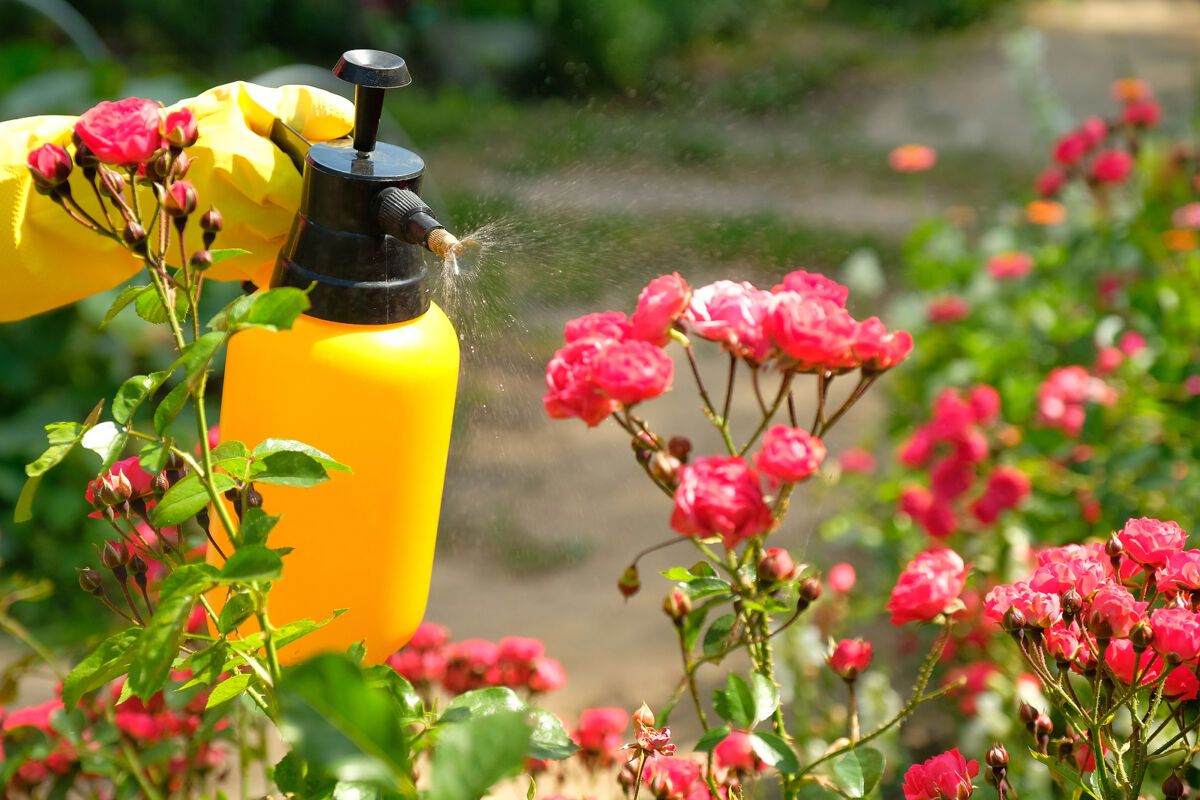
Glyphosate (which goes by the brand name Roundup) is considered so safe that no US governmental agency tests for it in food. Many homeowners use it without a second thought to control weeds in their yards. It’s in the rain, the water supply and the cotton in clothing, dish cloths, tampons and baby diapers. It aerosolizes, becoming dispersed into the air, which means we breathe it into our lungs. And it’s present in much of what we eat. Even if you eat an organic diet, it’s likely you’re still being exposed to glyphosate.
The powerful companies that manufacture and sell glyphosate have convinced government authorities and many research scientists that glyphosate is so safe they don’t even bother to investigate whether it could be partly to blame when bees and butterflies start dying in alarming numbers. At the same time, we all know pollution is harming the plants and animals we humans rely on.
Scientists have found stunning correlations between the rise in glyphosate use and the rise in Alzheimer’s disease, autism, diabetes, inflammatory bowel disease, kidney disease, liver disease, obesity, pancreatic cancer and thyroid cancer in the US, and scientist Nancy Swanson says that the statistics support the idea that glyphosate is the culprit.1
Glyphosate’s effect on plants is to disrupt the shikimate pathway, a metabolic pathway that plants use to produce the amino acids tryptophan, tyrosine and phenylalanine. When glyphosate disrupts the shikimate pathway, it kills the plants. This makes glyphosate an extremely effective herbicide.
Monsanto researchers and other industry-funded scientists posit that, because the shikimate pathway does not exist in human cells, glyphosate doesn’t pose a risk for us. However, many of the microbes in our bodies do possess the shikimate pathway, and that includes much of our microbiome—microbes we rely on for providing us with nutrients, aiding digestion, maintaining a healthy gut barrier and promoting the development of a healthy immune system.
For example, microorganisms collaborate to produce the B vitamins: thiamine (B1), riboflavin (B2), niacin (B3), pantothenate (B5), pyridoxine (B6), biotin (B7), folate (B9) and cobalamin (B12). These B vitamins made inside the body significantly augment B vitamins supplied from food. Our human cells are unable to produce these vitamins. But, collectively, our microbial hitchhikers contain a large number of enzymes that specialize in various steps in the synthesis of these essential nutrients, and many of these microbes are dependent on a working shikimate pathway.2
The gut microbiome is a teeming collection of trillions of bacteria, viruses and fungi that have made the human gut their home. Their relationship with us humans is largely symbiotic: they perform many functions for us, producing all sorts of biologically useful molecules that the host cells are unable to synthesize on their own.
When we disrupt the gut we also risk disrupting the brain. Scientists now understand that the gut and the brain are in close communication. The signaling that takes place between the gastrointestinal tract and the central nervous system is called the gut–brain axis. Communication happens via the lymph system, via the blood circulation and the vagus nerve.3
A lot of this communication involves signals released by the microbes in the gut.4 This is why several of our modern diseases are now believed to have their origins in the gut, including Alzheimer’s disease, amyotrophic lateral sclerosis (ALS), autism, depression, Parkinson’s disease and rheumatoid arthritis, among others.
Glyphosate was introduced into the food chain in 1975, and genetically engineered Roundup Ready crops were introduced in the mid-1990s. The gut bacteria Bifidobacteria are among the most sensitive to glyphosate of all microbes that have been studied.5 Scientists have found that maternal glyphosate exposure is associated with reduced Bifidobacteria in the milk as well as with increased risk of premature and difficult birth.6
A study on pregnant women in Indiana found an association between premature birth and glyphosate levels in the urine.7 Loss of B. infantis in breastfed infants leads to chronic gut inflammation during a critically important immunological training window.8 The increase in caesarean deliveries, the increased use of antibiotics as well as the increased practice of formula-feeding also contribute to the loss of Bifidobacteria.9
Most infant formula is contaminated with glyphosate. Soy formula from Brazil was found to have levels of glyphosate up to 1,000 parts per billion.10 Exposure to glyphosate from soy formula reduces the presence of Bifidobacteria and interferes with the process by which these bacteria maintain a healthy gut pH and a healthy recycling of mucins, protective proteins lining the gut barrier, as well as a steady supply of acetate to fuel the mitochondrial production of energy in the form of adenosine triphosphate (ATP).
Feeding soy formula to an infant is a triple whammy: the soy itself is an endocrine disruptor, the formula does not contain breast milk’s rich glycoproteins that maintain healthy mucins and support the growth of B. infantis, and the glyphosate in the soy disrupts the microbiome, further weakening its protective barrier.
In the past few decades, powerful pathogenic bacteria that are resistant to antibiotics have become a looming threat. Scientists have learned that chronic exposure to one antibiotic can allow pathogens to develop broad resistance to others. Remember: glyphosate is an antibiotic. It was patented by Monsanto in 2010 for use as an antibiotic to control microbial infections.
When we are chronically exposed to glyphosate in our food and water, it is like taking low doses of antibiotics over an extended period of time. While glyphosate improves the effectiveness of some antibiotics, it has the opposite effect for others. In particular, glyphosate reduces the responsiveness of both Escherichia coli and Salmonella typhimurium to ciprofloxacin (Cipro) and kanamycin, two commonly used antibiotics.11
The effects of concurrent exposure to low-dose glyphosate on various antibiotics can be catastrophic. In 2019, an international team of scientists discovered that antibiotics interfere with a signaling mechanism in the lungs that launches the first immune response to flu infection.12 What does this mean? Chronic exposure to glyphosate, an antibiotic, may make humans more susceptible to the flu and other respiratory infections, including Covid-19.
Glyphosate-based herbicides are used to control a wide variety of weeds that grow among food crops and in residential lawns, gardens, public parks, roadsides, conservation lands, wildlife areas, rangelands, forests, waterways and more.1
These herbicides come under a long list of names, including Roundup, Roundup Ultra, Roundup Pro, AquaMaster, Aqua Neat, Polado, Accord, Rodeo, Touchdown, Backdraft, Expedite, EZ-Ject, Glyfos, Laredo, Buccaneer Plus and Wrangler, among others. These products contain a variety of chemicals. But in all of them, glyphosate is the primary ingredient, making up 36–48 percent of the product.
Gut microbes in the colon break down complex carbohydrates that escape digestion in the middle intestine. These carbohydrates are known as prebiotics, and bacteria convert them into short-chain fatty acids, primarily acetate, propionate and butyrate. The balance among these three fatty acids has important implications for gut health and is strongly influenced by the pH of the gut.13
In particular, butyrate is important for maintaining a healthy gut barrier, since it is a major nutrient for the epithelial cells that line the surface of the colon. In fact, researchers have been able to induce autism-like behaviors in mice by exposing them to excess propionate, although that may not necessarily apply to humans.14
A study of gut bacteria under controlled pH conditions revealed a remarkable pattern consistent with glyphosate’s effects on pH and microbial populations.15 A low pH of 5.5 favors butyrate production, but glyphosate, by increasing the gut’s pH, reduces butyrate.
This study found that certain pathogenic strains of Bacteroides increased at higher pH, representing a whopping 78 percent of bacteria present.
Crohn’s disease, a painful inflammatory bowel condition often diagnosed in people under 35, is linked to an increase in Bacteroides and a decrease in colonic butyrate.16 Symptoms of Crohn’s include abdominal pain, severe diarrhea, fatigue, weight loss and malnutrition. Inflammatory bowel disease is one of the diseases rising in prevalence in the United States, in lockstep with the rise in glyphosate usage on core crops.
Along with stomach troubles and digestive difficulties, medical doctors report that painful bowel movements and the inability to defecate are on the rise among both children and adults. In 1989, constipation affected 2 percent of the US population.17 Today, estimates range from 9 percent to 20 percent.18 The number of hospital emergency room visits for constipation rose 42 percent over just five years.19
The standard American diet is what is usually blamed: Americans don’t eat enough fiber, which can make the bowels sluggish. And maybe you’ve heard the expression, “Sitting is the new smoking.” We are living more sedentary lives than ever before, and inactivity can exacerbate constipation. Anyone suffering from constipation is told to drink more fluids, as dehydration can play a role, too.
But the herbicide residues in processed and conventionally farmed foods are also to blame. Intestinal paralysis is one of the severe reactions to acute glyphosate exposure.20 Chronic exposure to glyphosate will cause a similar problem in the digestive tract, though less immediate and less severe.
Normally, most of the gut bacteria reside in the large intestine. However, with slow movement of the contents of the gut, nutrients become abundant in the small intestine, allowing microbes to flourish where they normally don’t belong and leading to small intestinal bacterial overgrowth (SIBO).
Disrupted peristalsis leads to constipation, and on top of that, impaired digestive enzymes cause proteins to be metabolized into ammonia, further increasing the pH of the gut. This in turn affects the balance of short-chain fatty acids such as acetate, propionate and butyrate. Low butyrate starves the cells lining the colon, allowing toxic metabolites produced by bacteria and fungi to breach the leaky gut barrier and enter the general circulation.
In order to understand how harmful glyphosate is, we have to look at the individual cells in the human body, then at the organelles within those cells and finally at the molecules that pass among the cells.
When we examine the biochemistry, the blurred images come into focus. Glyphosate is hurting our guts, preferentially killing the species of bacteria that we need the most. These are the microorganisms that help us with everything from digesting food to synthesizing chemicals that affect learning, memory and mood. When glyphosate annihilates these good-guy bacteria, pathogenic bacteria and fungi thrive.
The northern European region of Karelia was a province of Finland until 1939, when the eastern part of it was ceded to Russia. This bitter cold land of dense taiga, large lakes and ancient volcanoes represents an incredible opportunity for scientists to study lifestyle factors influencing chronic disease.
In Finnish Karelia there is a two- to six-fold higher incidence of allergies and a five- to six-fold higher incidence of type 1 diabetes and other autoimmune disorders compared to Russian Karelia.1 Researchers have long tried to figure out why.
Anyone who has heard of the hygiene hypothesis might think they know the answer. In wealthy countries, we may be inadvertently nurturing autoimmune conditions by being “too clean.” Our bodies need exposure to microbes in order to train our immune systems.
Water treatment, pasteurization, food sterilization and radiation, antibiotics, vaccines and decreased exposure to soil—all of these things are associated with “developed” societies and may help explain why Finnish children are less healthy than Russian children.
But there is something else. Finnish children who become diabetic have an overgrowth of Bacteroides dorei in their guts.2 At the same time, only 10 percent of Finnish infants have the beneficial bacteria Bifidobacteria longum infantis. Russian babies, by comparison, maintain high levels of this important beneficial strain throughout infancy.1
Lack of Bifidobacteria and the associated elevated fecal pH promote inflammation-favoring bacteria and gut dysbiosis.3 Remember that Bifidobacteria are vulnerable to glyphosate exposure, and that glyphosate is associated with elevated gut pH. Finnish children are more exposed to glyphosate than their Russian counterparts on the other side of the border, and they have been for years.
The use of glyphosate in agriculture, particularly cereal crops, has increased significantly in Finland since 1999. Since 2001, the Finnish government has subsidized farmers for no-till agricultural practices in order to minimize phosphate run-off into marine waters.4 While organic no-till practices can be excellent for ecosystems, glyphosate-based chemical no-till is not.
While Finnish children eat glyphosate-contaminated foods, Russian president Vladimir Putin has been enthusiastic about turning Russia into the organic food capital of the world.5
Since 2015, Russia has refused to plant GMO crops, and since June of 2016 there has been a near-total ban on the use of genetically modified plants in Russian agriculture. It is also illegal to import genetically modified food from abroad.
With rich soil that hasn’t been ruined by industrial chemicals, Russia has resisted an agrochemical approach to food production.
With less exposure to glyphosate in their food and water, is it any wonder the children in Russian Karelia are healthier than their Finnish counterparts?
Much of the damage caused by glyphosate and other chemicals is reversible. Besides not using glyphosate and other pesticides in your home, here are some simple, powerful changes you can make right now that will make a world of difference.
The most important step you can take toward a long and healthy life is to eat wholesome, nutritious, real food. If you’re fortunate enough to have access to farmers markets, community-supported agriculture (CSA) networks, food cooperatives or your own garden, that’s your best bet for knowing what your food is, how it was grown and if anything poisonous was applied to it. If you don’t have access to this level of real food, and many people don’t, look for the “Certified Organic” label if you’re in the US, or certification by the Soil Association or one of the other organic certification bodies recognized in the UK, wherever you buy your food.
Certified Organic labeling is not perfect, and it’s no substitute for buying real food from a local farmer, but it’s a simple way for consumers to choose foods that are less likely to be contaminated with glyphosate. Also, genetic modification is not allowed in certified organic foods.
Wherever you buy your food, do your best to have the bulk of your diet be whole real food instead of packaged food-like substances. Even when packaged products are labeled as organic and GMO-free, they still aren’t necessarily healthy foods. Stock up on fresh vegetables, fresh fruits, wild fish and grass-fed, grass-finished organic meats.
Since a deficiency in dietary sulfur, and especially in sulfate, is a factor in many modern diseases, it’s important to enjoy lots of sulfur-containing foods. Animal-based protein has higher levels of sulfur-containing amino acids—taurine, methionine and cysteine—than plant-based proteins. Seafood, grass-fed beef, fish, eggs and cheese are all good sources of sulfur.
Among plants, onions, leeks, garlic and cruciferous vegetables such as cabbage, Brussels sprouts, broccoli and cauliflower are the best sources of sulfur-containing molecules. Garlic, which is a food you should be eating often, contains allicin, an organosulfur compound that gives garlic its unique odor and is associated with many health benefits.
Certain supplements also boost your sulfur supply, such as N-acetyl cysteine (NAC), a sulfur-containing amino acid. A study on rats exposed to glyphosate-based herbicides that were also given NAC showed that it had a preventative effect. Giving animals exposed to glyphosate NAC protected them from the decreases in glutathione levels in the blood, liver, kidney and brain normally induced by glyphosate.1
Other sulfur-containing supplements include alpha-lipoic acid, chondroitin sulfate, glucosamine sulfate, Epsom salts, methyl sulfonyl methane (MSM), S-adenosylmethionine (SAMe), liposomal glutathione, taurine and garlic. If you soak in a tub of Epsom salts (magnesium sulfate), you absorb sulfate through your skin.
Suggested daily dose: for NAC, 600 mg twice a day, or follow the label instructions. For other sulfur-containing supplements, follow the label instructions
Prebiotics are nondigestible plant fibers. These complex carbohydrates, which cannot be digested by the human digestive system, are fermented by the beneficial bacteria that live in our intestines (also known as colonic flora). Prebiotics, such as oligosaccharides and lactulose, can reduce the pH of the colon and increase butyrate and calbindin, which increases the absorption of minerals and trace elements when they are fermented by gut microbes.2
Benefits of prebiotics include an increase in Bifidobacteria and Lactobacilli, a decrease in pathogenic species in the intestines, production of beneficial metabolites, improvement in calcium absorption, reduction in protein fermentation and ammonia production, improved gut barrier function and improved immunity.3
These foods include asparagus, artichokes, bananas, dandelion greens, garlic, leeks and onions.
Also make sure to eat loads of fermented raw foods with live bacteria such as kimchi, sauerkraut, plain yogurt and kombucha.
Prebiotics and probiotics can also be found in supplements, though which brands containing which species of beneficial bacteria that are helpful is the subject of ongoing scientific debate. A study on the health benefits of a formulation containing five strains of spore-forming Bacillus along with a prebiotic fiber blend produced remarkable results consistent with the idea that these microbes are clearing glyphosate from the gut.4
Suggested daily dose: choose a probiotic with live, active bacterial cultures and at least 1 billion colony forming units
Glutathione and vitamin C are important antioxidants in both the liver and the blood, as well as other parts of the body. Glyphosate disrupts the supply of glutathione in the liver.
Glutathione is found naturally in some foods. Asparagus, avocados, okra and spinach are some of the richest dietary sources. But you can also boost your glutathione levels by eating foods that are rich in sulfur-containing amino acids taurine, cysteine and methionine. Good options include nuts and seeds, as well as beef, cheese, chicken, duck, eggs, fish, pork, soy and turkey. Eating glycine-rich foods such as organic beef broth can also help.
Eating foods rich in vitamin C will reduce your need for glutathione, because vitamin C is also an effective antioxidant. Good sources include grapefruit, lemons, limes, oranges, broccoli, Brussels sprouts and kale, as well as herbs and spices such as parsley and thyme. Just make sure the fruits and vegetables you are eating are either certified organic or grown without pesticides and herbicides.
Suggested daily dose: for glutathione, 700–900 mg/day if taken in tablet form, or look for a liposomal formula that can be taken under the tongue, which is claimed to improve absorption. For vitamin C, the usual recommended maintenance dose is 1–2 grams/day
Playing in the dirt enhances wellbeing, both for children and grown-ups. In the cultures around the world where people live hardy, healthy lives well into old age, nearly everyone has a garden.
Growing your own food, coaxing flowers into bloom and touching the soil are all healthful activities. Both the soil microbiome and the gut microbiome have deteriorated in recent times, due to industrial-based agriculture and reduced human contact with healthy soil.1 In some places it’s no longer safe for children to play in soil, because you never know what heavy metals or toxic chemicals might be lurking there.
Scientists believe that getting dirty was essential for the evolution of the human gut microbiome, and it’s still essential for humans to thrive. Soil is an inoculant that provides a renewal of beneficial microbes.
But spending too much time indoors and on screens has taken us away from frequent exposure to soil. This reduces the diversity of our microbiome, which harms our health. And, of course, the soil microbiome also suffers from pesticide exposure.
Diminished soil diversity leads to reduced nutrient uptake by plants, just as a reduction in our own microbiome interferes with nutrient absorption past the gut barrier.
Let your kids delight in collecting earthworms, stepping in mud puddles and playing outside. We adults need to enjoy the outdoors as well, allowing ourselves to get dirty, walk barefoot and spend time in nature. In doing so we expose ourselves to microbes that enrich the diversity of species in the gut that lead to improved health.
Adapted from Toxic Legacy by Stephanie Seneff (Chelsea Green Publishing, 2021)
Main article
|
References |
|
|
1 |
J Org Syst, 2014; 9: 6–37 |
|
2 |
Front Genet, 2015; 6: 148 |
|
3 |
Front Physiol, 2018; 9: 184 |
|
4 |
Cell Mol Gastroenterol Hepatol, 2018; 6: 133–48 |
|
5 |
Curr Microbiol, 2013; 66: 350–8 |
|
6 |
Arch Toxicol, 2018; 92: 2629–43; Sci Rep, 2019; 9: 6372 |
|
7 |
Environ Health, 2018; 17: 23 |
|
8 |
Pediatr Res, 2019; 86: 749–57 |
|
9 |
mSphere, 2018; 3: e00041–18 |
|
10 |
Food Addit Contam Part A, 2018; 35: 724–31 |
|
11 |
mBio, 2015; 6: e00009–15 |
|
12 |
Cell Rep, 2019; 28: 245–56 |
|
13 |
Front Microbiol, 2016; 7: 185 |
|
14 |
PLoS One, 2018; 13: e0192925 |
|
15 |
Appl Environ Microbiol, 2005; 71: 3692–700 |
|
16 |
FEMS Microbiol Ecol, 2004; 50: 25–36 |
|
17 |
Dis Colon Rectum, 1989; 32: 1–8 |
|
18 |
Am J Gastroenterol, 2020; 115: 895–905 |
|
19 |
Am J Gastroenterol, 2015; 110: 572–79 |
|
20 |
Acute Med Surg, 2015; 2: 214–18 |
Lessons from Karelia
|
1 |
Cell, 2016; 165: 842–53 |
|
2 |
Front Microbiol, 2014; 5: 678 |
|
3 |
Nat Microbiol, 2019; 4: 470–9 |
|
4 |
Weed Res, 2012; 53: 110–20 |
|
5 |
Farmer’s Weekly, “Putin Wants Russia to Become World Leader in Organic Food, December 4, 2015. www.fwi.co.uk |
Play in the dirt!
|
References |
|
|
1 |
Microorganisms, 2019; 7: 287 |
Undoing the damage
|
References |
|
|
1 |
Environ Sci Pollut Res Int, 2019; 26: 11427–37 |
|
2 |
Food Rev Int, 2003; 19: 397–422 |
|
3 |
Curr Dev Nutr, 2018; 2: nzy005 |
|
4 |
Int J Pharm X, 2019; 1: 100021 |
What do you think? Start a conversation over on the... WDDTY Community


Great news! Discounts are available based on your cart total. Check the details below:


