It protects against Covid-19—and now there’s evidence that vitamin D protects against life-threatening cancers as well.
It’s been quite a year for vitamin D. It is one of the key vitamins to protect us from Covid-19 infection, and a new study has discovered it can also block life-threatening cancers.
Having good blood serum levels of the vitamin reduces our risk of developing a fatal cancer that has spread (metastasized) by nearly 40 percent—provided you’re not overweight or obese. The average protective effect for people of all shapes and sizes is 17 percent, say researchers from Brigham and Women’s Hospital in Boston, Massachusetts.1
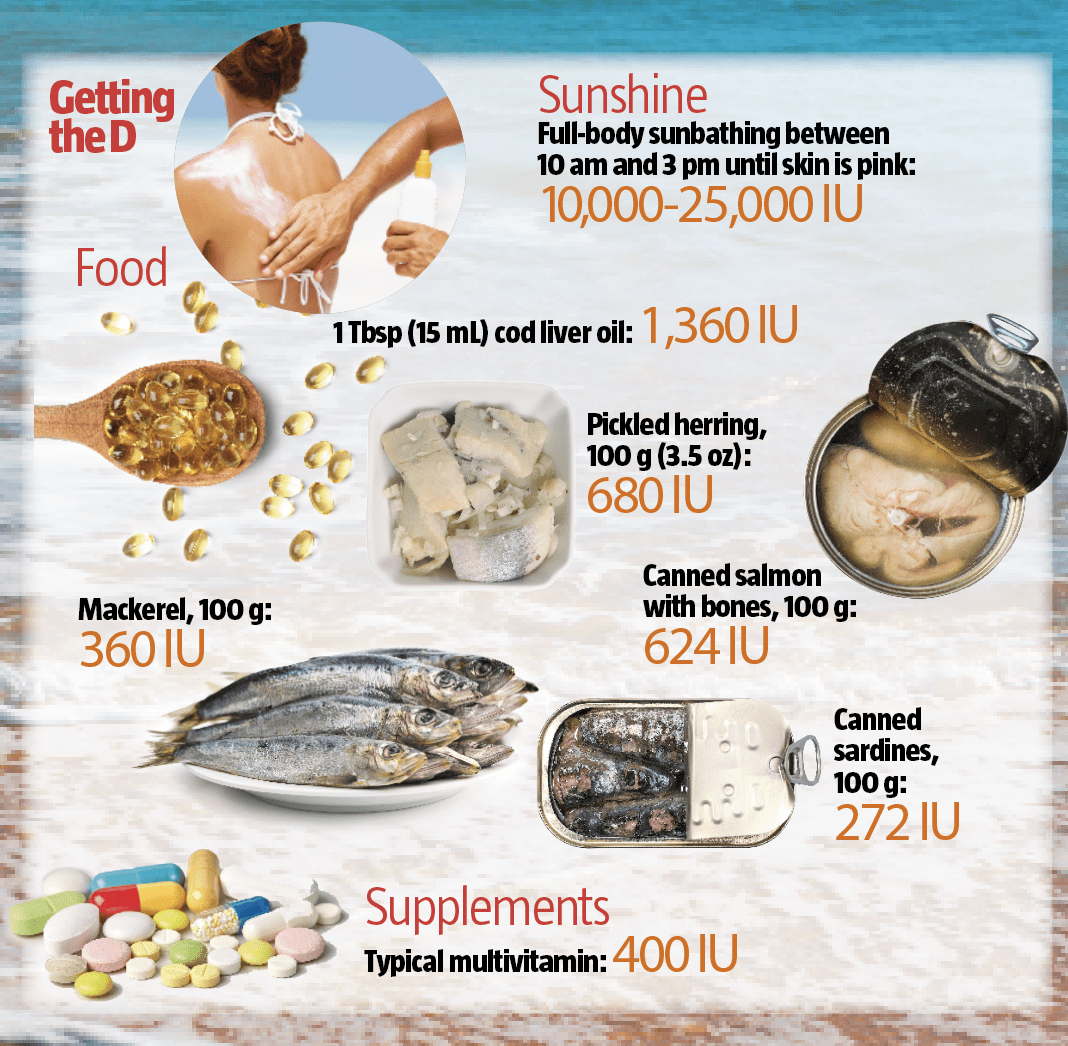
Although it’s called the sunshine vitamin, most of us don’t see enough of the sun to keep levels up, and so one of the best ways to top up is by taking a supplement every day. For the Brigham study, nearly 26,000 people were given either 2,000 IU of vitamin D or a placebo every day for five years.
The amount they were taking is far higher than the recommended daily allowance (RDA) of just 800 IU—roughly 20 mcg—for people older than 70, and 600 IU (15 mcg) for younger adults.
That’s not going to be enough for those of us in sun-starved northern regions—essentially anywhere north of Atlanta—as one study discovered when it measured the blood serum levels in a group of Bostonians at the end of the winter, with two-thirds being deficient.2
Around 40 percent of Americans are deficient in vitamin D all year round, and that rises to around 80 percent of African Americans and Hispanics.3
Despite the name, vitamin D is actually a steroid hormone that’s produced from cholesterol when your skin is exposed to sunlight, but it has to be a strong, summer sun to start the process.
The food we eat delivers vitamin D in one of two forms: as D3 (cholecalciferol), which is found in fatty fish and egg yolks, and D2 (ergocalciferol), an ingredient in some plants, mushrooms and yeasts. D3 is the one to focus on, as it’s almost twice as effective at increasing levels in our blood.
But whichever way you get it, the message is clear: every day should be a D-Day.
How much do you need?
Healthy adult: 800 IU (Recommended Daily Allowance, RDA)
Adult with vitamin D deficiency: 6,000 IU a day*
Adult who is deficient and obese or with malabsorption problems: 10,000 IU a day*
Disease prevention: 2,000 IU a day
*Until blood serum levels are above 30 ng/mL
Sunshine health benefits
•Reduces risk of osteoporosis, fracture and falls
•Reduces risk of life-threatening cancer
•Reduces risk of early death
•Eases symptoms of severe depression
•Reduces risk of type 1 and 2 diabetes
•Protects against Covid-19
Signs of deficiency
•Children may have difficulty walking or need to sit for long periods—an early sign of rickets
•Chronic aches and pain in the muscles
•In severe cases, children will have bowing in the legs
•In adults, bone pain, detected by pressing on the sternum or tibia
What do you think? Start a conversation over on the... WDDTY Community

Great news! Discounts are available based on your cart total. Check the details below: