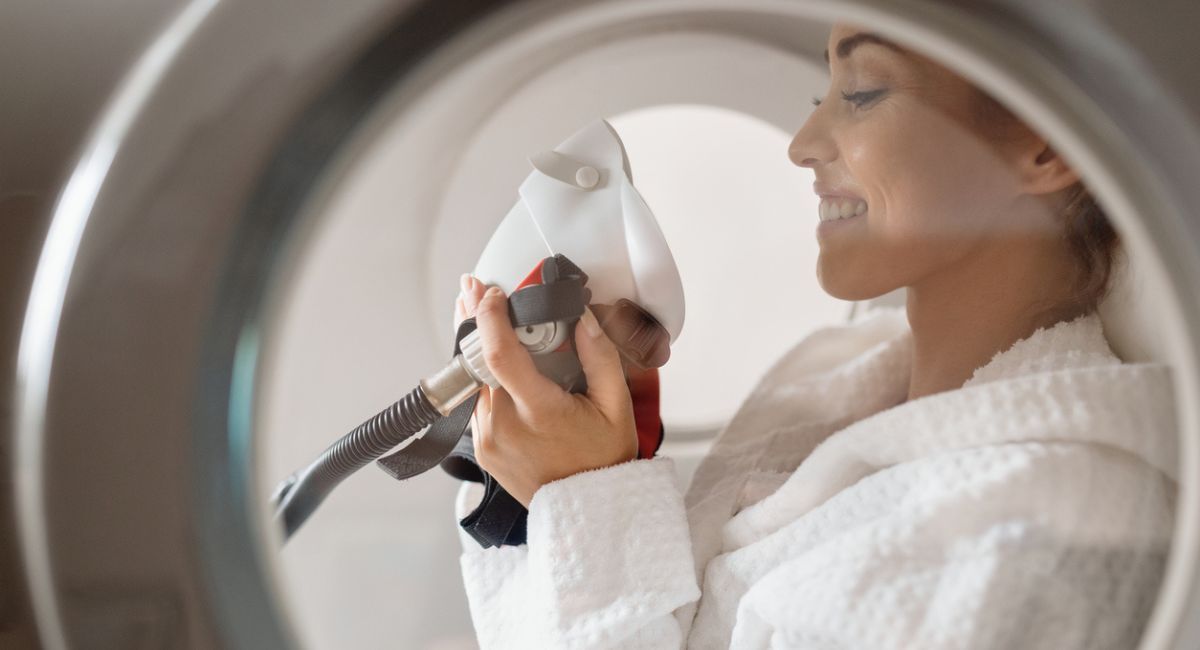
Hyperbaric oxygen can help with cancer treatment, brain health, wound healing and more, says Dr Leigh Erin Connealy. Here’s why more and more patients and practitioners are embracing this powerful therapy
What do Cristiano Ronaldo, Novak Djokovic, LeBron James, Justin Bieber and Michael Jackson all have in common? These celebrities, entertainers and top-tier athletes have all recognized the far-reaching benefits of hyperbaric oxygen therapy (HBOT).
Football (soccer) phenom Cristiano Ronaldo knows that this innovative therapy helps him stay in peak physical shape and prevent injuries. He even famously purchased a chamber for home use. Serbian tennis star Novak Djokovic relies on HBOT regularly for active recovery and to build endurance. Basketball legend LeBron James uses it to speed recovery, reduce inflammation and enhance physical performance.
Justin Bieber rejuvenates and reenergizes after grueling music tours with HBOT. And back in the 1980s, when Michael Jackson suffered burn injuries after an accident on a commercial set, he used HBOT to speed healing, prevent scarring and get back to his iconic pop-star career.
Hyperbaric oxygen therapy’s widespread benefits don’t end there. This remarkable modality also plays a role in cancer treatment, helping mitigate radiation-induced damage, enhancing various cancer treatments, and boosting overall health and immunity.
So, what’s so magical about hyperbaric oxygen therapy? Here’s how and why this therapy is so effective.
Everyone knows oxygen is essential. This element quite literally breathes life into us with every inhalation. But oxygen is also critical for healing, cellular repair, energy production and disease prevention.
Several harmful organisms and unhealthy cellular environments struggle to thrive in oxygen-rich conditions.1 Many parasites, fungi and viruses have evolved to survive in anaerobic (without oxygen) environments, such as soil or a host organism’s gut, so oxygen and its byproducts are actually toxic to them.
Two-time Nobel Prize winner Dr Otto Warburg famously noted, “If our internal environment was changed from an acidic, oxygen-deprived state to an alkaline, oxygen-rich state, viruses, bacteria and fungi could not live.”
Harnessing the healing and preventive powers of oxygen requires a special delivery system—in this case, a pressurized chamber. The air we breathe daily is normally roughly 21 percent oxygen. This percentage is great for sustaining everyday, run-of-the-mill bodily functions.
However, when you breathe highly concentrated oxygen (100 percent) under pressure, it allows the oxygen to dissolve and be delivered throughout the blood, plasma, tissues and cells, literally flooding the body with this health-enhancing element. The human body contains roughly 60,000 miles of blood vessels, and HBOT transports healing oxygen to even the tiniest capillaries.
This influx of oxygen serves several functions: mobilizing stem cells, promoting the formation of new blood vessels (angiogenesis), reducing inflammation and even stimulating collagen production. It’s a godsend for so many ailments and illnesses, and it’s a wonder more people aren’t using this remarkable therapy.
What happens when you slice an apple and leave it on the counter? Over time, it slowly turns brown as oxygen interacts with compounds in the fruit. If this effect is caused by interaction with oxygen, can something similar happen in the body during HBOT?
This browning process, known as oxidation, often gets a bad rap because it’s associated with aging and cellular damage. However, the relationship between oxygen and health is far more multifaceted.
While it’s certainly true that uncontrolled oxidative stress can be harmful, therapeutic oxygen delivered under carefully controlled conditions can stimulate healing, improve circulation, activate repair pathways and enhance cellular function. This is where HBOT shines.
Recovery from cancer treatment
As a doctor who treats cancer, I recognize that the conventional treatments of chemotherapy, surgery and radiation are sometimes warranted. That said, I also see the toll some of these approaches take on my patients. My number one goal is to restore the body to balance and mitigate any collateral damage.
Radiation therapy is a prime example. It’s highly effective at destroying cancer cells, but it also wreaks havoc on surrounding healthy tissues, cutting off or limiting their blood supply and drastically reducing oxygen levels.
HBOT is a therapy approved by the US Food and Drug Administration for “delayed radiation injury” precisely because it stimulates angiogenesis, which boosts circulation and restores healthy blood flow to damaged tissues, helps prevent fibrosis (thickening and hardening of tissues) and can speed wound healing, thereby helping prevent tissue or bone necrosis.2
There are thousands of studies on HBOT spanning several decades, and the research indicates that hyperbaric oxygen may benefit several other key areas of health.
Brain health and cognitive function
Decreased cognitive function is one of the chief concerns of aging. Restoring and optimizing critical blood flow to the brain via HBOT offers a potential way to enhance clarity and stave off age-related cognitive decline.
In a randomized clinical trial of patients aged 64 or older, roughly half received regular HBOT treatments for three months, while the other half served as a control group. MRI was used to evaluate cerebral blood flow, which increased significantly in the group who received HBOT.
The researchers wrote, “The most striking improvements were in attention and information processing speed.” They also saw improvements in executive functions (mental skills like focusing, planning and problem-solving).3 These cognitive enhancements resulted from increased cerebral blood flow following HBOT.
Post-injury and post-surgery recovery
HBOT can also speed wound healing and recovery after cancer surgeries. A recent review examined its efficacy after breast reconstruction surgery in mastectomy patients. The study’s authors concluded that HBOT could improve tissue oxygenation, ease complications such as infection and promote healing.4
Another study published earlier this year also found that HBOT appears to speed healing after breast reconstruction surgery. The best results occurred when treatment was started shortly after the surgery. The one caveat of this study was that women who had had prior radiation had less favorable outcomes.5
HBOT is also a promising therapy for concussions, traumatic brain injuries (TBIs) and surgical wound healing. In a landmark 2013 study, researchers evaluated 56 patients with chronic post-concussion syndrome. They followed them for one to five years after a mild TBI.
The patients underwent 40 sessions of HBOT, resulting in marked improvements in cognitive function. They reported increased attention, memory, information processing and executive function along with meaningful gains in quality of life.
Post-treatment brain imaging studies revealed increased neuronal activity in damaged brain regions. The change suggests that HBOT not only helps the brain adapt but also facilitates recovery, even years after a TBI.6
Another study examining the effects of HBOT on muscle damage and inflammation after total knee replacement surgery also reported positive outcomes. The researchers found that the HBOT treatments mitigated muscle damage, decreased inflammation and led to reduced pain, less swelling, and improved range of motion and function.7
Circulation and wound healing
Patients who experience issues with poor circulation or slow wound healing, such as those with diabetes, have also benefited from HBOT. Because chronic high blood sugar damages nerves, compromises oxygen delivery and restricts blood flow, it makes sense that increased oxygen and nutrient delivery would be helpful.
In a major 2010 study, patients with non-healing diabetic foot ulcers underwent either 40 sessions of HBOT or a placebo treatment five times a week for eight weeks. A year later, 52 percent of those treated with HBOT had complete wound healing, compared with 29 percent of those who received the placebo.
Additionally, those who completed at least 35 treatments achieved a 61 percent healing rate, versus only 27 percent in the placebo group. The study’s authors concluded that HBOT significantly improved healing outcomes when used to support standard wound care.8
Athletic performance and recovery
Several elite athletes include HBOT in their healing and recovery protocols. And the benefits are proven. In a recent randomized controlled trial, 40–50-year-old master athletes who underwent 40 sessions of HBOT experienced significant increases in endurance, aerobic activity and power compared to their counterparts who received a sham treatment.
Furthermore, researchers observed that the athletes’ mitochondria increased in size and function, suggesting that HBOT enhances the body’s ability to produce energy at the cellular level.9 This energy boost can help support peak performance, recovery and overall vitality—all essential components of high-level athletics.
Immune system support
As mentioned earlier, many pathogens and malignant cells can’t survive in an oxygen-rich environment. Think of HBOT as nature’s infection-fighting ally—not an antibiotic itself per se, but a therapy that helps your immune system and conventional treatments work more effectively against infection.
Personally, hyperbaric oxygen would be my go-to if I developed any type of bacterial or viral infection, from Epstein-Barr and Lyme disease to any stubborn infection or hard-to-treat virus.
Healthy aging and overall vitality
Everyone wants to look and feel their best, and slowing the aging process is a big part of the equation. As we get older, our cells gradually lose their ability to function optimally and repair themselves.
Two key markers of cellular aging are telomeres and senescent cells. Telomeres are the protective caps at the ends of our chromosomes that naturally shorten over time. Senescent cells, sometimes referred to as “zombie cells,” are aging or damaged cells that no longer function properly but remain in the body, contributing to inflammation and other age-related declines.
A groundbreaking 2020 study investigated the effects of HBOT on healthy adults aged 64 and older. Participants completed 60 HBOT sessions, and the results were remarkable. Telomere length increased by more than 20 percent in several immune cell types, while the number of senescent cells decreased by up to 37 percent in some cell populations.
These findings suggest that HBOT helps promote healthier aging at the cellular level by supporting telomere maintenance and helping the body clear out dysfunctional, aging cells. The study’s authors concluded that HBOT may support longevity, immune function and overall vitality as we age.10
Backing from the scientific community is crucial, but real-life experiences also matter. At the Center for New Medicine and the Cancer Center for Healing, patient feedback on HBOT is overwhelmingly positive and enthusiastic. People report the following benefits after regular use:
These self-reported benefits align with clinical trial findings, so it’s not surprising that patients, practitioners and researchers alike are singing the praises of hyperbaric oxygen therapy.
Research continues to pour in as the widespread benefits of hyperbaric oxygen therapy are demonstrated time and again. And though most of us aren’t elite athletes or celebrities, we can certainly appreciate the wound-healing, immune-boosting, cell-repairing aid that HBOT provides.
As word spreads about this valuable therapy, HBOT treatment options are expanding. We recently added a third hyperbaric chamber at our clinic to ensure more patients have access to this remarkable treatment, and other wellness facilities are following suit.
To locate a physician who offers HBOT in your area, visit the American College for Advancement in Medicine website at acam.org, or try neurotherapynetwork.org.uk or hyperbaricoxygentreatment.uk if you’re in the UK. And be sure to talk to your doctor about how HBOT could help improve your vitality, longevity and overall health.
Back in 1662, a British physician named Nathaniel Henshaw came up with the idea of a pressurized chamber that used compressed air to treat digestive ailments and lung disorders. The benefits of using 100 percent pure oxygen rather than regular compressed air were gradually recognized, but it wasn’t until 1937 that hyperbaric oxygen was successfully used to treat decompression sickness.
In the 1950s, HBOT’s ability to heal burns quickly and more effectively was discovered, and it was also found to mitigate radiation-induced tissue damage in patients with cancer. Around this time, the benefits of HBOT during cardiac surgery were also recognized.1
To date, HBOT is approved by the US Food and Drug Administration to treat only 14 conditions:
Fortunately, forward-thinking integrative practitioners have the option to prescribe hyperbaric oxygen for “off-label” conditions. As research mounts and studies continue to demonstrate its efficacy across the board, I’m hopeful that HBOT will become more accessible and that mainstream medicine will continue to adopt it more widely.
What do you think? Start a conversation over on the... WDDTY Community

Great news! Discounts are available based on your cart total. Check the details below: