Could your feet hold clues to symptoms that have defied explanation? Master Integrative Foot Zoning™ founder Amber Bodily shares what one client’s feet revealed after nearly a decade of unexplained muscle twitching
A few months ago, a client came to me after living with muscle twitching for close to 10 years. His calves twitched constantly, his thighs twitched, his eye twitched, and sometimes the movement seemed almost continuous.
He was still functioning; he could work and go about his life, but his quality of life was severely affected. He knew something was not right, and after years of being told variations of “This is simply how your body is,” he wanted to understand why.
He had already searched extensively for answers. He had been evaluated at major medical centers and specialty clinics, including the Mayo Clinic and Huntsman, and had undergone MRIs and other testing. At various points, he had been diagnosed with serious neurological conditions such as amyotrophic lateral sclerosis (ALS, or Lou Gehrig’s disease) and multiple sclerosis (MS), but these were simply replaced with a new diagnosis when medications and treatments didn’t work.
In addition to trying different medications, he tried supplements, diets and numerous other approaches with different practitioners. Nothing had stopped the twitching.
When he came to see me, I wasn’t interested in giving the twitching another name. I wanted to understand what was creating enough disturbance in his body for his nervous system to continue responding this way. We needed to get to the root cause.
So I started where I always start. I looked at his feet.
I have spent almost two decades looking at, feeling, and working on thousands of feet, and one thing I have learned over and over again is that the feet hold the language of health. They change with us. They carry patterns in their color, texture, tissue quality, structure, markings, temperature and density, and those patterns help me understand where the body appears to be struggling, compensating or carrying an unusual load.
This is one of the major differences between Integrative Foot Zoning and other approaches. I don’t look at a single callus and assign an organ or disease to it. I look at the feet as a whole. I notice where a finding sits, which systems intersect in that area, what else is appearing elsewhere on the feet and whether those findings begin telling the same story.
Then I use my hands. Feeling the feet gives me information that looking alone never will. An area that appears fairly normal can feel dense, congested, tender, resistant or completely different from the tissue around it. An area that looks dramatic can sometimes feel far less active than expected. Looking gives me one layer of information. Feeling gives me another.
Then I work the full Integrative Foot Zone. The analysis is not the treatment. The zone is the treatment.
The analysis helps me understand where I need to pay attention. My hands give me more information about what the body is presenting. And then the complete zone works through the body in a specific sequence rather than chasing one isolated symptom.
This client’s liver area immediately caught my attention. Within Integrative Foot Zoning, there are specific areas of the liver signal where I look for patterns I associate with parasite activity or what I call parasite “nests.”
But I wasn’t finding this pattern in only one place. I was also seeing and feeling disturbances throughout the digestive system, including the duodenum, small intestine, colon and ileocecal valve.
The ileocecal valve is where the small intestine meets the large intestine. Within my system, it’s one of the primary areas I go back and check when I find the parasite activity pattern elsewhere in the digestive tract.
There was another piece, too. His feet were showing what I associate with a significant heavy metal burden in the liver.
That combination mattered to me because parasites are a load on the body, and heavy metals are another load. Parasites can also take in heavy metals, and when those materials move through the parasite and are excreted in its waste, the resulting waste can become more toxic and acidic. I was looking at the possibility that one burden was compounding another.
Now think about what the body is being asked to do in that situation. The liver still has to process substances moving through the blood. The digestive tract still has to break down food, absorb nutrients and eliminate waste. The immune system still has to respond. The nervous system still has to communicate throughout the body.
Add parasites, toxic burden, inflammation and the metabolic waste produced along the way, and the body has more and more to manage. This is what I mean when I talk about load.
The way the body continually adjusts its physiology to different loads or changing demands is called allostasis. The nervous, endocrine, cardiovascular, immune and metabolic systems do not operate independently. They adapt together.
Stress, trauma, infection, inflammation, blood loss and toxic exposures all create load. An organ struggling to perform its normal work creates load. The body experiences all of these at the same time and has to keep allocating resources to handle them.
So while this man’s most obvious symptom involved his muscles and nervous system, his feet were asking me to look further upstream.
Finding the root cause doesn’t always mean finding one single thing responsible for every symptom. It often means asking what needs attention first.
What is creating the greatest demand on the body? What is consuming resources? What is forcing another system to compensate? What has to be addressed before the body has room to respond differently?
In this client’s case, I wanted to address the parasite burden before pouring more support into the nervous system. He began a parasite-cleansing protocol (see below), and after the first round he noticed that the twitching was slightly better.
But based on what I had originally seen and felt in his feet, I did not believe we were finished. He had presented with a significant pattern, so we continued working through it.
Over time, he completed four parasite cleanses, with additional support while he was actively cleansing. I also continued using the Integrative Foot Zone and reassessing his feet rather than assuming the same findings would remain dominant forever.
The feet change as the body changes. Once one major burden begins to lift, something that looked dominant before can soften or disappear. Another area can become more noticeable. Tissue can feel different. The hierarchy of what the body appears to need can shift.
That’s why I don’t believe in memorizing a formula and applying it to every client with the same symptom. Integrative Foot Zoning requires you to keep listening to the body in front of you.
Several months later, my client’s twitching was gone. He was sleeping through the night, and his bloodwork was normal. After almost 10 years of searching for a solution, the symptom he had eventually learned to live with had resolved.
Cases like his remind me why I trust the body and why I pay such close attention to the feet. His nervous system was communicating. The twitching was real. But his feet had pointed me toward a deeper load that needed to be addressed first.
Imagine someone who is exhausted, nutritionally depleted and anemic while also dealing with a significant parasitic infection. Certain parasites contribute to intestinal blood loss, nutrient depletion, inflammation and tissue injury.
You can continue giving that person nutrients, and nutritional support might still be valuable. But you also have to address why the depletion keeps happening.
The same question applies elsewhere. Someone can keep supporting hormones without asking what is disrupting them. They can support the nervous system without asking what keeps pushing it into compensation. They can add supplement after supplement without asking what the body is continually having to fight, process or overcome.
That’s why I often ask a different question from the one the symptom seems to demand—not “What else can I add?” but “What is standing in the way of healing?” The feet help me answer that question.
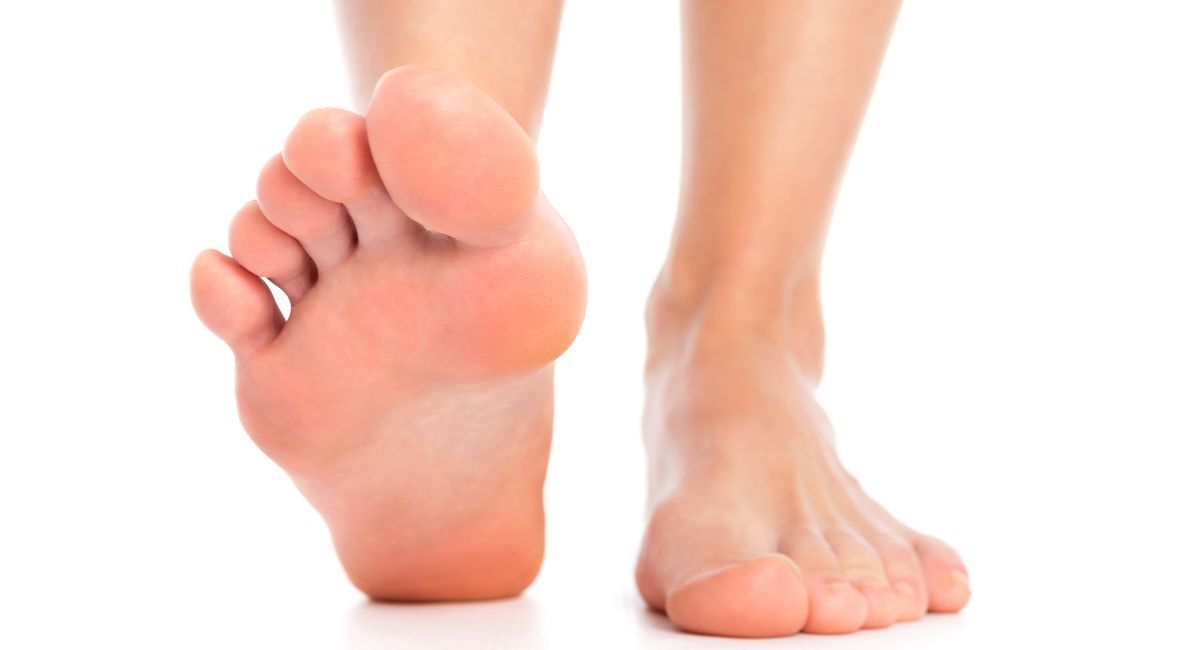
You don’t need to know Integrative Foot Zoning to begin paying closer attention to your own feet. The simplest place to start is observation.
Take photographs of both feet today, including the tops and soles, preferably in natural light. Then repeat those photographs periodically using approximately the same lighting and angles.
You’re not trying to diagnose yourself based on a wrinkle, callus or change in color. You’re looking for patterns and changes over time.
Compare your feet. Does one look puffier than the other? Has the color changed? Are you seeing new callusing, cracking, peeling, markings or areas of discoloration? Are your toes beginning to sit differently? Does one area look fuller, flatter or more tense than it used to?
Then think about what else was happening in your life and body when those changes appeared. Had you been sick? Was your digestion different? Were you under unusual stress? Were you sleeping poorly? Had you started a medication, supplement or different way of eating? Were you recovering from an infection or injury?
You’re not trying to decide, “This mark means there’s something wrong with my liver.” That’s not how this works. You are learning to observe your body.
The feet hold the language of health. My client’s feet didn’t simply tell me that his muscles were twitching. We already knew that. They helped me understand where to look next.
And after almost a decade of focusing on the symptom, changing where we started changed everything. When you give the body what it needs, beautiful things happen.
Parasites are more common than most people realize and can silently wreak havoc on your body’s systems. Here are some herbs, supplements and health foods that can help eliminate them. For my full protocol, visit amberbodilyhealth.com/eliminate-parasites-naturally.
Wormwood is known for its anti-parasitic properties and is highly effective against intestinal worms.
Black walnut hull helps kill parasites and cleanse the body.
Clove goes after parasite eggs as well as unwanted guests in the intestines.
Parasitix Cleanse Tincture by HerbEra is a traditional herbal blend of wormwood, black walnut hull and cloves crafted to support natural detox pathways (available from herb-era.com). Parasite Cleanse by ArcanaHerb is a similar formula but with added thyme and neem (available from arcanaherb.co.uk).
Garlic is a natural anti-parasitic with additional antibacterial and antifungal benefits.
Bentonite clay is effective at binding to and removing parasites and toxins from the digestive tract. Not everyone tolerates bentonite clay well, so working with a practitioner to assess what works best for your body is helpful.
Papaya seeds are highly effective at killing off parasites. The seeds can be ground into powder and used in smoothies or on foods in place of pepper.
Pumpkin seeds have natural anti-parasitic properties, helping to weaken and expel parasites from the body.
Amber Bodily is a master Integrative Foot Zoning practitioner and founder of the Bodily Wellness Institute. She has earned certifications in biomagnetic therapy, herbalism, aromatherapy, natural detoxification and the Body Rejuvenation Diet. She uses her intuitive gifts and training to understand the body and equip others to reclaim their health and vitality. To learn more about her work and learn the language of health through the feet, visit amberbodilyhealth.com.
What do you think? Start a conversation over on the... WDDTY Community

Great news! Discounts are available based on your cart total. Check the details below: