There’s a forgotten mineral at the heart of blood-pressure control. Celeste McGovern asks why we’re told so much about cutting sodium but so little about the other half of the salt equation
At age 37, California internist Dr David Clayton found himself on the other side of the prescription pad. He had a 28-inch waist, still wore the same size clothes he’d worn in college, and worked out regularly. Yet he had developed high blood pressure.
“I was prescribed antihypertensive drugs—the same ones my patients didn’t want to take,” he recalls. “We used to call patients like that ‘noncompliant.’ Now I appreciate why that happens.
“Nobody likes looking at a pill bottle in the morning,” he says. Especially when they’re still in their 30s.
Until then, Clayton admits, he had shared a common assumption about people who developed hypertension and other chronic health problems: They didn’t exercise, couldn’t control their appetite or had other lifestyle failures. His own diagnosis forced him to reconsider.
Why were people who lived generally healthy lives developing high blood pressure? “The common mantra from physicians was ‘age and genetics,’” he says.
Clayton wasn’t old, but he wasn’t alone. Nearly half of American adults have hypertension, including more than 70 percent over age 60. In the UK, it affects over a third of adults, including 60 percent of those over age 60.1
Globally, the WHO estimates that hypertension accounts for about 11 million deaths each year.
Because it’s so common, particularly among the elderly today, hypertension seems to be an expected part of aging. But it’s not normal.
Persistently high blood pressure damages blood vessels throughout the body, raising the risk of stroke, heart failure, kidney disease, dementia and vision loss.2 It can even show up in the bedroom: It’s associated with erectile dysfunction in men and sexual dysfunction in women.
Clayton’s own diagnosis made him doubt the age-and-genetics narrative. For the next two years, while working as an attending physician, he immersed himself in hypertension research. He was surprised to find dozens of studies showed oral potassium lowers blood pressure.
Clayton began thinking about the things modern diets routinely fail to provide, from fiber to omega-3 fats. What if one of the gaps was chronic potassium deficiency? The trail of research dating back to the 1920s suggested he was onto something.
He began supplementing potassium and saw his blood pressure return to the normal range within two weeks. More than a decade later, he still keeps his blood pressure between 115/80 and 130/90 mmHg this way. If he stops taking potassium, he says, his systolic pressure climbs by around 10 mmHg.
His experience raises some big questions. For decades, we’ve been told sodium is a major culprit in the epidemic of high blood pressure. Eat less salt. Pay attention to it on food labels. But where is the urgent message about potassium?
Sodium has a largely overlooked partner in human physiology. Together, the two minerals create the electrical gradients that allow nerves to fire, muscles to contract and the heart to beat. And despite public health authorities’ warnings about excess sodium, their own data have long shown another problem: Most of us are potassium deficient.
“The balance of the two is really what’s important,” says Dr David Ellison, a kidney specialist and professor of medicine and physiology and pharmacology at Oregon Health & Science University.
Could correcting that imbalance through food, potassium-enriched salt and supplements be the easy, economical and drug-free way of lowering high blood pressure and the enormous burden of disease that comes with it?
If potassium is the forgotten half of the blood-pressure equation, it isn’t because nobody thought to test it. A century ago, two Canadian doctors were already treating hypertension with it.
In 1925, W. L. Addison and H. G. Clark reported in the Canadian Medical Association Journal on using potassium chloride in patients with arterial hypertension.3 Addison continued the experiments, comparing the effects of sodium chloride and potassium chloride in patients whose high blood pressure responded to potassium supplementation. He was intrigued: Two chemically similar salts had strikingly different effects on blood pressure.4
Over the decades, researchers kept returning to the idea. In population studies, higher potassium intake was linked to lower blood pressure. Meanwhile, clinical researchers began giving people measured doses, usually of potassium chloride, to see what happened.
By the 1980s, randomized controlled trials were testing supplemental doses that would look extraordinary on today’s supplement shelves. Trials commonly provided 60–100 mmol of potassium a day—2.3–3.9 grams of elemental potassium—on top of the participants’ diets.
In 1991, Francesco Cappuccio and Graham MacGregor pooled 19 trials involving 586 people. Potassium lowered blood pressure by an average 5.9/3.4 mmHg overall and 8.2/4.5 mmHg among those with hypertension. They concluded that higher potassium intake should be among non-drug approaches to uncomplicated hypertension.5
Six years later, Paul Whelton and colleagues pooled 33 randomized trials involving 2,609 people and again found significant reductions, with greater effects among people consuming more sodium.6
Clayton argues that the size of the effect has been underappreciated. “When you look across the intervention trials, the average reduction in blood pressure is eight or nine points, which is literally like thiazide diuretics, like angiotensin receptor blockers,” he says. Except, he adds, “It’s more like re-centering the body chemistry than throwing medications at it.”
By the end of the 1990s, this was hardly fringe medicine. Increased potassium intake had made it into the US Joint National Committee recommendations for preventing and treating hypertension.
This leads to an obvious question: If doctors have been investigating potassium to treat high blood pressure for a century, and if dozens of randomized trials supported large-dose supplements more than 30 years ago, why do most doctors just say, “Eat less salt” and often “Don’t take potassium”?
Some influential guidelines explicitly discourage potassium. Britain’s National Institute for Health and Care Excellence (NICE), for example, advises people with hypertension to reduce sodium intake but tells doctors not to offer calcium, magnesium or potassium supplements to reduce blood pressure.7
It’s a curious endpoint after decades of positive research with gram-sized supplements. What happened?
Potassium occupies an unusual place in medicine. We’re told we don’t consume enough, yet we’re also warned that too much can be dangerous.
Even health authorities don’t offer consumers one simple number. Current US recommendations are 2,600 mg a day for women and 3,400 mg for men—lower than the previous 4,700 mg target (which the Food and Drug Administration, or FDA, still uses) because the method of calculating adequacy changed, not because that intake proved excessive.
What is clear is that, by any yardstick, potassium consumption is falling well short of health targets. US government surveys put average intake at about 2,900 mg a day for men and 2,300 mg for women. Health experts call potassium a “nutrient of public health concern” because people under-consume it.
Clayton looks further back for his yardstick—to historic Paleolithic diets that suggest our ancestors consumed upwards of 10,000 mg (10 g) of potassium a day while getting remarkably small doses of sodium— perhaps as low as 700 mg.
Today, sodium intake from processed foods has skyrocketed, while potassium intake from root vegetables and greens, especially, has plummeted. Where our ancestors may have consumed roughly 15 times as much potassium as sodium, today we consume slightly more sodium than potassium.
“When you think about it, your body’s really designed to flourish on a high-potassium, low-sodium diet,” says Clayton.
It doesn’t matter what modern diet someone is eating—Paleo, keto, Mediterranean, DASH—none of them, says Clayton, stack nearly the potassium our bodies are designed for. Which leads him to conclude that “almost everyone is potassium deficient.”
He doesn’t mean we have clinical hypokalemia, or abnormally low potassium in the blood. Most people eating a low-potassium diet won’t show up that way on a routine blood test because the body regulates blood potassium within a narrow range. He means there’s a chronic gap between the amount in modern diets and the amounts our physiology may be designed to handle.
And this is where the paradox becomes stark. Researchers have routinely tested potassium’s effect on blood pressure using doses measured in grams, not milligrams. Yet public warnings emphasize the dangers of potassium and recommend against it for lowering blood pressure. Supplements typically contain just 99 mg.
Potassium can unquestionably be dangerous for some people, particularly when impaired kidney function or certain drugs (see below) prevent the body from excreting it properly.
The kidneys are essential to potassium balance. In healthy people, they remove excess potassium in the urine, keeping blood levels remarkably stable despite substantial changes in dietary intake.
But as kidney function declines, potassium can accumulate in the blood—known as hyperkalemia. Severe hyperkalemia can disrupt the heart’s electrical conduction system, triggering dangerous arrhythmias and, in extreme cases, cardiac arrest.
The risk isn’t theoretical, although even people with substantially impaired kidneys often appear able to handle additional potassium. In a 2022 study, researchers gave 1,560 mg of supplemental potassium daily to 191 people with moderate to severe chronic kidney disease; 83 percent were also taking renin–angiotensin inhibitors.
Yet after two weeks, 89 percent remained free of hyperkalemia. The other 11 percent developed it, particularly older participants and those with higher baseline potassium.8
One concern is that people don’t always know they’re at risk. Chronic kidney disease can remain symptomless for years, and US data suggest awareness remains surprisingly low even with moderate or advanced disease. Someone with significantly impaired potassium excretion could begin taking high-dose potassium without realizing they require monitoring.
Kidney function, in other words, matters enormously.
Clayton sees a more fundamental problem. If inadequate potassium is contributing to hypertension, he argues, drugs may be treating downstream consequences without correcting the nutritional imbalance that helped produce them.
“When you replace the potassium, you’re striking at the root cause of the problem, which is that the kidney is responding to low potassium by raising blood pressure,” he says. Drugs may instead target individual parts of that response—renin, angiotensin receptors or the sodium-chloride cotransporter. “When you target those systems piecemeal, the rest of the system remains upregulated.”
For Clayton, that raises another question: what happens to a patient’s need for medication once potassium intake increases and blood pressure begins to fall?
In a year-long randomized trial of 54 treated hypertensive patients, those encouraged to increase potassium from food were taking just 24 percent of their original drug dose after a year, versus 60 percent among controls. And 81 percent maintained blood pressure control on less than half their original medication, compared with 29 percent of controls.9
Medicine is well accustomed to managing hyperkalemia risks with blood tests, dose adjustments and medication changes. Yet when potassium itself is proposed as an intervention, the possibility of hyperkalemia shifts from a risk to be managed to a reason to avoid it altogether.
Hyperkalemia isn’t the only reason potassium supplements have a reputation for being dangerous, however. Another reason dates back more than half a century, when doctors noticed patients with ulcers, bleeding and sometimes severe damage to the small intestine after taking potassium chloride tablets.
Potassium chloride was immediately fingered as the culprit, except there was more to the story. It turned out that slow-release, enteric-coated potassium tablets could expose a small patch of the digestive tract to a highly concentrated payload as they dissolved. Patients developed ulcers that could scar and narrow the intestine, leading to obstruction and occasionally perforation.
Later studies showed delivery was crucial. Wax-matrix tablets caused substantially more gastrointestinal injury than microencapsulated or liquid preparations.
By 2005, the US Institute of Medicine concluded the delivery vehicle was a “critical determinant” of gastrointestinal risk. It also noted that in another trial, 175 people took 2,300 mg of microencapsulated potassium daily for six months with no serious gastrointestinal effects.10
The injuries were real, but the delivery format was crucial to the risk. Still, the episode cast a long shadow.
In 1975, the FDA introduced special requirements for potassium-containing drugs that deliver 100 mg or more of potassium per tablet, including warnings about small-bowel injuries linked to concentrated potassium salts. Supplement manufacturers subsequently settled on a familiar number: 99 mg.
Contrary to a widely repeated belief, the FDA didn’t set 99 mg as the maximum amount in a dietary supplement. No statutory limit or Tolerable Upper Intake Level exists for potassium. And it deems potassium chloride GRAS—generally recognized as safe—for specified uses in food.
The distinction is striking. The FDA’s Daily Value for potassium is 4,700 mg, while a 99 mg pill provides barely 2 percent of that. For most people, whose diets fall 2,000 mg short of the target, filling the gap with supplements would mean swallowing roughly 20 a day.
By the time hard evidence for potassium was stacking up in the 1980s and early 1990s, hypertension had become an enormous pharmaceutical market. By 1992, Americans were spending some $7 billion a year on antihypertensive drugs as newer and more expensive classes such as ACE inhibitors and calcium-channel blockers rapidly displaced old treatments.
Drug companies didn’t necessarily push potassium aside. They didn’t need to. New drugs had patents, commercial sponsors and enormous markets. Potassium is a cheap mineral salt that can’t be patented, and the mostly public research behind it was dwarfed by massive trials that influenced medical practice and were bankrolled by the drug industry.
Some of the decisions along the way don’t match the evidence available at the time, though. In 1999, for example, a Canadian expert panel, some of whose members had significant ties to pharmaceutical companies, concluded that potassium supplementation was ineffective for lowering high blood pressure.11 They recommended against it although major meta-analyses of randomized supplementation trials had already reported significant reductions.
More than a quarter-century later, official US advice is shifting. The 2025 American hypertension guidelines recommend 3,500–5,000 mg of potassium a day for people with hypertension and give increased potassium intake a top-tier Class 1 recommendation. They also explicitly include moderate supplementation—less than about 3,100 mg a day—and endorse potassium-enriched salt substitutes.12
Ellison says one important way potassium lowers blood pressure is “by getting you to pee out sodium.” In a 2026 paper, his team describes a “potassium switch” in the kidney: Low potassium activates the sodium chloride cotransporter (NCC), encouraging sodium retention, while increasing potassium suppresses it, promoting sodium excretion.13
More importantly, the benefits may extend beyond blood pressure readings. In the 2021 Salt Substitute and Stroke Study, nearly 21,000 high-risk adults in rural China used either regular salt or a substitute containing 75 percent sodium chloride and 25 percent potassium chloride. After nearly five years, the substitute group had 14 percent fewer strokes, 13 percent fewer major cardiovascular events and 12 percent fewer deaths, without a significant increase in serious hyperkalemia.14
But translating that intervention to North America isn’t straightforward. In rural China, much of the sodium is added during cooking; in the US, it’s often already embedded in processed foods. “The challenges of changing diet are different here,” says Ellison.
One solution is to change the food supply itself. Yet when the FDA proposed allowing salt substitutes in standardized foods in 2023, the American Kidney Fund urged changes to the standards, citing the risk of hyperkalemia in people with kidney disease or taking certain medications. Three years later, the proposal is still in limbo.
Which brings us back to David Clayton. Today he remains something of a lone voice, broadcasting his potassium message on YouTube to a large and eager audience. Many are looking for ways to lower their blood pressure without antihypertensive drugs.
Clayton would go much further than the guidelines. Asked what he would tell doctors treating a newly diagnosed patient with hypertension today, his answer is simple: “Before you put him on medication, put him on 1,000 mg of potassium twice daily and have him come back in a month.”
Clayton has also put his money behind his argument. He developed PMAX1000, a supplement providing 1,000 mg of potassium per serving, which he sells through his company, PotassiMax.
Scroll through the comments under his YouTube videos and the strange divide over potassium plays out in miniature.
“My doctor said [euthanasia proponent Dr Jack] Kevorkian used potassium to kill his patients. He told me to stick with Nebivolol,” writes one viewer.
“Isn’t [it] illegal to sell capsules above 100 mg?” asks another.
“I’ve seen about five cardio docs over the years, not one has ever recommended taking potassium. Are they ALL ignorant?”
“For any one person who says, ‘Hey, this is dangerous,’ or ‘My doctor told me not to,’ there are 10 people who say, ‘Thank you for this information. It changed my life,’” says Clayton.
The comments bear him out.
“Thanks to your content, I now have normal blood pressure,” writes one. “Started 2 grams a day of potassium chloride. Doctor put me on meds, but I’m now off them.”
“Taking 2000 mg extra saved me from an ablation in the heart and flecainide medication for life. Taking less or losing too much increases extrasystoles,” writes another—referring to an arrhythmia characterized by premature heartbeats.
Others attribute a variety of benefits to increasing their potassium—from better sleep and less daytime fatigue to relief from dry mouth and even plantar fasciitis.
They’re only testimonials, not clinical evidence. But the comments capture the divide surrounding this mineral: One viewer has been warned that potassium can stop the heart, while another believes it saved him from having his heart treated.
Clayton believes the biggest obstacle now is inertia. “When I approached a cardiovascular journal with the evidence on potassium, they said, ‘There’s more research needed. The risks outweigh the benefits,’” he says. “It’s this party-line type of holding to one story when there’s limited evidence to support that story.”
The new American guidelines suggest that dogma may finally be shifting. But guidelines on paper are one thing; changing a medical culture that has treated potassium supplements with suspicion for decades may take longer.
Meanwhile, high blood pressure contributes to more than 1,800 deaths every day in the US alone. Given the stakes—and a century of evidence behind potassium—perhaps the message about the other half of the salt equation needs to catch up a little faster.
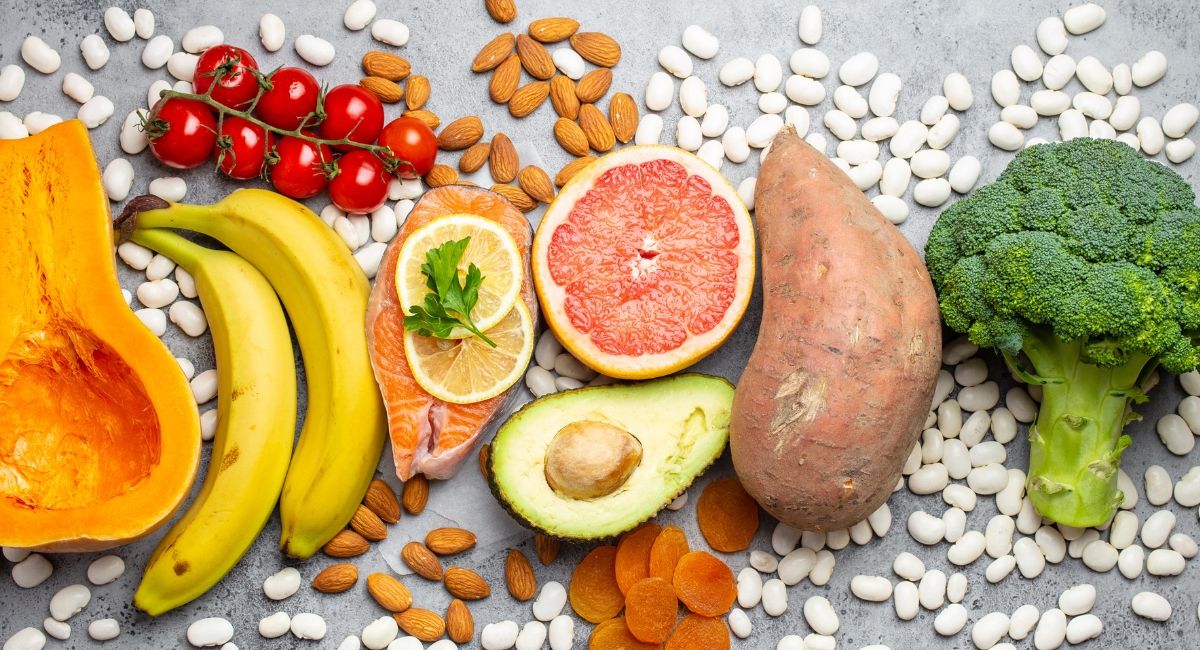
Bananas may be potassium’s poster child, but they’re nowhere near the top of the list, and getting several grams every day still requires a very potassium-rich diet.
They’re sold as a healthy way to replenish essential minerals. But flip over the packet, and you may get a surprise: Many electrolyte drinks contain a whopping dose of sodium and a relatively tiny dose of potassium.
One LMNT sachet, for example, contains 1,000 mg of sodium and just 200 mg of potassium. Athletes dripping with sweat can lose large amounts of sodium, while people on ketogenic diets excrete more sodium as insulin levels fall. These are the people LMNT is marketed to.
Ironically, though, keto can make potassium harder to get. Potatoes, beans, lentils, bananas and coconut water—all potassium powerhouses—are restricted because of their carbohydrate content. Avocados, leafy greens, fish and meat can help fill the gap, but it takes some effort.
For the rest of us, the equation looks rather different. Most Western diets already provide plenty of sodium while falling short on potassium. Adding another 1,000 mg of sodium may not offer the balance you’re looking for.
Potassium comes in several forms, and each has pros and cons. A hundred years of blood pressure studies support potassium chloride, but it can cause nausea, bloating and other gut problems.
Potassium citrate and bicarbonate are alkaline and may offer additional benefits for kidney stones and bone health, say internist Dr David Clayton. But he favors potassium gluconate or aspartate. Both are neutral, he says, with a slower absorption curve and potentially better tolerability.
The problem? Finding them in useful doses. Most over-the-counter potassium pills contain tiny amounts. Clayton’s supplement, PotassiMax, offers a higher dose (potassimax.com). For more, see Healthy Shopping: High-dose Potassium Supplements.
Certain medications add a layer of risk to potassium supplementation. ACE inhibitors and angiotensin receptor blockers (ARBs) widely prescribed for hypertension, heart failure and kidney disease can reduce potassium excretion. Potassium-sparing drugs such as spironolactone and eplerenone can do the same.
The risk is higher in people with already impaired kidney function. Adding potassium by the gram in these circumstances without medical supervision can lead to hyperkalemia. But these drugs don’t automatically make high-dose potassium supplements dangerous.
In 2016, Francesco Cappuccio and colleagues pooled data from 20 randomized trials involving more than 1,200 participants and gave them 858–5,460 mg of potassium per day, averaging 1,755 mg. Despite these doses, blood potassium rose by an average of only 0.14 mmol/L, while creatinine—a marker of kidney function—did not change significantly. No trials reported serious adverse effects.1
The review found little evidence that the gram-sized potassium doses used for up to 24 weeks caused the hyperkalemia that makes supplementation so feared. The danger isn’t simply “potassium plus an ACE inhibitor.” It’s the accumulation of potassium in someone who can’t excrete it well.
Besides raising potassium levels, some drugs routinely used to treat high blood pressure can also lower potassium levels, like thiazide and loop diuretics. Extreme low levels, or hypokalemia, can be dangerous as well.
What do you think? Start a conversation over on the... WDDTY Community


Great news! Discounts are available based on your cart total. Check the details below:


