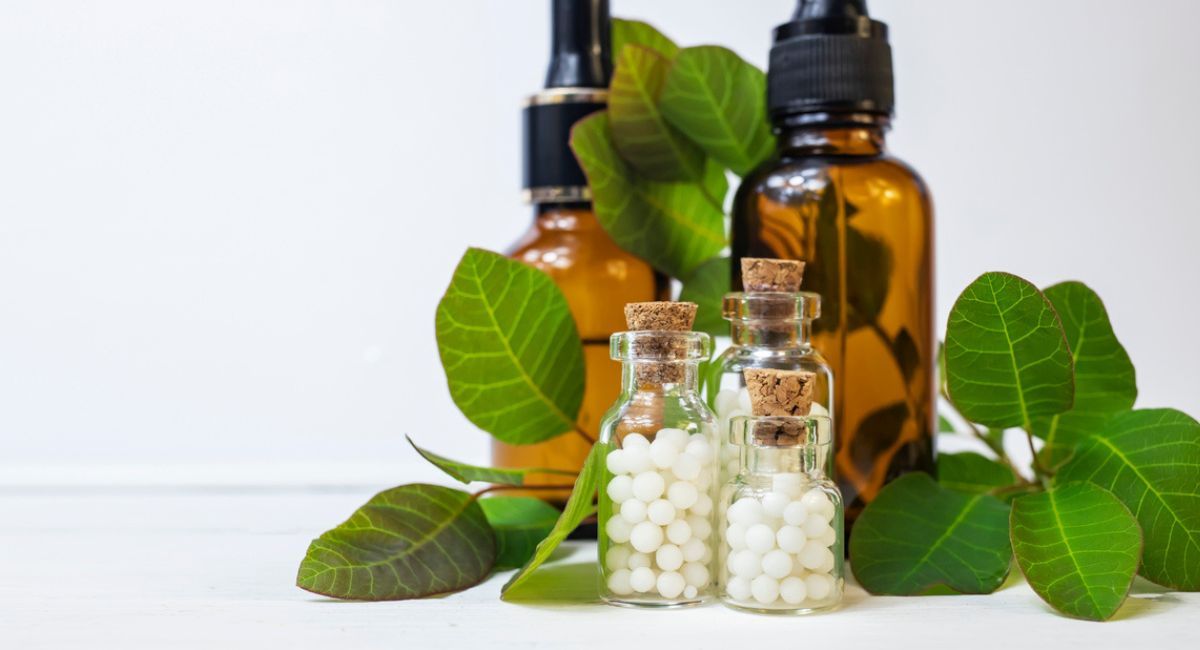
Vaccines are considered the standard for preventing disease, but evidence has long supported the use of homeopathy for this purpose—and its superior safety profile. Cate Montana reports
In 2006, in Kerala, India, a group of doctors distributed a homeopathic preventive remedy for the mosquito-borne viral disease chikungunya to 1,061 people. Only 17 percent of those who took the homeopathic prophylaxis contracted the disease (with usually milder symptoms), while over 73 percent of the unprotected contracted it, resulting in an effectiveness of 82.19 percent. There were no reported side effects from the homeopathic treatment.1
On the other hand, on May 15, 2025, the US Food and Drug Administration (FDA) and Centers for Disease Control and Prevention (CDC) recommended pausing the use of Ixchiq, the chikungunya vaccine, in people over age 60 years. The recommendation was due to serious adverse events, including neurologic issues, cardiac events and two deaths in individuals who received it.
Homeopathy has been around since the 18th century, when German doctor Samuel Hahnemann, frustrated by the toxic medical practices of his day, set out to investigate a strange phenomenon that ancient physicians like Hippocrates and Paracelsus had also noticed and written about: “similia similibus curantur,” or “like cures like.” In other words, a remedy created from a particular plant (or other substance) that causes certain symptoms can also stimulate the body to heal similar symptoms in someone who is ill.
For example, a homeopathic preparation of poison ivy, Rhus Toxicodendron, which causes inflammation and a rash, can be used as an anti-inflammatory to treat arthritis and various skin conditions. A homeopathic preparation of coffee known as Coffea Cruda calms the racing mind and “jitters” in people who have consumed too much caffeine from drinking coffee or black tea. (Speaking from experience, this author can testify that it works.)
Hahnemann stumbled across this effect after he ingested the cure for malaria (quinine) and experienced the same effects that malaria itself produced. Curious, he went on to laboriously research the phenomenon, eventually creating an entire medical system based on the Law of Similars.
Not only did he create at least 90 effective remedies for disease conditions ranging from skin lesions to scarlet fever but he also developed homeopathic prophylaxes—remedies that could be used to prevent disease from occurring in the first place.
Attacks on Hahnemann’s research forced him to leave Germany in 1835. But despite ongoing onslaughts from the allopathic medical community since then, the results of Hahnemann’s discovery have stood the test of time.
This includes his development of effective remedies for preventing disease—an issue of considerable importance and one still neglected by conventional medicine in our modern era. The following are a few examples of the effectiveness of homeopathic prophylaxis, also known as homeoprophylaxis (HP)—essentially homeopathic vaccination.
One of the first modern recorded uses of homeopathic remedies for disease prevention was during the Spanish Flu epidemic of 1918. The CDC archives estimate about 500 million people—one-third of the world’s population at the time—got sick with an H1N1 virus. The number of deaths worldwide was estimated at 50 million.
In comparison to allopathic physicians, who lost approximately 30 percent of their patients, records indicate that homeopaths using symptom-specific remedies including Gelsemium Sempervirens (made from the twining vine of the same name) experienced a mortality rate of just over 1 percent.2
More recently, in 1998, two professors of medicine at the University Foundation in Blumenau, Brazil, immunized 65,826 young people homeopathically to protect against meningococcal disease. The control group of 23,532 people were not given the remedy.
During the following year, there were four cases among those protected homeopathically and 20 cases in those not protected. Statistical analysis showed that homeopathic immunization offered 95 percent protection against meningococcal disease in the first six months and 91 percent protection over the year.3
In late 2007, during an annual epidemic of leptospirosis (a bacterial blood infection), the Cuban government distributed a homeopathic nosode (a remedy made from the disease itself) to 2.3 million people at high risk of infection. The remaining population of 8.8 million was left untreated. Incidence of the disease dropped 84 percent in treated areas within weeks, while the epidemic increased 22 percent in untreated provinces. The protective effect continued into 2008.4
In 2008, facing an outbreak of dengue fever, a county in Rio de Janeiro, Brazil, carried out a “homeopathy campaign against dengue.” A prophylactic homeopathic was given to 156,000 asymptomatic patients, and 129 doses of the Genus Epidemicus (GE) were given to symptomatic patients at outpatient clinics.
A GE remedy is a homeopathic remedy (or remedies) that numerous licensed homeopathic doctors have identified and agreed on as specific and appropriate for treating common symptoms of a particular epidemic, such as respiratory difficulties, barking cough, chills, fever, etc.
In three months, cases of the fever dropped 93 percent in comparison to the same period in 2007. But the rest of the untreated state experienced a 128 percent increase in cases.5
The longstanding animosity between the two disciplines is not without merit; they stem from different views of the body, disease and the importance of root causes. But right from the beginning, there were some similarities between the allopathic and homeopathic approaches to disease prevention.
In 1796, Edward Jenner, an English surgeon, conducted the first successful vaccination of an eight-year-old boy for smallpox. Noticing that milkmaids, who were frequently afflicted with cowpox, seemed immune to the deadly smallpox ravaging 18th-century populations, he took matter from a cowpox lesion and introduced it under the skin of the boy, James Phipps, who had yet to contract either disease. Phipps was “slightly ill” over the course of the next nine days but recovered fully.
Hahnemann’s first preventive use of a homeopathic remedy occurred just three years later during an outbreak of scarlet fever in Germany. He successfully circumvented an epidemic with widespread distribution of his homeopathic remedy Belladonna, which he had derived from a perennial plant in the nightshade family.6
In a way, both approaches followed the Law of Similars. Cowpox had symptoms similar to those of smallpox, and the plant belladonna can stimulate red rashes and fever, the primary symptoms of scarlet fever. The difference was that Jenner used a tiny bit of the dangerous substance itself, while Hahnemann diluted belladonna so many times that he was simply using its “energy.”
The delivery method was also very different. Jenner basically injected pus from a cowpox pustule under the skin, and Hahnemann gave an oral plant-based remedy. Furthermore, people did not become “slightly ill” for nine days with scarlet-fever-type symptoms following preventive doses of Belladonna, as they had with the smallpox vaccine, or suffer any other serious side effects that the smallpox vaccine caused.
“The huge difference between a pharmaceutical vaccine and a homeoprophylactic is, of course, potentization and the lack of side effects of homeopathic remedies,” says Isaac Golden, PhD(MA), DHom, ND.
Homeopathic remedies are prepared by placing a physical substance, such as belladonna, in a water and alcohol solution and letting it soak. The substance is mashed, then strained out, leaving a tinctured solution containing only the chemical properties of the original plant, animal or mineral substance used.
This “mother tincture” is diluted over and over again while subjecting it to intermittent “succussion” (prolonged agitation) to create the specific potency desired. Strangely, Hahnemann and subsequent researchers found that the more absent the molecules of the substance being potentized, the greater the healing impact.
In contrast to HP, use of the actual bacterium or virus (either living or dead) as the foundation of a vaccine means that, like Jenner’s first patient, people can get sick from the vaccine. Researchers have to dilute and weaken the substance and then add chemical additives and adjuvants to make the vaccine more effective while delivering it at a slow enough pace to avoid causing illness.
Golden, an author and expert in HP who consults with governments worldwide, says the adjuvants cause the weakened material to be dribbled into the person’s system over a period of months. “That builds up the antibodies,” he says.
“Or at least that’s the theory. And of course, the theory has turned into the belief that building up antibodies is the only way to protect a person.”
While antibodies are an important part of the body’s defense, confusion about whether they’re necessary to it (see below) brings up the question of just how immunity actually works. The allopathic model has given us “the immune system,” a grouping of components comprised of white blood cells, lymphatic system, bone marrow, thymus gland, spleen, adenoids, tonsils and appendix.
“But that’s so limiting,” says homeopath and HP expert Cathy Lemmon from Dallas, Texas (healthyhealingarts.com). “Immunity is so much more. It’s a full-body thing. Thinking you can call someone immune by simply saying they’ve got antibodies, that’s so restrictive.
“Immunity is more about lessening susceptibility, strengthening the vital force, which is what works to keep homeostasis within us.” (Homeostasis is a self-regulating state of healthy balance in an organism.)
A US immunologist, who asked not to be named, had some interesting things to say about the field of immunology in general. “Immunology didn’t exist prior to Jenner’s invention of the smallpox vaccine, which became the cornerstone of vaccinology,” she says.
“Had immunology as a science come first, perhaps things would be different. As it stands, immunology, for the most part, has really been the handmaiden of vaccinology.”
Which is why the fact that homeopathic prophylaxes don’t stimulate antibody production in the human body continues to be one of the traditional allopathic community’s two major arguments against the use of homeopathic remedies and HP for disease prevention. Even though studies show it isn’t true, in the allopathic model of the immune system, no antibodies equals no protection, and that’s that.
And yet, when we widen the view beyond the narrow lens of vaccinology and its singular reliance on antibody production, we realize there’s more to immunity. It’s vital to lessen susceptibility to disease by strengthening the whole body, and the body already has multiple other defenses in place.
Cytokines, T cells and neutrophil extracellular traps, which are networks of fibers that bind pathogens, are just a few of many adaptive cellular responses that are natural antiviral mechanisms in the body.
The second major allopathic argument against HP and homeopathy in general is the absence of any physical material in any homeopathic remedy, including GE remedies and nosodes. There’s no teeny-tiny piece of poison ivy in the Rhus Tox remedy. No microscopic fragment of the Covid virus in the Novus-CV nosode pellets. There are not even any molecules of the original substance in the remedies with the highest potencies. So how does homeopathy work?
This question has plagued homeopathy researchers and physicians for 200 years. It’s not good enough that something works. We have to know why it works to believe it.
In recent decades, the proposed answer has been that the energetic “signature” or electromagnetic frequency of the potentized substance somehow imprints the water/alcohol solution with information. That data is then transferred to the patient via the remedy pellets.
As the editors of this magazine have pointed out in the past, this theory is substantiated by the work of Jacques Benveniste, who demonstrated that water has a memory—much like a tape recorder (see below). Benveniste’s work was followed up by that of Italian physicists and Luc Montagnier, a French virologist who won the Nobel Prize for co-discovering the human immunodeficiency virus (HIV).
Perhaps the most important distinctions between homeopathic and allopathic vaccines are safety and effectiveness. Prescription drugs are the third leading cause of death in the US and Europe7—and their victims more than doubled from 2014 to 2024, from 123,927 deaths to over 250,000 in the US alone.8
Only heart disease and cancer are bigger killers. Half of those who died took the drugs properly; the other half died due to prescription errors.7
In comparison, a clinical review of all adverse effects ever publicly reported against homeopathic remedies amounts to 1,159 cases worldwide that were mostly calls to poison control centers seeking information about remedies accidentally ingested. The four deaths reported in the study have since been questioned and attributed to “clinical negligence” and not the remedies themselves.9
According to those in the industry, there has never been a single homeopathic medicine recalled in the method’s 200-year history. And unlike allopathic doctors who pay enormous sums of money for insurance coverage, insurance companies that cover homeopaths charge very low rates precisely because of the lack of side effects and patient issues in general. Doctor after doctor of homeopathy, including Golden and Lemmon, stress its precision of application, effectiveness and incredible safety.
Turning to vaccines, the comparison between the allopathic and homeopathic approaches is equally stark. On May 21, 2025, a US Senate hearing cited FDA and CDC data revealing that as of April 25, 2025, vaccine-related deaths worldwide during the last 35 years totaled 21,725 people. And adverse events numbered over 1.5 million cases.10
“I’ve studied the large interventions in millions and sometimes tens of millions of people,” says Golden. “We can say with great confidence that HP has a very comparable level of protection to vaccines because the best vaccines out there are hardly reaching above 90 percent effectiveness.
“Now, I know they claim 99 percent protection for measles, but even the editor of the journal Vaccines himself said that’s impossible.
“Homeopathy and HP can offer an option which is comparably effective, but without the risk of toxic damage. You can’t get the disease from the HP, because there’s no molecules of any antigen there.
“There’s no aluminum, formaldehyde and all the other stuff they put in pharmaceutically made vaccines that cause so many problems. Plus, it’s a more natural delivery pathway, using the oral pathway rather than injection.”
The FDA reaffirmed its stance of approving vaccines “On the basis of immunogenicity—proof that a vaccine can generate antibody titers in people” as recently as a May 20, 2025, article in the New England Journal of Medicine.1 (An antibody titer is a blood test that measures the number of antibodies in the blood against foreign pathogens.)
And yet studies show that some people with no antibodies to a disease are immune to that disease anyway and may rely on T cell protection.2 As well, some people with antibodies get the diseases they’ve been vaccinated against.3
Many people who received repeated doses of a Covid vaccine, and in some cases also became infected with the virus, largely failed to make special antibody-producing cells.4 One study from Germany reported that 85 percent of people exposed to confirmed infected Covid-19 contacts failed to develop antibodies.5
A half century before the first isolation of the tubercle bacillus, tuberculosis vaccine nosodes (homeopathic dilutions of the bugs causing the illnesses in question, given orally) were commonly used as just-in-case measures against a wide variety of diseases. In 1974, more than 18,000 children were successfully protected against a meningitis epidemic with the nosode Menigococcinum 11C.1
These are some other examples of homeopathic remedies you can use to proactively protect yourself against illness while traveling.
Hepatitis
One Chelidonium Majus 30 taken eight days before departure; repeat the dose once every week of your stay.
Polio
One Lathyrus Sativus 30 taken seven days before departure.
Meningitis
If meningitis becomes epidemic while you’re away, take one Belladonna 30 weekly.
Rabies
One Lyssin 30C taken three times over 24 hours.
Japanese or tick-borne encephalitis
Nosodes of both available. Take at 30C potencies. Consult a homeopath for directions.
In March 13, 2020, prior to the initial peak of Covid-19 cases in the US and UK, a volunteer group of 846 people self-administered the homeopathic nosode Novus-CV in various potencies. Of that group, 135 were known to have been directly exposed to verified Covid carriers. By the end of the follow-up period, not one person in the protected group had contracted Covid and there were no side effects.
The case conclusions stated, “These results suggest Novus-CV nosode offers the world a low-risk disease prevention method that is 100 percent effective in those with definite exposure that deserves consideration in public health programs.”1
On March 30, 2020, and August 20, 2021, using the remedy Corona 2019 Graft of Nosode, 116 patients took one dose of two pellets every two weeks, which they continued for two months. Patients exposed to positively tested, symptomatic persons were directed to take the remedy once a day for three days and then resume the bi-weekly protocol.
No one in the study got Covid even though 53 participants were exposed to coworkers or family members who tested positive. There were no side effects.2
Many scientists reject the idea of homeopathy because it doesn’t seem to conform to the natural laws of science. The only way such a medicine could work, so the argument goes, is if there’s both a special quality to water and an ability of molecules to leave behind essential “information” as a “memory.”
The late French biologist Jacques Benveniste carried out countless studies decisively demonstrating that cellular communication relies on electromagnetic wave signaling at low frequencies. Over thousands of experiments, he recorded the activity of a molecule on a computer and replayed the recording to a biological system sensitive to that molecule.
In every instance, the biological system was fooled into thinking it was interacting with the molecule itself and acted accordingly, initiating a biological chain reaction just as it would have in the presence of the actual molecule.1
In his studies, when water was exposed to a chemical, then diluted to the point that none of the original chemical molecules remained, the water sample could still be used in place of the chemical to trigger a reaction.
So vital may water be to the transmission of energy and information that Benveniste found molecular signals could not be transmitted in the body unless it was done through the medium of water,2 and rigorous shaking (succussion) of the containers, as is done in homeopathy, may serve to speed up the process.
Somehow water appeared to “memorize” the unique signature frequencies of molecules.
How can this be? Two Italian physicists at the Milan National Institute of Nuclear Research, the late Giuliano Preparata and his colleague the late Emilio Del Giudice, demonstrated mathematically that, when closely packed together, atoms and molecules exhibit collective behaviors and form what they termed “coherent domains,” much as a laser does.
Single wavelengths of water molecules appeared to become “informed” in the presence of other molecules—that is, they tended to polarize around any charged molecule—storing and carrying its frequency so it could be read at a distance.3
This suggests that water acts like a tape recorder, retaining and carrying information whether the original molecule is still there or not.
In Japan, physicist Kunio Yasue of the Research Institute for Informatics and Science, Notre Dame Seishin University in Okayama, confirmed that water molecules can organize discordant energy into coherent photons—a process known as superradiance.4
This means water, as the natural medium of all cells, may be acting as the essential carrier of a molecule’s signature frequency in all biological processes and that water molecules organize themselves into a pattern on which wave information can be imprinted. Water appears to not only send the signal but also amplify it.
More recently a group of Italian scientists, including Claudio Cardella of the Sapienza University of Rome and Laura de Magistris of the Second University of Naples, carried out three years of research confirming Preparata’s and Del Giudice’s findings that certain electronic resonance signals can create permanent changes in the physicochemical properties of water.5
Benveniste’s radical ideas were also vindicated by the work of the late French scientist and Nobel laureate Luc Montagnier, whose experiments demonstrated that some bacterial and viral DNA sequences can induce low-frequency electromagnetic waves at high aqueous dilutions.6
Montagnier’s experiments suggested water can retain and carry information from various materials it’s exposed to, whether molecules from the original material are still present or not. In fact, he discovered water could pick up electromagnetic information from materials without ever even touching them.
In one dramatic experiment, Montagnier showed that a virtually identical copy of a DNA fragment in one test tube could be “teleported” via electromagnetic signals to a second test tube containing nothing but pure water.7
As he concluded, “High dilutions of something are not nothing. They are water structures which mimic the original molecules.”
Lynne McTaggart
If you’re looking into homeoprophylaxis or homeopathic nosodes, consult with a qualified homeopath or contact your local homeopathic pharmacy for advice. Here are some useful resources for finding a homeopath near you, plus a list of reputable homeopathic pharmacies.
How to find a homeopath
These websites all have a search function allowing you to find a registered homeopath in your area.
US and UK
Faculty of Homeopathy
facultyofhomeopathy.org
US
National Center for Homeopathy
homeopathycenter.org
North American Society of Homeopaths
homeopathy.org
UK
4Homeopathy
findahomeopath.org
Society of Homeopaths
homeopathy-soh.org
Homeopathic pharmacies
Here’s a handful of trusted homeopathic pharmacies in the US and UK. All sell a wide range of remedies online.
US
Washington Homeopathic Products
homeopathyworks.com
Boiron
boironusa.com
Castle Remedies
castleremedies.com
UK
Helios
helios.co.uk
Ainsworths
ainsworths.com
Nelsons Pharmacy
nelsonspharmacy.com
What do you think? Start a conversation over on the... WDDTY Community

Great news! Discounts are available based on your cart total. Check the details below:


