An acidic diet can lead to type 2 diabetes and a host of other health problems, says author and health coach Ross Bridgeford. Here’s how an alkaline approach to eating can transform your health
Type 2 diabetes (T2D) affects millions of people worldwide. In the US alone, over 38 million people have a type 2 diabetes diagnosis, and it’s estimated that a further 97 million people have prediabetes.1 Unmanaged, it can have devastating consequences, including kidney failure, vision loss, amputations, nerve damage and even ultimately death.
It’s one of the most common “foundational diseases” that dramatically increases the risk of a host of other serious conditions. Several studies have shown that following a T2D diagnosis, all-cause mortality risk increases by up to 3.4 times, and atherosclerosis and cancer are far more likely. In fact, Alzheimer’s disease, kidney disease, nerve damage, eye damage and mental health can all worsen with T2D.
But T2D is completely reversible through diet and lifestyle changes. When you follow an alkaline diet, you can reverse T2D, get off insulin and receive a whole host of other benefits along the way.
Diet-induced acidosis (DIA) is eating and drinking in a way that puts the body into an acidic state (see ‘The importance of pH,’ below).
T2D occurs when the body produces insufficient insulin or fails to use it effectively. As a result, glucose levels remain abnormally high in the bloodstream and can lead to serious damage to blood vessels, nerves and immune system.
There’s a lot of complexity behind the scenes, but it’s simple to see how an acid-forming diet of processed foods, junk food, sweets, sugars, gluten and additives could lead to the major issues behind T2D: too much glucose in the blood and insufficient capacity to produce the insulin to control and deal with it.
There are three obvious ways in which diet-induced acidosis contributes to increased T2D risk:
Direct impact on blood sugar and insulin. Sugar and gluten are the most acid-forming foods in the standard modern diet. Both wreak havoc on our blood sugar, driving it higher and higher and causing the body to produce more and more insulin to manage it. The amylopectin A (a type of carbohydrate) in modern gluten-containing grains drives blood sugar up like nothing else. Which leads us to . . .
Inflammation impact. Foods in the standard modern diet are not only terribly pro-inflammatory but also create an environment in the body where inflammation quickly gets out of control. Chronic inflammation is particularly troublesome to insulin regulation, as it damages the beta cells the pancreas makes that are responsible for producing insulin. Inflammation in fat cells also contributes to insulin resistance, since when the fat cells are inflamed, they are unable to respond to insulin and can’t take up the glucose from the bloodstream as easily. Which leads us to . . .
Excess weight impact. DIA causes weight gain in numerous ways, and this increases T2D risk substantially. Hundreds of studies have linked a higher body mass index (BMI) to an increased risk, and it makes sense.
With an increased BMI comes a greater risk of digestive imbalance, poorer liver and kidney function, increased inflammation, hormone disruption and pancreatic stress. While having your BMI in the “healthy” range is not a guarantee you won’t develop T2D, increased visceral fat is clearly a huge risk factor.
Then there are the sneaky ways that DIA can increase diabetes risk:
Study after study is finding that being in chronic, low-grade metabolic acidosis (DIA) fuels and exacerbates insulin resistance and drives up the risk of T2D.
In a 2020 study in Nutrition Journal, researchers studied 5,406 subjects with no prior history of T2D, insulin resistance, cancer or kidney disease. They followed up with the subjects for 7.4 years, analyzing their diet, and documented 3,449 insulin resistance cases.
They found that the highest quartile of acid-forming diet eaters had a significantly increased risk of insulin resistance and concluded that “diet-induced metabolic acidosis is associated with an increased risk of insulin resistance.”6
A 2014 study published in Diabetologia, looking at a cohort of 66,000 women, found similar results. The highest 25 percent of acidic diet eaters were at a significantly increased risk of T2D.7
In fact, research dating back as far as 1952 has highlighted this link between DIA and insulin resistance.8
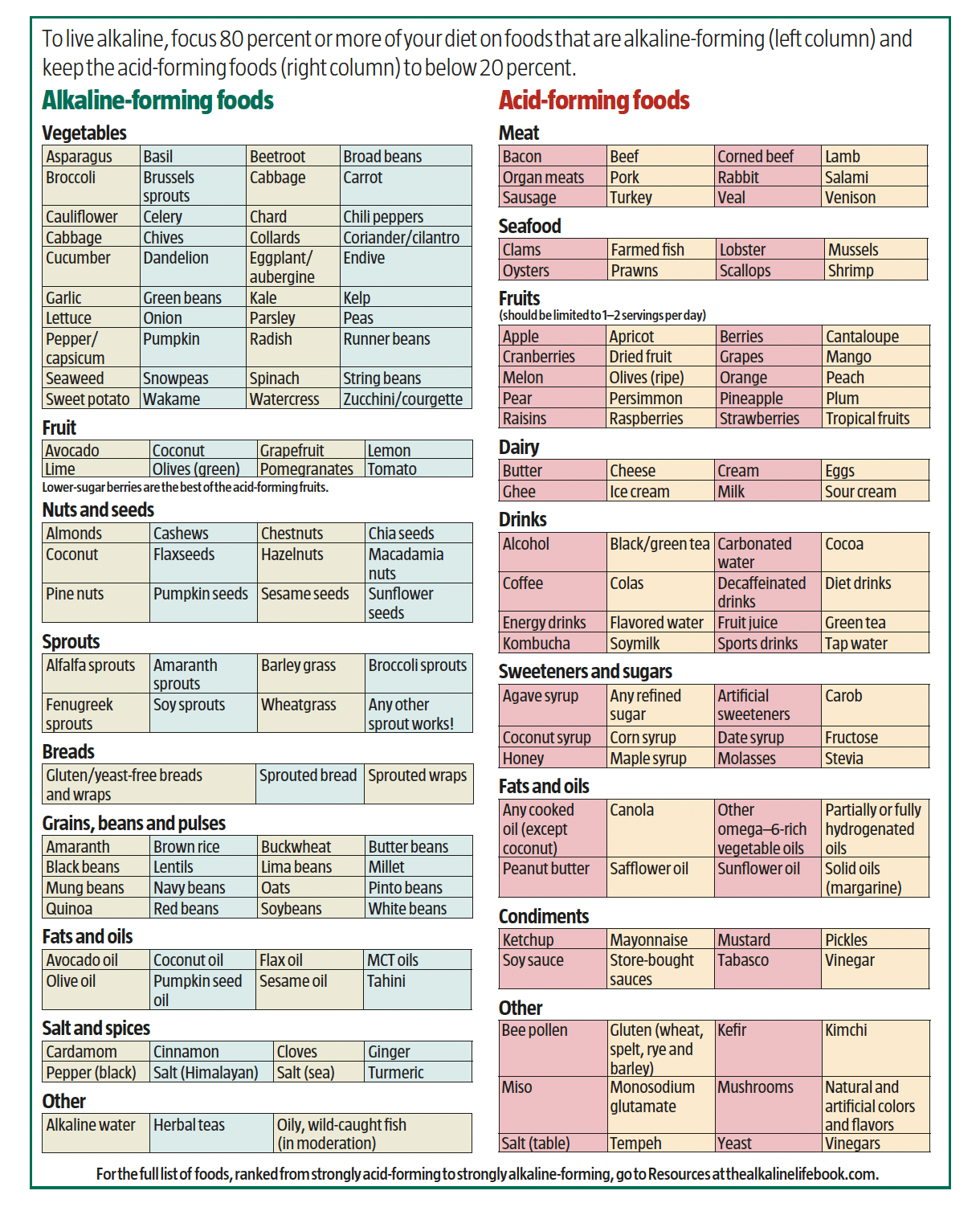
The good news is that the solution is simple: live an alkaline life. To live alkaline, you should focus 80 percent or more of your diet on foods that are alkaline forming and keep the acid-forming part of your food and drink intake below 20 percent.
Note that I say alkaline forming and acid forming. This is important.
We’re not concerned by whether a food is alkaline or acidic in nature, on the tree or plant. We’re concerned only with the impact it has on the body once digested.
Using lemons as an example, the citric acid in lemon juice means that in nature, outside the body, it’s acidic. Not only is citric acid a “weak” acid—meaning it is quickly metabolized and broken down into its basic components without any real impact on our pH—but the body breaks down and metabolizes lemon, releasing its strong alkaline mineral content, including calcium, potassium and magnesium.
As well as lemons and limes, alkaline-forming foods include leafy greens, avocados, spinach, kale, broccoli, celery, blueberries, carrots, beets, gluten-free oats, quinoa, nuts, seeds, olive oil, coconut oil, oily fish, herbs and spices.
Proper hydration is also important. As tap water is acid-forming, get a countertop or undersink water filter.
The acid-forming foods to keep in your 20 percent bucket include sugar, gluten, processed foods, fast foods, trans fats, refined foods and packaged foods. These are things like chips, pizza, soda, artificial sweeteners, processed meats, cookies, cakes and sweets (see page xx for a useful chart of acid- and alkaline-forming foods).
There are, of course, nuances and a little more to it than this, but this is what the alkaline approach is at a very high level.
It’s also important to recognize that not everyone is the same. However, supporting your body to balance your pH is perhaps the most powerful thing you can do to prevent sickness and disease and allow your body to thrive with energy and vitality.
This might surprise you, but we are not trying to make your body more alkaline, and it is not about changing your pH. The goal is to support your body in maintaining the perfectly balanced pH levels throughout your organs, tissues, glands, cells and extracellular fluids, with the most important being the slightly alkaline pH of the blood, at close to 7.365.
The foods we eat, the drinks we drink and the way we live all have a direct and dramatic impact on the body’s ability to maintain this pH.
While we have evolved with a small acid-buffering capacity, this is no match for the standard modern diet. Our buffering capacity, which consists largely of increasing bicarbonate, proteins and phosphate,9 is able to manage only the tiny amount of acidity produced naturally by our daily bodily functions. It wasn’t designed for a bacon-and-egg bagel, a large mocha and OJ before we’ve left the house in the morning!
The aim is to provide your body with a diet and lifestyle that don’t overload it with acidity while also nourishing it with the alkaline-forming nutrients it needs to thrive. And by decreasing dietary acid load, we’re removing the foods most associated with blood sugar spikes, inflammation, visceral fat cell formation, raised cortisol and insulin resistance.
When you provide your body with the delicious alkaline nourishment that removes the pressure and stress of fighting acidosis while giving it the tools to heal and rebalance, magic really does happen.
Your body craves alkaline balance. This is indisputably proven in scientific literature. Study after study shows us that maintaining the correct pH throughout the organs, cells and fluids in your body is important to every system and process required to keep you healthy and thriving.
From your hormonal balance to your digestion, from your immune system to your cognitive health, your body works tirelessly to be in pH balance all day, every day. Yet our modern diet and lifestyle are almost the exact opposite of what the body needs to maintain our delicate pH balance.
The way many of us eat today puts the body under constant stress. The modern diet of fast food, convenience food, processed food, sugar, gluten, chemicals and preservatives drives our pH down, day in and day out, forcing the body to work to bring the pH back to where it needs to be. And maintaining our pH balance is not just important; it’s essential.
Eating and drinking in a way that puts the body into an acidic state, known as diet-induced acidosis, has been proven to dramatically increase the risk of cancer,1 atherosclerotic disease,2 neurodegenerative disease,3 and T2D.4 These are by far the biggest killers in the developed world.5
This type of diet has also been proven to increase the likelihood of “foundational” diseases such as autoimmune disease, fatty liver disease, chronic kidney disease, osteoporosis, chronic fatigue, fibromyalgia, adrenal fatigue and irritable bowel syndrome.
In fact, the risk of all-cause mortality (dying from anything) goes up dramatically on this diet.6 But when we give our body the nutrients it needs to easily maintain our pH balance, everything changes.
Abundant health becomes effortless. Your vitality and energy skyrocket, and your risk of disease dramatically lowers.
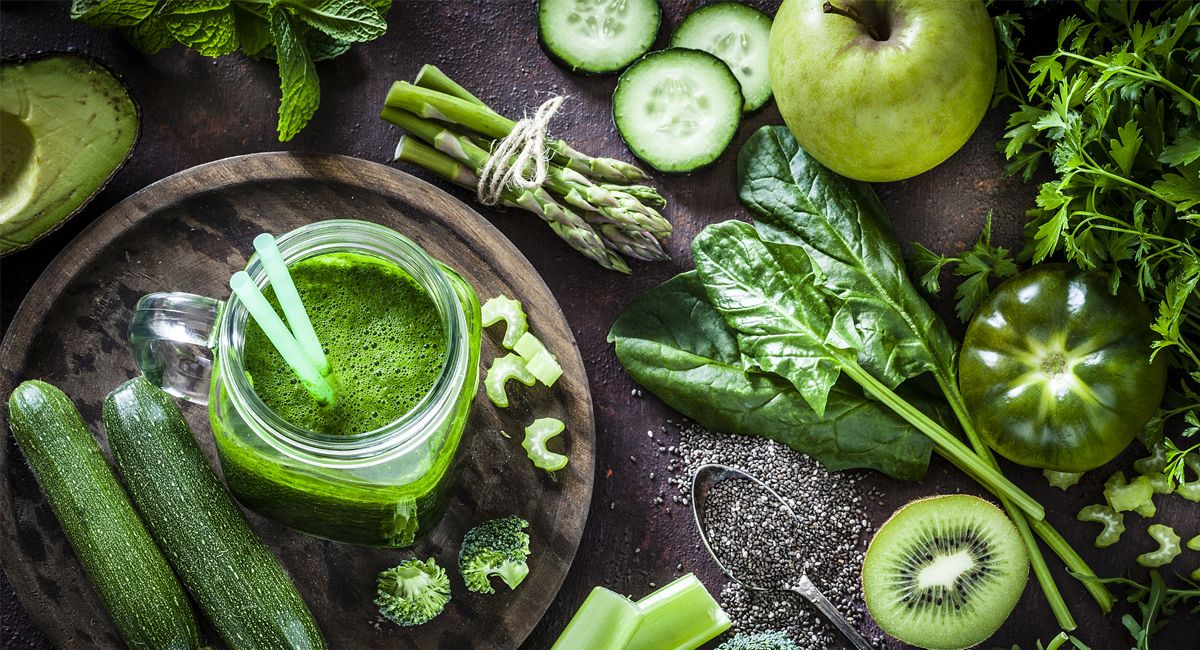
A core part of living alkaline is to eat more greens—five to seven servings of green foods daily. If you do just this one action, you will see an incredible benefit to your health and energy. The sheer volume of vitamins, minerals and nutrients, such as magnesium, iron, potassium, omega-3s, sulforaphane, chlorophyll, antioxidants and anti-inflammatories, will make an enormous difference in your life.
Here are five ideas you can use to get your greens consumption up.
Alkaline detox green juice
Ingredients
2 large handfuls baby spinach leaves
2 large handfuls kale (any variety)
1 handful parsley leaves and stems
½ bunch coriander (cilantro)
1 large cucumber
2 sticks celery
1-in. piece fresh ginger
1 medium lemon
Filtered water or coconut water, to taste
Method
Simply pass all the ingredients through your juicer and top up with water to get your desired consistency. You can also add other alkaline-forming vegetables and fruit, like broccoli, tomatoes, bell pepper, carrots and beets.
Simple alkaline oats
Ingredients
1 cup rolled oats
1 cup filtered water
1 Tbsp chia seeds
Coconut or unsweetened almond milk, to taste
1 Tbsp coconut oil
2 tsp cinnamon
Coconut yogurt
1 handful mixed nuts/seeds
Berries of your choice (optional)
Method
Top tip: Top with grated lemon or lime zest for an extra alkaline boost
Alkaline green shakshuka
Ingredients
2 Tbsp olive oil
½ medium onion, diced
4 cloves garlic, minced
9 oz brussels sprouts, shaved or finely sliced
1 cup peas
1 zucchini, grated
1 tsp ground cumin
½ tsp Himalayan or Celtic sea salt
¼ tsp black pepper
2 cups packed baby spinach
¼ cup fresh cilantro, chopped
1 large avocado, sliced, for garnish
Method
Note: Feel free to add eggs to this dish like a regular shakshuka by creating 3 to 4 “wells” in the mixture while it’s in the skillet and cracking in the eggs. Then cover the pan and continue to cook for 5 to 6 minutes.
Adapted from The Alkaline Life by Ross Bridgeford, published by Hay House Inc. Copyright © 2024 by Ross Bridgeford. See thealkalinelifebook.com for useful resources.
What do you think? Start a conversation over on the... WDDTY Community

Great news! Discounts are available based on your cart total. Check the details below: